
Short Answer
Overview
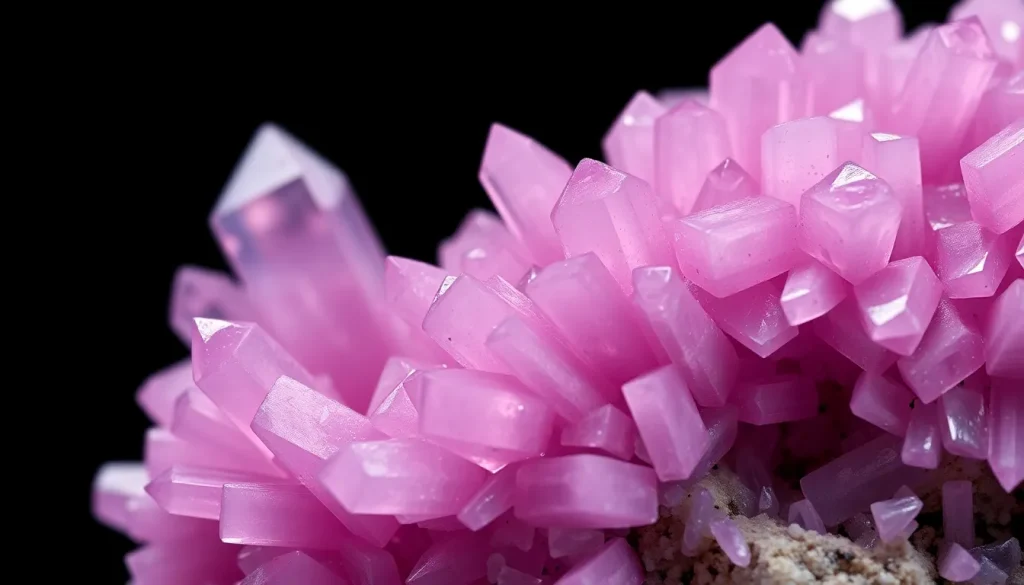
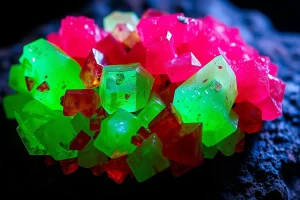
Hodgkinsonite is a rare zinc‑manganese arsenate mineral prized by collectors and occasionally cut as a gemstone. It typically occurs in delicate pink to violet hues, displaying a vitreous luster and a transparent to translucent body. Its modest hardness and limited supply make it a distinctive, yet delicate, choice for specialty jewelry.
History and Origin
First described in 1910, Hodgkinsonite was named in honor of the English‑American geologist J. F. Hodgkinson, who contributed to the study of the mineral‑rich Franklin district of New Jersey. The type locality remains the Franklin‑Wells mines, where the mineral forms in low‑temperature hydrothermal veins alongside other zinc and arsenate species. Small occurrences have also been reported from a few localities in Japan.
Meaning and Symbolism
In traditional gemstone lore, the gentle pink and violet tones of Hodgkinsonite are associated with love, compassion, and emotional balance. It is thought to encourage openness in relationships and to support the heart’s capacity for forgiveness.
Healing and Metaphysical Properties
Crystal‑healing practitioners attribute Hodgkinsonite with soothing properties for the emotional body. It is believed to aid in releasing past hurts, fostering self‑acceptance, and enhancing inner peace. These claims are based on metaphysical traditions and are not medical advice.
Varieties and Types
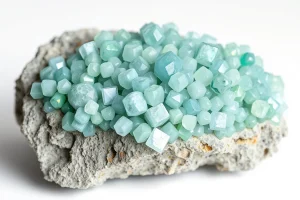
Hodgkinsonite does not have widely recognized varieties, but specimens can differ in hue intensity—from soft rose‑pink to deeper violet‑blue—depending on trace element content and formation conditions. Some crystals display well‑developed prismatic terminations, while others occur as massive aggregates.
Jewelry Uses and Care
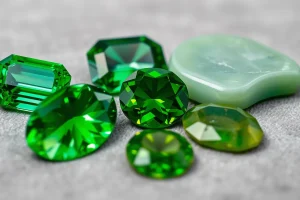
Because of its rarity and a Mohs hardness of 4.5–5, Hodgkinsonite is most often set in protective settings such as bezels or pendants that shield the stone from knocks. It should be worn with care, avoiding harsh impacts and prolonged exposure to chemicals. Cleaning is best performed with a soft, lint‑free cloth and mild soapy water; ultrasonic cleaners are not recommended.
Buying Guide
When purchasing Hodgkinsonite, consider the following:
- Color and clarity: Look for vibrant, evenly distributed pink to violet color with minimal inclusions.
- Cut and setting: Well‑cut stones in protective settings indicate thoughtful handling.
- Certification: Reputable dealers will provide a gemological report confirming the mineral’s identity.
- Origin documentation: Provenance from known localities such as Franklin, New Jersey, adds confidence.
Due to its scarcity, Hodgkinsonite often commands a premium price relative to more common gemstones.
FAQ
What is Hodgkinsonite good for?
Hodgkinsonite is prized for its delicate pink‑violet color in collector pieces and occasional fine jewelry; traditionally it is believed to promote emotional balance and compassion.
Is Hodgkinsonite rare?
Yes. Quality specimens are rare because the mineral forms only in a few localities and is often too fragile for extensive cutting, making gem‑grade stones uncommon.
How can you tell if Hodgkinsonite is real?
Real Hodgkinsonite displays a vitreous luster, a Mohs hardness of 4.5‑5, and characteristic pink to violet hues. Professional testing, such as refractive index measurement and X‑ray diffraction, confirms authenticity.
What chakra is Hodgkinsonite associated with?
In crystal lore Hodgkinsonite is linked to the Heart (Anahata) chakra, supporting love and emotional healing.
How should you clean Hodgkinsonite?
Clean gently with a soft lint‑free cloth and mild soapy water; avoid ultrasonic cleaners and harsh chemicals due to its modest hardness and potential porosity.
Leave a Reply