Short Answer
Halide minerals represent a distinct and chemically fascinating group of minerals characterized by the presence of a halogen element (fluorine, chlorine, bromine, or iodine) combined with a metal. While they are less common in high-end jewelry than silicates or oxides due to their inherent softness, they are highly prized by mineral collectors and specialty gemstone enthusiasts for their vivid colors and unique crystal habits.
What Is a Halide Mineral?
In gemology, a halide is a mineral composed of a halogen element and a metallic element. The most common halogens found in gemstones are fluorine (F) and chlorine (Cl). These minerals typically form in evaporite deposits—where saltwater evaporates—or in hydrothermal veins where hot, mineral-rich fluids precipitate crystals into cavities.
The chemical bonding in halides is predominantly ionic, which contributes to several of their defining physical characteristics, such as relatively low hardness and high solubility in water. The most prominent example in the gemstone world is Fluorite, though others like Sylvite and Halite are studied for their aesthetic and scientific value.
Varieties and Related Materials
The halide group contains several varieties that differ based on their halogen and metal combination:
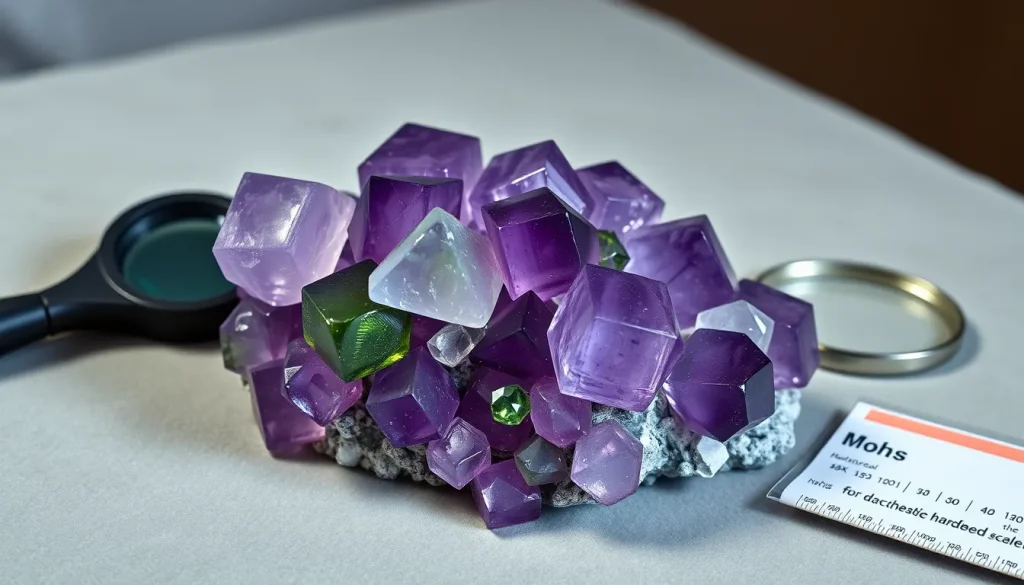
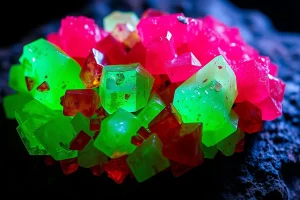
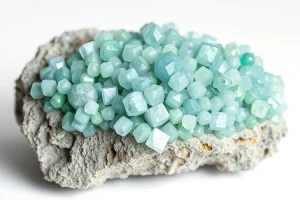
- Fluorite (CaF2): The most famous gemstone halide, occurring in a spectrum of purple, green, blue, and yellow. It is renowned for its perfect octahedral cleavage.
- Sylvite (KCl): A potassium chloride mineral that can occur in cubic crystals, often appearing in colorless to reddish-brown hues.
- Halite (NaCl): Common table salt, but in large, clear cubic crystals, it is a prized mineral specimen, though virtually unusable as a gemstone.
- Cryolite (Na3AlF6): An extremely rare halide that is historically significant for its role in aluminum production.
Identification and Look-Alikes
Identifying halide minerals requires a combination of physical testing and optical observation. Because many halides are soft, the Mohs scale is a primary diagnostic tool.
| Property | Fluorite | Sylvite | Halite |
|---|---|---|---|
| Hardness (Mohs) | 4 | 2 – 2.5 | 2 – 2.5 |
| Crystal System | Isometric (Cubic) | Isometric (Cubic) | Isometric (Cubic) |
| Cleavage | Perfect Octahedral | Perfect Cubic | Perfect Cubic |
| Key Identifier | Fluorescence | Bitter Taste | Salty Taste |
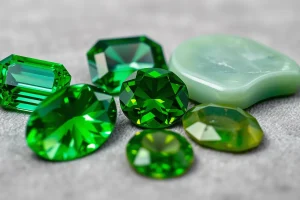
Common Look-Alikes: Fluorite is frequently mistaken for Amethyst (purple) or Green Beryl. However, fluorite’s lower hardness and distinct octahedral cleavage easily distinguish it from the much harder quartz or beryl.
Jewelry Suitability and Care
Due to their low position on the Mohs scale, halide minerals are generally considered collector’s stones rather than jewelry stones. Their susceptibility to scratching and cleavage-related fracturing makes them unsuitable for rings or bracelets.
Gemologist’s Tip: Never clean halide minerals with water or ultrasonic cleaners. Many halides, particularly halite and sylvite, are water-soluble and can be permanently damaged or dissolved if exposed to moisture.
If set in jewelry, halides should be placed in protective settings (such as bezels) and worn only as pendants or earrings to minimize impact and friction.
Quality and Value Factors
The value of halide minerals is driven primarily by three factors:
- Color Saturation: Deep, vivid purples and greens in fluorite command higher prices.
- Crystal Form: Perfect, undamaged cubic or octahedral crystals are more valuable than tumbled stones.
- Fluorescence: Many halides exhibit strong fluorescence under UV light, a trait highly desired by collectors.
FAQ
Can I wear fluorite in a ring?
It is not recommended. With a Mohs hardness of 4, fluorite scratches easily and is prone to chipping, making it unsuitable for rings.
Why are some halides soluble in water?
The ionic bonds in minerals like halite (NaCl) are easily broken by water molecules, causing the crystal structure to dissolve.
How can I tell the difference between fluorite and amethyst?
The easiest way is hardness; amethyst (quartz) will easily scratch fluorite. Additionally, fluorite has octahedral cleavage, while amethyst has no true cleavage.
Leave a Reply