Short Answer
Overview
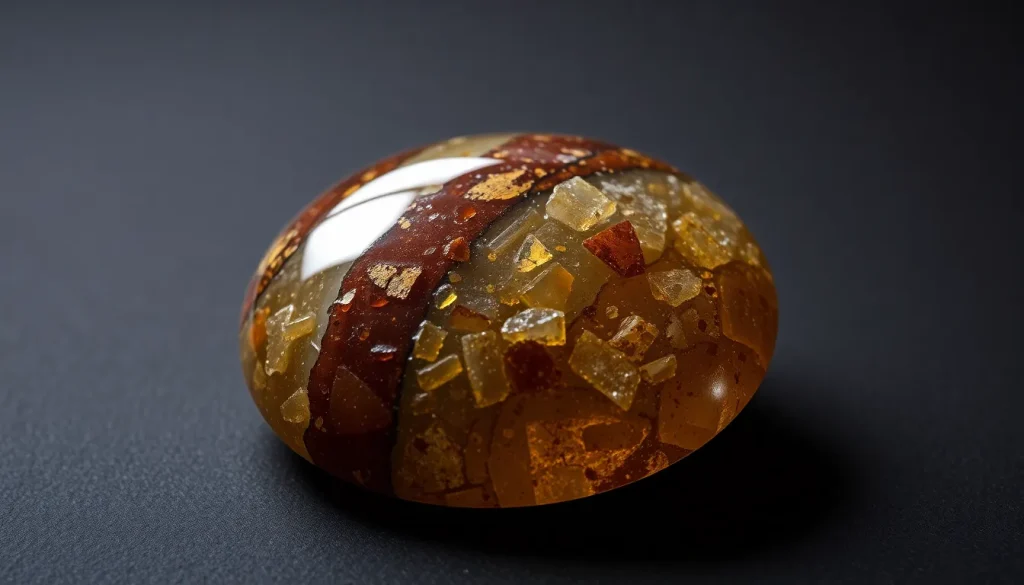
Richterite is a member of the amphibole group of silicate minerals, characterized by its sodium‑rich composition and monoclinic crystal structure. It typically occurs in earthy brown, yellow‑green, gray, or blue‑gray hues and is found in metamorphic and igneous rocks. With a Mohs hardness of 5–6 and a vitreous to silky luster, Richterite is most often fashioned into cabochons, beads, or ornamental carvings rather than faceted gemstones.
History and Origin
The mineral was first described in 1848 by the German mineralogist Friedrich August Heinrich von Miller, who named it after the Austrian geologist Ferdinand Richter, a pioneer in the study of amphiboles. Notable localities include the Kola Peninsula in Russia, the Nunavut region of Canada, Norway, Finland, and scattered occurrences in the United States (e.g., California). These deposits are typically associated with high‑pressure metamorphic environments such as blueschist facies.
Meaning and Symbolism
In traditional gemstone lore, Richterite is regarded as a grounding stone that encourages stability and perseverance. Its earthy colors are said to symbolize a connection to the natural world and the ability to stay rooted during periods of change. Collectors often view Richterite as a reminder of inner strength and resilience.
Healing and Metaphysical Properties
Crystal‑healing practitioners attribute several metaphysical qualities to Richterite. It is believed to aid in releasing emotional blockages, fostering self‑confidence, and enhancing mental clarity. Some claim that the stone supports the root chakra, helping individuals feel more secure and balanced. These ideas are part of traditional belief systems and are not intended as medical advice.
Varieties and Types
Richterite occurs in several compositional varieties, each reflecting differing ratios of iron, magnesium, and calcium:
- Iron‑rich Richterite – displays deeper brown to reddish tones.
- Magnesium‑rich Richterite – tends toward lighter yellow‑green or gray shades.
- Sodium‑dominant Richterite – often exhibits a bluish‑gray hue and higher specific gravity.
All varieties share the same basic crystal habit—prismatic to acicular crystals that may form massive aggregates.
Jewelry Uses and Care
Because of its moderate hardness and perfect cleavage on {110}, Richterite is best suited for settings that protect the stone from impact, such as bezel or halo settings. It is commonly used in:
- Cabochons for pendants and earrings.
- Beaded necklaces and bracelets.
- Artistic inlays in metalwork.
Care instructions:
- Clean with warm, soapy water and a soft brush; avoid ultrasonic cleaners.
- Dry with a lint‑free cloth; do not expose to harsh chemicals.
- Store separately from harder gemstones to prevent scratching.
Buying Guide
When selecting Richterite, consider the following factors:
- Color: Rich, uniform brown‑yellow or greenish tones are most desirable.
- Clarity: Look for minimal inclusions that do not obscure the surface.
- Cut: A well‑polished cabochon showcases the stone’s luster and subtle internal texture.
- Treatment: Natural Richterite is rarely treated; any enhancement should be disclosed.
- Certification: For high‑value pieces, request a gemological report from a reputable laboratory.
Because Richterite is not as widely marketed as other gemstones, prices can vary significantly based on locality, color intensity, and craftsmanship.
FAQ
What is Richterite good for?
Richterite is valued for its distinctive earthy colors in jewelry and as a collector's stone; traditionally it is believed to provide grounding and emotional stability.
Is Richterite rare?
Richterite is not among the most common gemstones, but quality specimens with vivid color and good polish are relatively scarce, especially from well‑known localities.
How can you tell if Richterite is real?
Authentic Richterite displays a vitreous to silky luster, perfect cleavage on {110}, and a specific gravity around 2.9–3.1. Professional gemological testing, such as refractive index measurement, confirms its identity.
What chakra is Richterite associated with?
In crystal‑healing traditions Richterite is most often linked to the Root (Muladhara) chakra, though no single standard association exists.
How should you clean Richterite?
Clean Richterite gently with warm, soapy water and a soft brush; avoid ultrasonic cleaners and harsh chemicals. Dry with a lint‑free cloth and store separately from harder stones.
Leave a Reply