
Short Answer
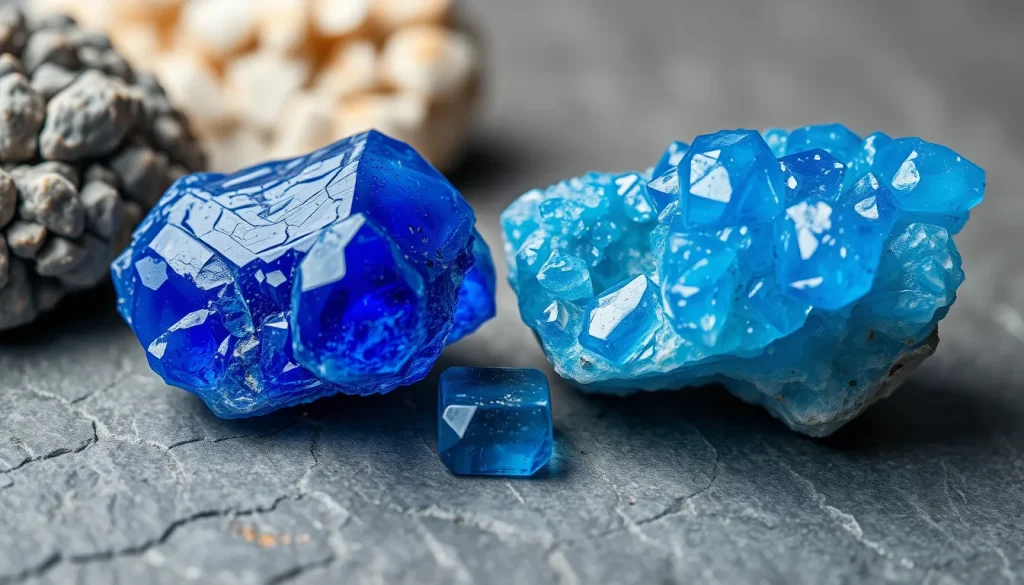
Feldspathoids represent a fascinating group of minerals that occupy a unique chemical niche in the Earth’s crust. While they share similar chemical compositions and crystal structures with the common feldspar group, they are fundamentally defined by their inability to coexist with free quartz in an igneous environment. For the gemologist, they offer a palette of striking colors and rare mineralogical properties.
What Is a Feldspathoid?
Technically, feldspathoids are tectosilicates—minerals where the silica tetrahedra are linked in a three-dimensional framework. However, unlike feldspars, feldspathoids form in silica-undersaturated environments. This means that during the cooling of magma, there was not enough silica (SiO₂) present to form quartz or the full amount of feldspar, leading to the crystallization of these alternative minerals.
Chemically, they are typically aluminosilicates containing cations such as sodium, potassium, calcium, or chlorine. Because they are chemically incompatible with quartz, the presence of a feldspathoid in a rock sample is a definitive diagnostic indicator that the rock is silica-poor.
Varieties and Related Materials
The feldspathoid group is diverse, ranging from common rock-forming minerals to highly prized collector gemstones. The most notable varieties include:

- Sodalite: Famous for its deep royal blue color, often used in jewelry and ornamental carvings.
- Nepheline: The most common feldspathoid, typically colorless or grey, primarily used in industrial ceramics.
- Leucite: Often found in volcanic rocks, typically colorless to white.
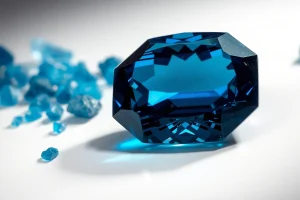
- Haüyne: A rare, vivid blue mineral often found in volcanic complexes, highly valued by mineral collectors.
- Analcime: A zeolite-like feldspathoid that often occurs as crystals in cavities.
Identification and Look-Alikes
Identifying feldspathoids requires a combination of visual inspection and chemical testing. Because many are blue, they are frequently confused with other minerals.
| Feldspathoid | Look-Alike | Key Distinguishing Feature |
|---|---|---|
| Sodalite | Lapis Lazuli | Lapis contains pyrite inclusions and calcite; Sodalite is more homogeneous. |
| Haüyne | Azurite | Haüyne has a higher hardness and different crystal habit. |
| Nepheline | Albite (Feldspar) | Nepheline does not occur with quartz; Albite often does. |
Jewelry Suitability and Care
Most feldspathoids are relatively soft compared to traditional gemstones, typically falling between 5.5 and 6.5 on the Mohs scale. This makes them unsuitable for rings meant for daily wear but excellent for pendants, earrings, and collector specimens.
Expert Tip: Due to their chemical sensitivity, avoid using ultrasonic cleaners or harsh chemicals on feldspathoids. Warm, soapy water and a soft brush are the safest methods for cleaning these minerals.
Quality and Value Factors
The value of a feldspathoid specimen is primarily driven by three factors:
- Color Saturation: In Sodalite and Haüyne, a deep, vivid blue without greyish overtones is most prized.
- Transparency: While most are opaque to translucent, rare transparent crystals command a significant premium.
- Crystal Form: Well-defined, undamaged crystals are far more valuable to collectors than tumbled or cabochon-cut stones.
FAQ
What is the main difference between a feldspathoid and a feldspar?
The primary difference is silica content. Feldspars are silica-saturated and can coexist with quartz, whereas feldspathoids are silica-undersaturated and never occur with quartz in the same igneous environment.
Is Sodalite the same as Lapis Lazuli?
No. While both are blue, Lapis Lazuli is a rock composed primarily of lazurite, calcite, and pyrite, whereas Sodalite is a single mineral species with a different chemical composition.
Are feldspathoids durable enough for jewelry?
They are moderately soft (5.5-6.5 Mohs), meaning they can be scratched by harder materials. They are best suited for earrings or pendants rather than rings.
Leave a Reply