
Short Answer
Zinc is not as common a primary element in faceted gemstones as aluminum or beryllium, yet it forms some of the most intriguing and sought-after minerals for collectors. Zinc-based minerals often occur as secondary deposits in oxidized zones of ore bodies, resulting in unique crystal habits and striking fluorescence that fascinate both scientists and lapidaries.
What Is a Zinc-Based Mineral?
Zinc-based minerals are chemical compounds where zinc (Zn) is a primary constituent. In gemology, these typically manifest as silicates, carbonates, or arsenates. While many zinc minerals are industrial ores (such as sphalerite), a select few possess the hardness, clarity, and color required to be classified as gemstones or high-value mineral specimens.
The most notable among these is Willemite, a zinc silicate, and Hemimorphite, a zinc silicate hydroxide. These minerals are characterized by their specific chemical bonds which often allow for the substitution of other elements, leading to a wide spectrum of colors and optical phenomena.
Varieties and Related Materials
Zinc minerals vary significantly in their chemical composition and physical appearance. The following are the most prominent varieties encountered in the gemstone market:

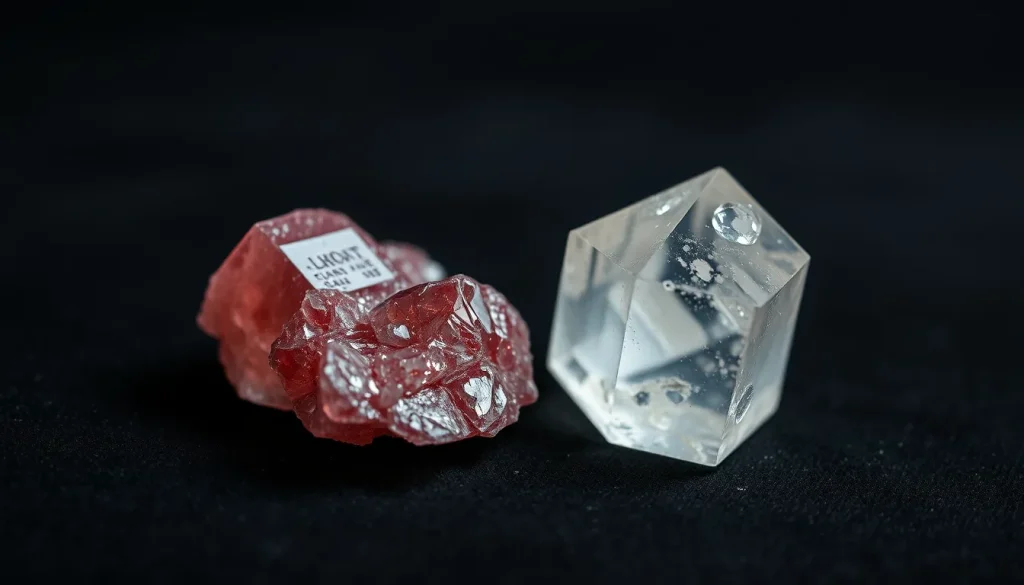
- Willemite: Known for its exceptional fluorescence. It can appear colorless, white, or red. The red variety is particularly prized by collectors.
- Hemimorphite: Often found as colorless to white crystals. Its name derives from the “half-form” of its crystals, which terminate differently on each end.
- Smithsonite: A zinc carbonate that often forms botryoidal (grape-like) masses. While usually opaque, some translucent varieties are cut into cabochons.
- Sphalerite: While primarily an ore, high-quality crystals are collected for their extreme dispersion (fire), which exceeds that of diamond.
Identification and Look-Alikes
Identifying zinc-based gemstones requires a combination of physical testing and optical analysis. Because many of these minerals are rare, they are often mistaken for more common species.
| Zinc Mineral | Look-Alike | Key Distinguishing Feature |
|---|---|---|
| Willemite (Red) | Red Beryl / Spinel | Intense green or red fluorescence under UV light. |
| Hemimorphite | Quartz / Calcite | Distinctive asymmetric crystal termination. |
| Smithsonite | Chalcedony / Magnesite | Higher specific gravity and distinct carbonate chemistry. |
Jewelry Suitability and Care
Most zinc-based minerals are relatively soft compared to the “big three” gemstones, making them unsuitable for daily-wear jewelry such as engagement rings.
Gemologist’s Tip: Due to their lower Mohs hardness (typically between 3.5 and 5), zinc minerals should be set in protective bezel settings rather than prongs to prevent chipping and abrasion.
Care instructions for these minerals include:
- Avoid Chemicals: Zinc carbonates like Smithsonite can react to acidic cleaners. Use only warm, soapy water.
- Avoid Ultrasonic Cleaners: Many of these minerals have internal fractures or inclusions that can expand and shatter under ultrasonic vibration.
- Storage: Store separately from harder gemstones like diamonds or sapphires to avoid surface scratching.
Quality and Value Factors
The value of zinc-based gemstones is driven more by rarity and specimen quality than by traditional commercial grading scales. The primary factors include:
- Fluorescence: For Willemite, the intensity and color of the reaction to short-wave UV light are the primary value drivers.
- Crystal Habit: Well-formed, undamaged crystals are significantly more valuable than faceted stones.
- Transparency: Since many zinc minerals are opaque or translucent, high-clarity, transparent crystals command a premium.
- Color Saturation: Rare colors, such as the deep reds in certain zinc silicates, increase market demand among collectors.
FAQ
Are zinc-based gemstones suitable for rings?
Generally, no. Most are too soft (Mohs 3.5-5) for daily wear and are better suited for collector specimens or protective settings.
What makes Willemite special to collectors?
Willemite is highly prized for its intense fluorescence under ultraviolet light, often glowing a vivid neon green.
How can I tell Hemimorphite apart from Quartz?
Hemimorphite crystals exhibit a unique 'half-form' termination where the two ends of the crystal are different, unlike the symmetrical points of quartz.
Leave a Reply