
Short Answer
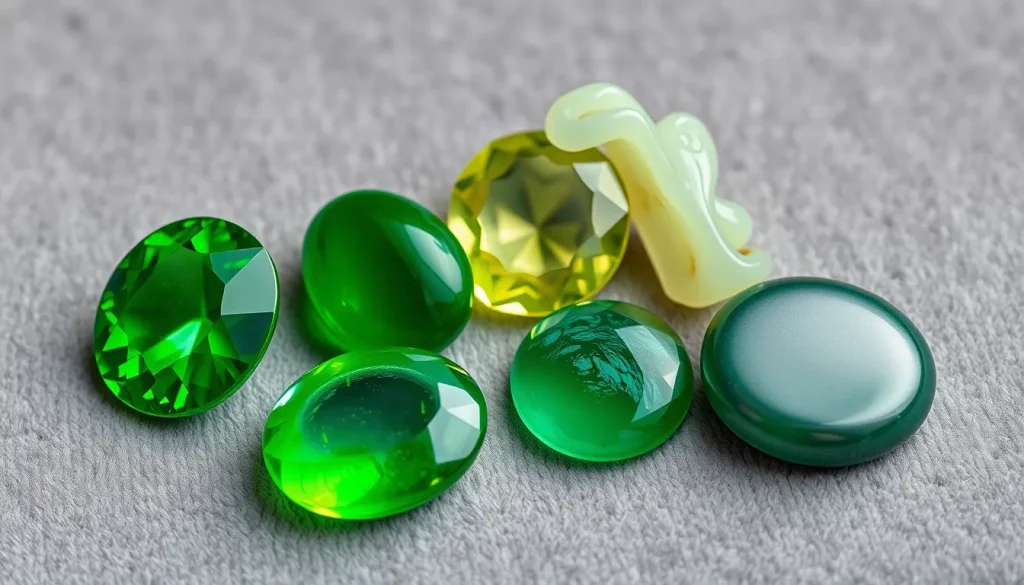
The color green in the mineral kingdom is one of the most diverse and sought-after, spanning a spectrum from the pale, lime-yellow of peridot to the deep, saturated forest green of a fine emerald. This chromatic variety is the result of various chemical trace elements—most notably chromium, vanadium, and iron—interacting within different crystal structures. For the collector and the gemologist, green gemstones represent not only aesthetic beauty but a complex study in mineralogy and geological history.
Comparison Table
| Gemstone | Mineral Family | Hardness (Mohs) | Primary Coloring Agent | Typical Transparency |
|---|---|---|---|---|
| Emerald | Beryl | 7.5 – 8.0 | Chromium / Vanadium | Transparent |
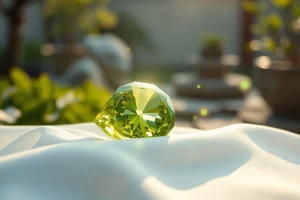
| Peridot | Olivine | 6.5 – 7.0 | Iron | Transparent |
| Jadeite | Pyroxene | 6.5 – 7.0 | Chromium / Iron | Translucent to Opaque |
| Tsavorite | Garnet | 7.0 – 7.5 | Vanadium | Transparent |
| Bloodstone | Quartz (Chalcedony) | 6.5 – 7.0 | Iron Oxides | Opaque |
Shared Features
Despite their diverse chemical compositions, most green gemstones share a common appeal rooted in their association with nature, renewal, and vitality. From a gemological perspective, many of these stones are allochromatic, meaning their color is derived from impurities rather than the pure chemical formula of the mineral. For instance, pure beryl is colorless; it only becomes an emerald when chromium or vanadium is present in the crystal lattice.
Important Differences
The primary distinctions between green gemstones lie in their crystal systems and durability. Emeralds belong to the hexagonal system and are known for their jardin (internal inclusions), which are often used to distinguish natural stones from synthetics. In contrast, peridot is an idiochromatic gem, meaning its green color is an inherent part of its chemical makeup (iron), resulting in a distinct yellowish-green hue that is rarely found in emeralds.
Another critical difference is transparency. While emeralds and tsavorites are prized for their transparency and brilliance, stones like jade and bloodstone are valued for their opacity and saturation. Bloodstone, specifically, is a variety of chalcedony characterized by dark green jasper with splashes of red hematite, making it visually distinct from any faceted gemstone.

Suitability by Use
When selecting a green gemstone for jewelry, hardness and toughness are the deciding factors:
- High-Wear Jewelry (Engagement Rings): Tsavorite garnet and emerald are preferred, though emeralds require more care due to their tendency to be heavily included and fractured.
- Statement Pieces (Necklaces/Earrings): Peridot is suitable, provided the wearer is mindful of its slightly lower Mohs hardness.
- Carvings and Cabochons: Jadeite and bloodstone are ideal due to their toughness and opaque nature, making them resistant to chipping during the carving process.
Identification Limits
Distinguishing between high-quality green gemstones can be challenging without professional equipment. For example, a deep green tourmaline can easily be mistaken for an emerald or a tsavorite garnet to the naked eye. Gemologists rely on Refractive Index (RI) measurements and Specific Gravity tests to provide a definitive identification. Furthermore, the presence of oil treatments in emeralds can mask inclusions, necessitating the use of a microscope to detect the “oil trails” often found in commercial-grade stones.
Related Profiles
To deepen your understanding of green minerals, it is recommended to explore detailed profiles on the Beryl family (to understand the relationship between emerald and aquamarine) and the Garnet group (to see how tsavorite differs from the more common pyrope or almandine garnets).
FAQ
What is the difference between emerald and peridot?
Emeralds are a variety of beryl and typically have a deep, saturated green color caused by chromium. Peridots are olivine and have a distinct yellowish-green hue caused by iron.
Is bloodstone a crystal?
Bloodstone is a cryptocrystalline variety of quartz (chalcedony), meaning its crystals are too small to be seen without a microscope.
Why are emeralds often oiled?
Emeralds naturally contain many fissures. Cedar oil or synthetic resins are used to fill these gaps, improving the stone's clarity and stability.
Leave a Reply