
Short Answer
Definition
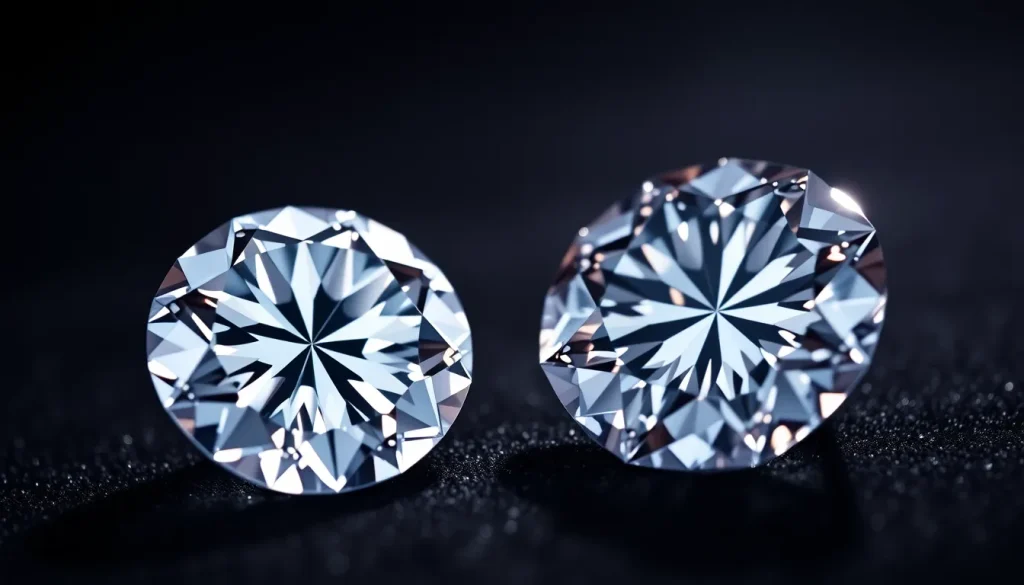
In gemology, adamantine luster refers to a specific quality of light reflection from the surface of a mineral that is exceptionally brilliant and sparkling. The term is derived from the Greek word adamas, meaning ‘invincible’ or ‘untameable,’ which is also the root of the word ‘diamond.’ It represents the pinnacle of luster intensity, where the surface reflects light with a sharp, mirror-like intensity that creates a distinct ‘glow’ or ‘fire’ even before the light enters the stone to be refracted.
Plain-English Explanation
Think of luster as the way light ‘bounces’ off the very top skin of a gemstone. Some stones look waxy (like chalcedony), some look glassy (like quartz), and some look metallic (like pyrite). Adamantine luster is the ‘super-glassy’ version. It is the intense, piercing shine that makes a diamond look like it is emitting its own light. When a gem has adamantine luster, it doesn’t just reflect light; it seems to snap it back at the viewer with incredible sharpness, giving the stone a crisp, high-contrast appearance.
Expert Tip: Do not confuse luster with brilliance. Luster is the light reflecting off the surface, while brilliance is the light reflecting from the internal facets of a polished stone. Adamantine luster enhances the overall brilliance of a gemstone.
Example
The most iconic example of adamantine luster is the Diamond. Because diamonds have a very high refractive index, the interface between the air and the stone’s surface creates a powerful reflection. However, diamonds are not the only minerals with this quality. Other notable examples include:
- Zircon: Often exhibits an even more ‘fiery’ adamantine luster than diamond.
- Moissanite: Known for an extremely high refractive index that produces a vivid adamantine glow.
- Rutile: In its crystalline form, it shows a strong adamantine to sub-adamantine luster.
To illustrate the difference, consider the following comparison of common luster types:

| Luster Type | Visual Characteristic | Common Example | |
|---|---|---|---|
| Adamantine | Brilliant, diamond-like, sharp | Diamond, Zircon | |
| Vitreous | Glassy, smooth | Quartz, Topaz | |
| Pearly | Iridescent, soft glow | Pearl, Moonstone | |
| Greasy | Oily, duller reflection | Nephrite Jade |
Why It Matters
Understanding adamantine luster is critical for both professional gemologists and collectors for several reasons:
- Identification: Luster is a primary diagnostic tool. If a stone is claimed to be a diamond but exhibits a vitreous (glassy) luster, it is likely a stimulant like cubic zirconia or glass.
- Value Determination: Gemstones with adamantine luster are generally more prized because they possess a visual ‘life’ and intensity that makes them more attractive for jewelry.
- Authentication: By observing how light interacts with the surface, experts can narrow down the mineral family of an unknown specimen. For instance, a stone with a high refractive index will almost always lean toward an adamantine or sub-adamantine luster.
FAQ
Is every sparkling stone adamantine?
No. Many stones sparkle due to their cut (brilliance), but adamantine luster refers specifically to the intense, diamond-like reflection from the surface of the material itself.
Can a stone's luster change over time?
The inherent luster of a mineral does not change, but the surface can become scratched, pitted, or coated in oils, which makes the luster appear duller (e.g., a diamond becoming 'greasy' due to skin oils).
What is the difference between adamantine and vitreous luster?
Vitreous luster looks like common glass. Adamantine luster is significantly more intense and 'sharper,' characteristic of materials with a much higher refractive index.
Leave a Reply