
Short Answer
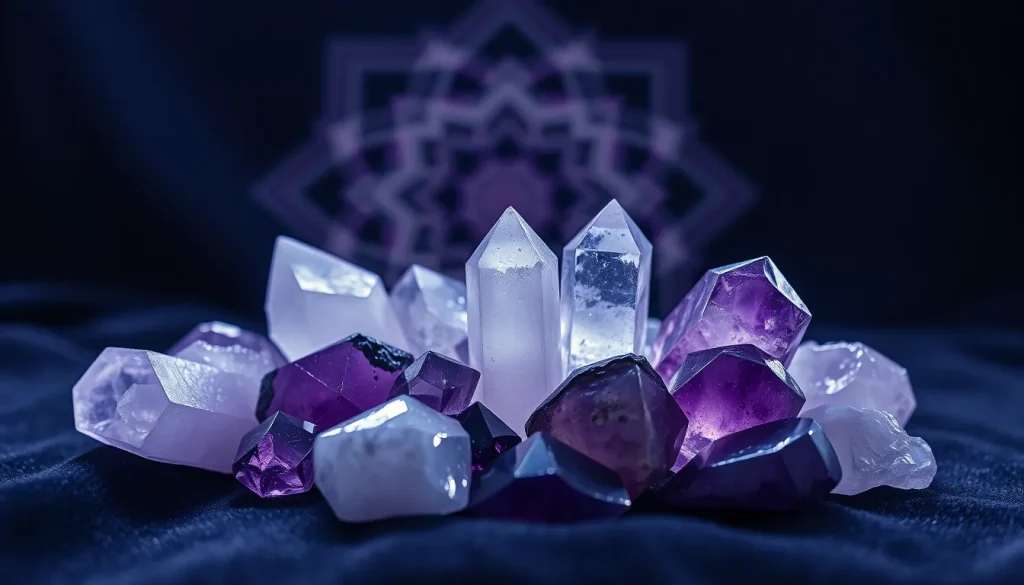
In the intersection of mineralogy and metaphysical study, certain gemstones are traditionally associated with the upper energy centers of the body: the Third-Eye (Ajna) and the Crown (Sahasrara). While gemology focuses on the physical properties of these crystals, the study of their symbolic application emphasizes their ability to facilitate intuition, mental clarity, and spiritual transcendence.
Documented Context
The association between specific gemstone colors and energy centers is rooted in ancient Vedic traditions and later adopted by various esoteric schools of thought. The Third-Eye chakra, located between the eyebrows, is linked to perception beyond ordinary sight, while the Crown chakra, at the top of the head, represents the connection to the divine or universal consciousness. In gemological terms, stones that resonate with these centers typically fall within the indigo, violet, and colorless spectra of the visible light range.
Place and Period
The use of stones for intuition dates back to ancient Mesopotamia and Egypt, where Lapis Lazuli was prized not only for its beauty but as a stone of truth and celestial communication. In ancient India, the application of crystals in meditation practices became formalized, aligning specific mineral frequencies with the chakra system. During the Victorian era, the resurgence of occultism in the West further integrated these eastern concepts with Western mineralogy, leading to the modern classification of ‘intuition stones’.
Historical Uses
Historically, the gemstones used for these upper centers were often reserved for royalty, priests, and spiritual leaders.

- Lapis Lazuli: Used in Egyptian amulets to protect the wearer and enhance psychic abilities.
- Amethyst: Historically worn by Greek officials to maintain a clear mind and avoid intoxication (the word comes from amethystos, meaning ‘not drunk’).
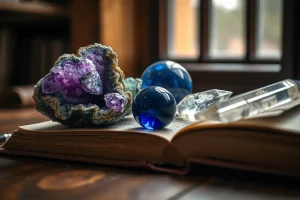
- Clear Quartz: Utilized in various cultures as a ‘master healer’ and a tool for amplifying intent during divination.
Later Interpretations
As the field of crystallography evolved, the focus shifted toward the structural properties of these stones. For example, the hexagonal crystal system of Quartz is often cited by modern practitioners as a reason for its perceived ability to focus and direct energy. The deep blue of Lapis Lazuli, caused by the presence of sulfur and pyrite, is interpreted as a visual bridge to the night sky, symbolizing the infinite nature of the mind.
Modern Associations
Today, gemstones for the Crown and Third-Eye are categorized by their perceived vibrational frequency. The following table outlines the most prominent stones used for these purposes:
| Gemstone | Associated Chakra | Primary Attribute | Gemological Note |
|---|---|---|---|
| Amethyst | Crown / Third-Eye | Spiritual Clarity | Variety of Quartz |
| Lapis Lazuli | Third-Eye | Intuition & Truth | Rock composed of Lazurite |
| Clear Quartz | Crown | Universal Connection | SiO2 Composition |
| Sodalite | Third-Eye | Logic & Perception | Tectosilicate |
| Celestite | Crown | Divine Peace | Strontium Sulfate |
Expert Tip: When selecting stones for intuition, prioritize transparency and saturation. A high-clarity Amethyst or a deeply saturated Lapis Lazuli is traditionally believed to provide a more potent ‘channel’ for spiritual energy than opaque or pale varieties.
Source Limitations
It is important to note that the association between gemstones and chakras is based on metaphysical tradition and symbolic belief rather than empirical geological data. While the physical properties (hardness, refractive index, chemistry) of these stones are scientifically verifiable, their effects on human intuition are subjective and not recognized by medical science. Collectors should distinguish between the mineralogical value of a stone and its metaphysical attribution.
FAQ
Can one stone work for both the Third-Eye and Crown chakras?
Yes, Amethyst is the most prominent example, as its violet hue bridges the gap between the indigo of the Third-Eye and the white/violet of the Crown.
How do I tell if a Lapis Lazuli is natural or synthetic?
Natural Lapis contains inclusions of pyrite (gold flecks) and calcite (white veins). Perfectly uniform blue stones are often dyed howlite or synthetic.
Is clear quartz necessary for Crown chakra work?
While not strictly necessary, Clear Quartz is considered the gold standard for the Crown due to its transparency and ability to amplify other stones.
Leave a Reply