
Short Answer
Overview
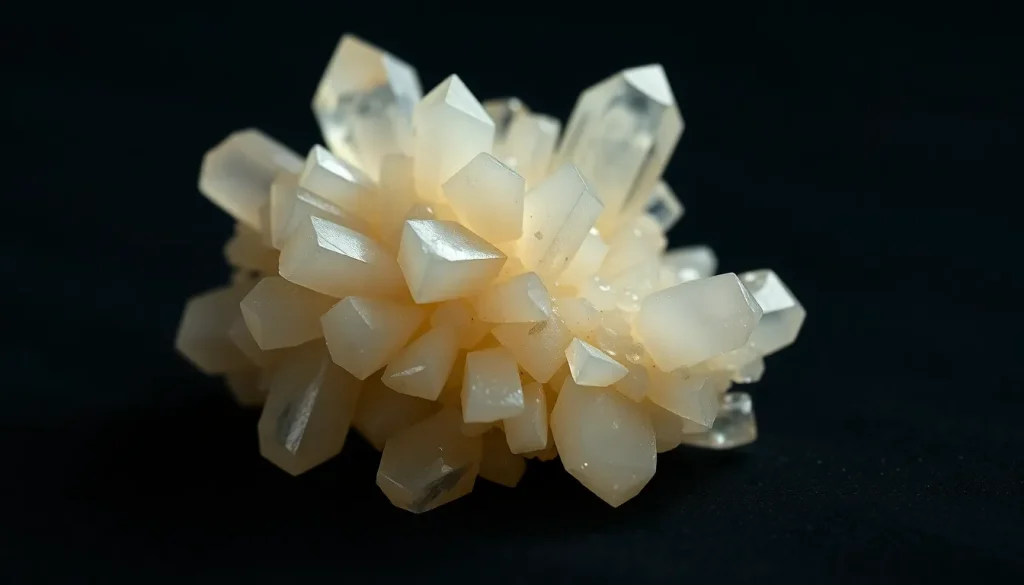
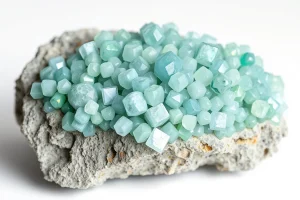
Legrandite is a relatively rare hydrated arsenate mineral composed of calcium, zinc, and arsenate groups. It typically forms as tabular to prismatic crystals that display a colorless to pale yellow hue with a pearly to vitreous luster. Although not commonly used in mainstream jewelry, legrandite attracts collectors and niche designers because of its delicate transparency and distinctive chemical composition.
History and Origin
The mineral was first described in 1932 and named after the French mineralogist Paul Legrand. Early specimens were reported from the famous Tsumeb Mine in Namibia, a locality renowned for a diversity of secondary arsenate minerals. Subsequent finds have been documented in a few other arsenic‑rich environments, such as the Carlin Trend in Nevada (USA) and the Lengenbach Quarry in Switzerland. These occurrences are typically associated with the oxidation zones of zinc‑bearing sulfide deposits, where legrandite precipitates as a secondary mineral during weathering.
Meaning and Symbolism
In traditional gemstone folklore, legrandite is associated with clarity of thought and the gentle unveiling of hidden truths. Its subtle coloration is thought to encourage calm reflection and the ability to see situations without the distortion of strong emotions. Because the stone is relatively uncommon, it is sometimes regarded as a symbol of individuality and the value of rare, understated beauty.
Healing and Metaphysical Properties
Crystal‑healing practitioners attribute legrandite with properties that support mental clarity, emotional balance, and the release of old patterns. It is believed to aid the throat and third‑eye chakras, promoting honest communication and intuitive insight. These claims are based on traditional beliefs and are not medical facts. Legrandite is sometimes used in meditation to foster a sense of inner peace and to assist in the gentle clearing of mental fog.
Varieties and Types
Legrandite does not have widely recognized varieties, but subtle differences in hue and crystal habit can be observed among specimens from different localities. For example, crystals from the Tsumeb Mine often show a faint yellow tint, whereas those from the Carlin Trend may appear nearly colorless. The degree of hydration can also vary, influencing the stone’s transparency and luster.
Jewelry Uses and Care
Because legrandite ranks only 3.5–4 on the Mohs hardness scale, it is considered relatively soft and prone to scratching. Consequently, it is most suitable for pendants, earrings, or brooch settings where the stone is protected from abrasion. The mineral’s perfect cleavage on {010} means that sudden impacts can cause it to split.
Cleaning: Use a soft, lint‑free cloth and mild lukewarm soapy water. Avoid ultrasonic cleaners, steam, or harsh chemicals, as they can damage the surface and alter the hydration state.
Storage: Keep legrandite pieces in a padded compartment separate from harder gemstones such as quartz or diamonds. A low‑humidity environment helps prevent dehydration, which could affect its translucency.
Buying Guide
When purchasing legrandite, consider the following factors:
- Color and Clarity: Look for a uniform, pale yellow to colorless tone without extensive cloudiness. Inclusions are common but should not obscure the stone’s overall transparency.
- Cut and Faceting: Well‑cut specimens display the natural tabular habit and maximize light reflection. Over‑faceting can hide the characteristic luster.
- Origin Documentation: Reputable dealers will provide provenance, especially for specimens from notable localities like Tsumeb.
- Treatment Disclosure: Legrandite is generally untreated, but any artificial stabilization or coating should be disclosed.
- Certification: While formal gem‑ological certificates are rare for legrandite, a qualified mineralogist’s identification report adds confidence.
Because the market for legrandite is niche, prices can vary widely based on size, clarity, and origin. Collectors often pay a premium for well‑formed, museum‑grade crystals.
FAQ
What is legrandite good for?
Legrandite is prized by collectors for its rarity and delicate appearance, and it is occasionally used in artisanal jewelry. Traditional beliefs attribute it with mental clarity and emotional balance, but these are not medically proven.
Is legrandite rare?
Yes, legrandite is considered a rare mineral. High‑quality, well‑formed crystals are especially scarce and are primarily found in a few arsenic‑rich localities such as Tsumeb (Namibia) and the Carlin Trend (Nevada).
How can you tell if legrandite is real?
Real legrandite is typically colorless to pale yellow, has a pearly luster, and shows a perfect cleavage on {010}. Its hardness (3.5‑4) and specific gravity (≈3.4) differ from many imitations. Professional gemological testing, such as X‑ray diffraction or spectroscopic analysis, provides definitive identification.
What chakra is legrandite associated with?
In crystal‑healing traditions, legrandite is linked to the throat and third‑eye chakras, supporting clear communication and intuitive insight.
How should you clean legrandite?
Clean legrandite gently with lukewarm soapy water and a soft cloth. Avoid ultrasonic cleaners, steam, harsh chemicals, and sudden temperature changes, as the stone is soft (Mohs 3.5‑4) and can lose water from its crystal structure.
Leave a Reply