
Short Answer
Overview
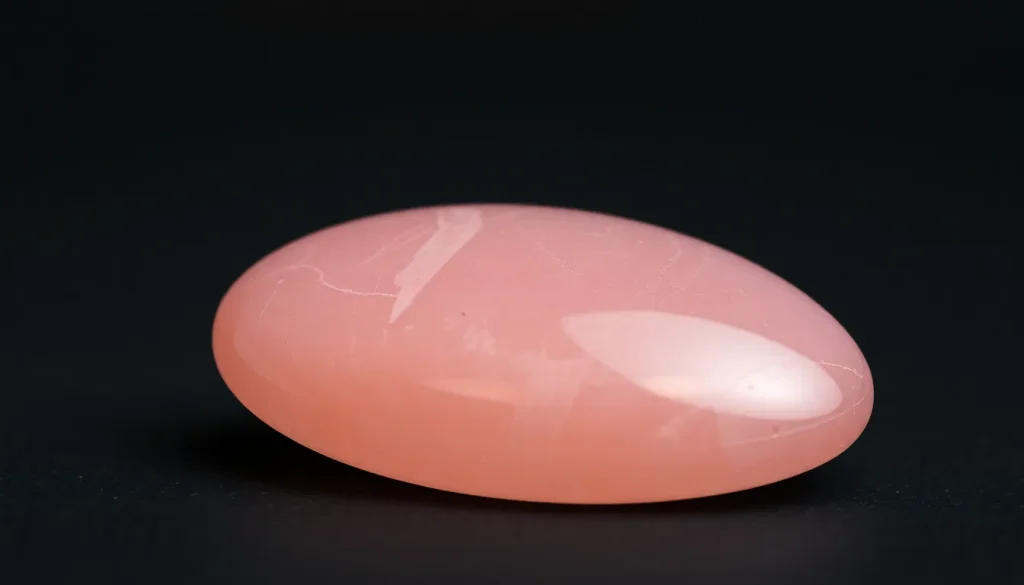
Kutnohorite is a carbonate mineral with the chemical formula CaMn(CO3)2. It belongs to the dolomite group and crystallizes in the trigonal (rhombohedral) system. The stone is most recognized for its soft pink to rose coloration, which results from the presence of manganese ions substituting for magnesium in the crystal lattice.
Typical physical properties include a Mohs hardness of 3.5–4, a specific gravity of 3.12–3.17, and a vitreous luster. It is transparent to translucent and displays perfect rhombohedral cleavage.
History and Origin
The mineral was first described in 1847 from specimens collected near the historic silver‑mining town of Kutná Hora in Bohemia, now the Czech Republic. The name directly references this locality. Since its discovery, kutnohorite has been reported from several carbonate‑rich deposits worldwide, often occurring alongside dolomite, calcite, and other manganese‑bearing minerals.
Meaning and Symbolism
In traditional gemstone lore, the gentle pink of kutnohorite is associated with love, compassion, and emotional balance. It is thought to encourage openness in relationships and to support the heart’s capacity for forgiveness. Because the stone is relatively rare in the gemstone market, it is sometimes regarded as a symbol of uniqueness and personal authenticity.
Healing and Metaphysical Properties
Crystal‑healing practitioners attribute the following properties to kutnohorite, describing them as beliefs rather than medical facts:
- Supports emotional healing and helps release past hurts.
- Promotes a calm, nurturing energy that aligns with the heart chakra.
- Assists in balancing hormonal cycles and soothing menstrual discomfort.
- Encourages self‑acceptance and the expression of one’s true self.
These claims are based on longstanding metaphysical traditions and are not intended as health advice.
Varieties and Types
While kutnohorite is a single mineral species, its appearance can vary:
- Pink/Salt‑Rose: The most common commercial variety, ranging from pale blush to deep rose.
- Brownish‑Red: Specimens with higher manganese content may display a richer, earthy hue.
- Transparent Crystals: Well‑formed rhombohedral crystals are prized by collectors for their clarity.
Occasionally, the stone is marketed under trade names such as “Manganese Calcite” or “Pink Dolomite,” though these names can also refer to related carbonate minerals.
Jewelry Uses and Care
Because of its relatively low hardness, kutnohorite is best suited for pieces that experience minimal abrasion, such as pendants, earrings, and brooches set in protective settings. Cabochon cuts are popular, showcasing the stone’s color without exposing vulnerable edges.
Care recommendations:
- Avoid exposure to harsh chemicals, ultrasonic cleaners, or steam cleaning.
- Clean gently with warm soapy water and a soft brush.
- Store separately from harder gemstones to prevent scratches.
- Protect from prolonged sunlight, which can cause fading over many years.
Buying Guide
When purchasing kutnohorite, consider the following factors:
- Color Saturation: Deep, even pink hues are most desirable; uneven or overly brown tones may be less valuable.
- Clarity: Inclusions are common; however, large cracks or fractures should be avoided.
- Cut and Finish: A well‑polished cabochon enhances color depth and reduces the risk of chipping.
- Treatment Disclosure: Natural kutnohorite is rare; any dyeing or heat treatment should be fully disclosed by the seller.
- Certification: For high‑value pieces, request a gemological report from a reputable laboratory.
Price varies widely based on color intensity, size, and origin, ranging from modest for small beads to premium for large, flawless cabochons.
FAQ
What is kutnohorite good for?
Kutnohorite is valued for its soft pink hue in jewelry and as a collector’s mineral. Traditionally, it is believed to promote emotional healing and heart‑centered balance, though these are metaphysical concepts, not medical facts.
Is kutnohorite rare?
High‑quality pink kutnohorite is relatively uncommon because the mineral forms in limited localities and large, clear crystals are scarce. However, lower‑grade material is more widely available.
How can you tell if kutnohorite is real?
Real kutnohorite exhibits a vitreous luster, perfect rhombohedral cleavage, and a Mohs hardness of 3.5–4. It should feel cool to the touch and display a white streak. Professional testing, such as refractive index measurement or X‑ray diffraction, confirms authenticity.
What chakra is kutnohorite associated with?
In crystal‑healing traditions, kutnohorite is most often linked to the Heart (Anahata) chakra, supporting love and emotional openness.
How should you clean kutnohorite?
Clean gently with warm, soapy water and a soft brush. Avoid ultrasonic cleaners, steam, harsh chemicals, and prolonged sunlight. Store separately from harder stones to prevent scratches.
Leave a Reply