
Short Answer
Overview
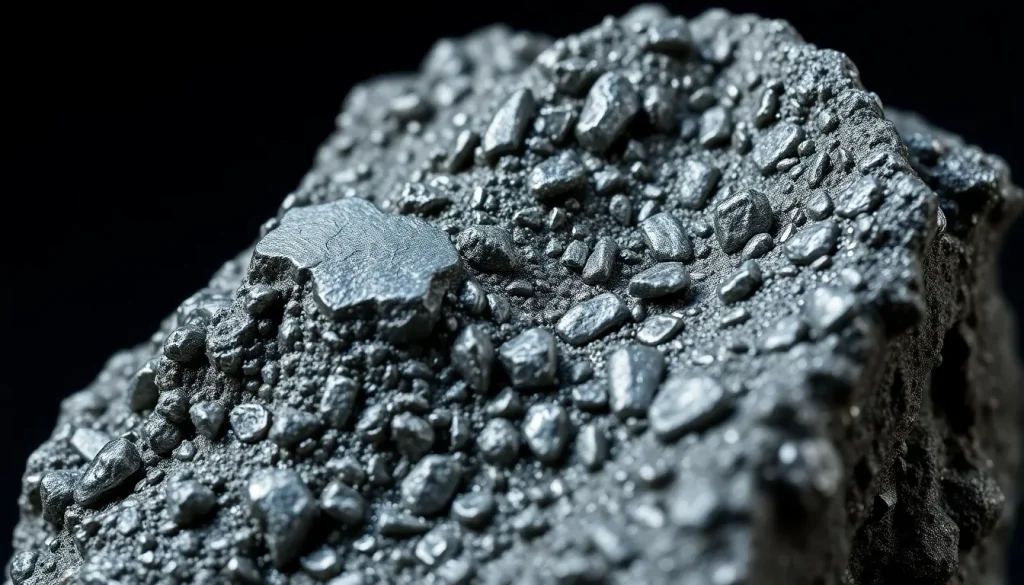
Marcasite is an iron sulfide mineral with the chemical formula FeS₂. Although it shares composition with pyrite, marcasite crystallises in the orthorhombic system, giving it a distinct, often tabular or prismatic habit. Its metallic luster and steel‑gray to silver appearance make it a popular ornamental stone, especially in vintage and Art Deco jewelry.
History and Origin
The name “marcasite” derives from the ancient Greek word marcasitos, meaning “shining stone.” Historically, it was mined in Europe—particularly in Germany, Spain, and the United Kingdom—where it was used as a decorative inlay and as a cheap imitation of more valuable precious metals. During the 18th and 19th centuries, marcasite became a hallmark of British and American costume jewelry, often set in intricate lattice patterns. Modern mining still occurs in Canada, the United States (Colorado), and Russia, though the stone is primarily valued for its aesthetic rather than its rarity.
Meaning and Symbolism
Traditional folklore attributes marcasite with qualities of protection and resilience. Its metallic sheen is said to reflect inner strength, while its tendency to tarnish over time is interpreted as a reminder of impermanence. In some cultures marcasite is considered a talisman against negativity and a symbol of endurance.
Healing and Metaphysical Properties
Within crystal‑healing circles, marcasite is believed to ground the wearer, enhancing stability and perseverance. Practitioners claim it can aid in overcoming fear and promoting confidence in decision‑making. These attributes are described as traditional beliefs and are not supported by medical evidence.
Varieties and Types
Marcasite occurs naturally in several forms:
- Tabular marcasite – flat, plate‑like crystals often used in jewelry settings.
- Prismatic marcasite – elongated, needle‑like crystals that may be cut into cabochons.
- Artificial or synthetic marcasite – produced for decorative purposes; visually similar but may differ in purity.
Because marcasite and pyrite share the same chemical composition, they are sometimes confused. The key distinction lies in crystal structure: marcasite is orthorhombic, whereas pyrite is isometric (cubic).
Jewelry Uses and Care
Marcasite’s brilliance and affordability made it a staple in Victorian and Edwardian costume jewelry. It is commonly set in:
- Bezel or channel settings that protect the brittle crystals.
- Granulated “marcasite work” where tiny pieces are set closely to create a sparkling surface.
Despite its metallic luster, marcasite is relatively soft (Mohs 6–6.5) and exhibits perfect cleavage, making it susceptible to chipping. Care recommendations include:
- Clean with a soft, lint‑free cloth; avoid abrasive cleaners.
- Use mild soap and warm water for deeper cleaning, then dry thoroughly.
- Store separately from harder gemstones to prevent scratches.
Buying Guide
When purchasing marcasite, consider the following factors:
- Clarity and surface quality – Look for specimens without excessive tarnish or surface cracks.
- Cut and setting – Well‑cut pieces maximize metallic sparkle and reduce stress points.
- Origin – Reputable sources from known localities (e.g., Germany, Spain) often indicate higher quality.
- Treatment disclosure – Ensure any polishing, coating, or synthetic enhancement is disclosed.
Because marcasite is not classified as a precious gemstone, prices are modest, but high‑quality antique pieces can command premium values due to craftsmanship and provenance. For assurance, request a gem‑ological report or have the piece examined by a qualified jeweller.
FAQ
What is Marcasite good for?
Marcasite is valued for its metallic sparkle in vintage jewelry and decorative inlays. Traditionally, it is believed to provide protection and grounding, though these are metaphysical claims, not scientific facts.
Is Marcasite rare?
Marcasite is relatively common in sulfide deposits, but high‑quality, untarnished specimens suitable for fine jewelry are less abundant. Antique pieces with intricate marcasite work can be rare and valuable.
How can you tell if Marcasite is real?
Real marcasite exhibits a metallic luster, steel‑gray color, and a greenish‑black streak. It is brittle with perfect cleavage. Professional gemologists can confirm authenticity using hardness testing, microscopic examination, and possibly X‑ray diffraction.
What chakra is Marcasite associated with?
In crystal‑healing traditions, marcasite is sometimes linked to the Root chakra for grounding, though there is no universally accepted chakra association.
How should you clean Marcasite?
Clean marcasite gently with a soft, lint‑free cloth. For deeper cleaning, use mild soap and warm water, then dry thoroughly. Avoid abrasive cleaners, ultrasonic baths, and harsh chemicals, as the stone can chip or tarnish.
Leave a Reply