
Short Answer
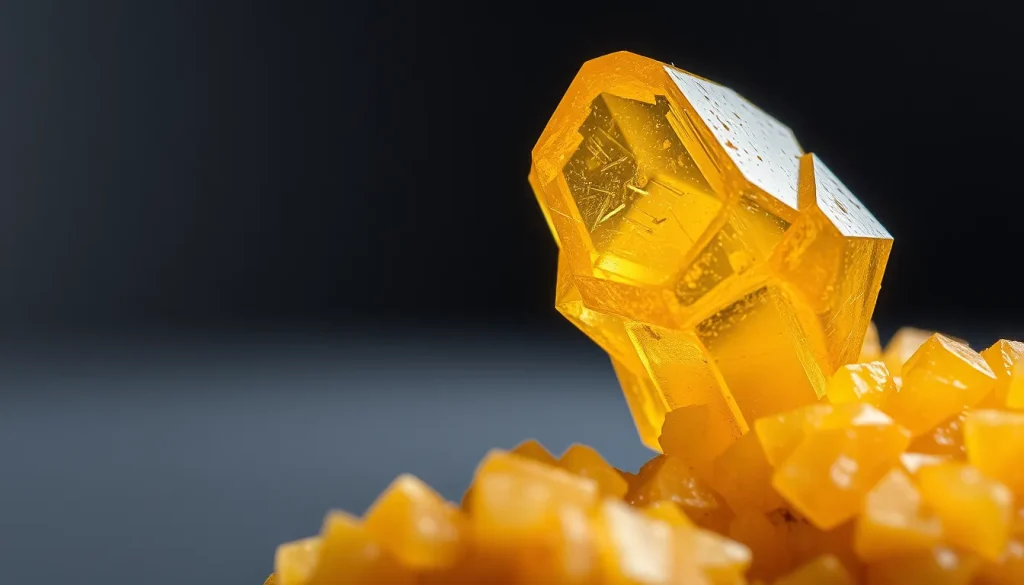
Wurtzite is a rare and visually striking mineral that occupies a unique niche in the world of mineralogy and gemstone collecting. While not commonly found in mainstream jewelry, its crystalline beauty and chemical composition make it a subject of intense interest for specialists and collectors of rare earth minerals.
What Is Wurtzite?
Wurtzite is a mineral composed of zinc sulfide (ZnS). It is one of two primary polymorphs of zinc sulfide, the other being Sphalerite. The term “polymorph” refers to minerals that share the same chemical formula but possess different crystal structures. Wurtzite crystallizes in the hexagonal system, which often results in distinct, elongated crystals or granular aggregates.
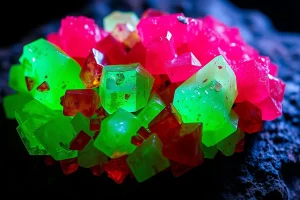
In nature, Wurtzite typically appears in colors ranging from yellow and orange to deep red or even colorless. Its rarity in gem-quality crystals makes it a prized specimen for mineral museums and high-end collectors rather than a standard faceted gemstone.
Varieties and Related Materials
Understanding Wurtzite requires a look at its chemical “cousins” and polymorphs. The most significant relationships are as follows:
- Sphalerite: The cubic polymorph of ZnS. While Sphalerite is more common and often more colorful, Wurtzite is distinguished by its hexagonal symmetry.
- Zincite: Often confused with Wurtzite due to the similar color palette (bright oranges and reds), Zincite is actually zinc oxide (ZnO). While Wurtzite is a sulfide, Zincite is an oxide.
Identification and Look-Alikes
Because of its vibrant yellow to red hues, Wurtzite can be easily mistaken for several other minerals. Gemologists use specific tests to differentiate them:
| Feature | Wurtzite | Zincite | Sphalerite |
|---|---|---|---|
| Chemical Formula | ZnS (Sulfide) | ZnO (Oxide) | ZnS (Sulfide) |
| Crystal System | Hexagonal | Hexagonal | Cubic |
| Hardness (Mohs) | 2.0 – 2.5 | 5.5 – 6.0 | 3.5 – 4.0 |
Expert Tip: The most immediate way to distinguish Wurtzite from Zincite is through hardness. Wurtzite is significantly softer and can be scratched by a copper penny, whereas Zincite is much harder and more durable.
Jewelry Suitability and Care
From a professional gemological standpoint, Wurtzite is not recommended for traditional jewelry. Its extreme softness (Mohs 2.0-2.5) means it is highly susceptible to scratching, abrasion, and structural failure if worn in a ring or pendant.
If a collector insists on mounting a Wurtzite specimen, the following precautions are necessary:
- Setting: Use a bezel setting that completely surrounds the edges of the stone to prevent chipping.
- Cleaning: Avoid ultrasonic cleaners or steam. Use only a soft, dry microfiber cloth.
- Storage: Store in a separate, padded compartment to avoid contact with harder gemstones like quartz or sapphires.
Symbolism and Modern Beliefs
While Wurtzite lacks a deep historical record in ancient lapidaries, modern metaphysical practitioners associate it with the Solar Plexus Chakra. It is believed to aid in the manifestation of will and the clearing of mental fog. In these circles, it is often viewed as a stone of “structural alignment,” mirroring its precise hexagonal atomic arrangement.
FAQ
Is Wurtzite the same as Zincite?
No. Wurtzite is zinc sulfide (ZnS), while Zincite is zinc oxide (ZnO). They share similar colors but have different chemical compositions and hardness levels.
Can Wurtzite be used in a ring?
It is not recommended. With a Mohs hardness of 2.0-2.5, it is too soft for daily wear and would scratch almost immediately.
What is the difference between Wurtzite and Sphalerite?
They are polymorphs, meaning they have the same chemistry (ZnS) but different crystal systems: Wurtzite is hexagonal, while Sphalerite is cubic.
Leave a Reply