
Short Answer
Overview
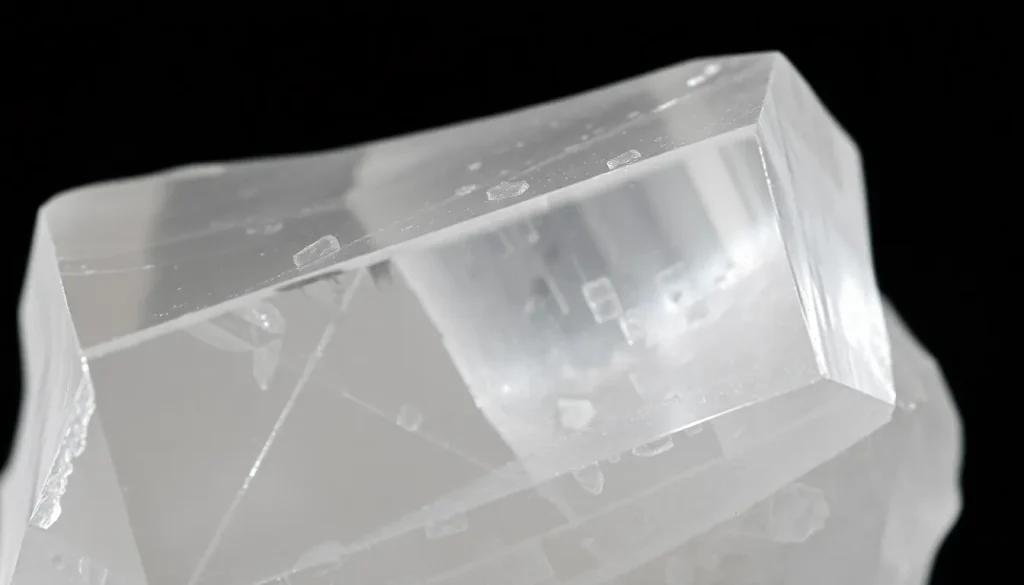
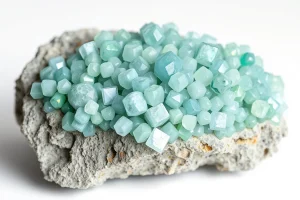
Anorthoclase is a member of the alkali feldspar group, chemically represented as (Na,K)AlSi3O8. It occupies a compositional position between the sodium‑rich albite and the potassium‑rich orthoclase. In its gem‑grade form, anorthoclase displays a range of colors from near‑colorless to very pale yellow or pink, often exhibiting a vitreous luster and good transparency.
Although not as widely known as quartz or beryl, anorthoclase is prized by collectors for its clear crystal habit, distinctive cleavage, and the subtle play of light that can be enhanced by skilled cutting.
History and Origin
The name “anorthoclase” derives from the Greek words anorthos (uneven) and klasis (fracture), referencing its characteristic uneven cleavage compared with orthoclase. Natural occurrences were first described in the late 19th century in pegmatite veins of Norway and later identified in similar alkaline igneous environments worldwide.
Geologically, anorthoclase forms in high‑temperature, silica‑rich magmas, often alongside other feldspars, quartz, and mica. Its presence can indicate a specific alkali‑rich magmatic evolution, making it of interest to petrologists as well as gemologists.
Meaning and Symbolism
Traditional gemstone lore attributes anorthoclase with qualities of balance and adaptability. It is said to help the wearer navigate change, encouraging mental clarity while fostering emotional steadiness. In jewelry, the stone’s subtle hue is believed to complement both contemporary and classic designs, symbolizing understated elegance.
Healing and Metaphysical Properties
Within crystal‑healing traditions, anorthoclase is associated with the following beliefs:
- Mind‑Body Alignment: It is thought to promote harmony between thoughts and emotions, aiding decision‑making.
- Energy Flow: Practitioners claim it can unblock stagnant energy in the solar plexus area, supporting personal power.
- Spiritual Insight: Some traditions link it to enhanced intuition and a gentle opening of the third eye.
These properties are based on traditional beliefs and are not intended as medical advice.
Varieties and Types
While anorthoclase itself is a specific mineral species, it occurs in several contexts that affect its appearance:
- Pegmatitic Anorthoclase: Large, well‑formed crystals from pegmatite bodies, often used for cabochons.
- Rhyolitic Anorthoclase: Fine‑grained crystals embedded in rhyolite, sometimes producing small, faceted stones.
- Heat‑Treated Specimens: Controlled heating can enhance clarity or induce a faint pink hue, though such treatments must be disclosed.
Jewelry Uses and Care
Because anorthoclase rates 6–6.5 on the Mohs scale, it is suitable for many types of jewelry but requires thoughtful handling:
- Ring Settings: Best used in settings that protect the stone’s edges, such as bezel or channel settings.
- Necklaces & Pendants: Ideal for pendant or necklace designs where the stone can be displayed without excessive impact.
- Care Instructions:
- Clean with warm, soapy water and a soft brush. Avoid ultrasonic cleaners if the stone has fractures.
- Dry with a lint‑free cloth; do not expose to sudden temperature changes.
- Store separately from harder gemstones (e.g., quartz, diamond) to prevent scratches.
Buying Guide
When selecting anorthoclase, consider the following factors:
- Clarity: Look for stones free of visible inclusions; high‑clarity specimens are rarer and more valuable.
- Cut: Well‑cut cabochons or facets that emphasize the stone’s natural luster are preferred.
- Color: While colorless stones are common, pale yellow or pink hues can add uniqueness. Verify that any color enhancement has been disclosed.
- Origin: Reputable sources will provide locality information. Established localities include Norway, Russia (Kola Peninsula), Canada, and the western United States.
- Certification: Request a gem‑ological report from a recognized laboratory (e.g., GIA) to confirm authenticity and any treatments.
By evaluating these criteria, collectors and jewelry buyers can make informed decisions and appreciate the subtle beauty of anorthoclase.
FAQ
What is anorthoclase good for?
Anorthoclase is valued for its clear, subtle appearance in jewelry and as a collector's mineral. Traditionally, it is believed to promote mental balance and emotional steadiness, though these are metaphysical claims, not medical facts.
Is anorthoclase rare?
High‑quality, gem‑grade anorthoclase is relatively rare because large, clear crystals are uncommon. The stone occurs in several localities, but fine specimens with good color and clarity are limited.
How can you tell if anorthoclase is real?
Real anorthoclase exhibits a vitreous luster, perfect cleavage, and a refractive index in the 1.516–1.534 range. A professional gemologist can confirm identity using optical microscopy, refractometry, and, if needed, X‑ray diffraction.
What chakra is anorthoclase associated with?
In crystal‑healing traditions, anorthoclase is sometimes linked to the solar plexus or third eye chakras, but there is no universally accepted chakra association.
How should you clean anorthoclase?
Clean anorthoclase with warm soapy water and a soft brush. Avoid ultrasonic cleaners if the stone has fractures. Dry gently with a lint‑free cloth and store it separately from harder gemstones to prevent scratches.
Leave a Reply