
Short Answer
Overview
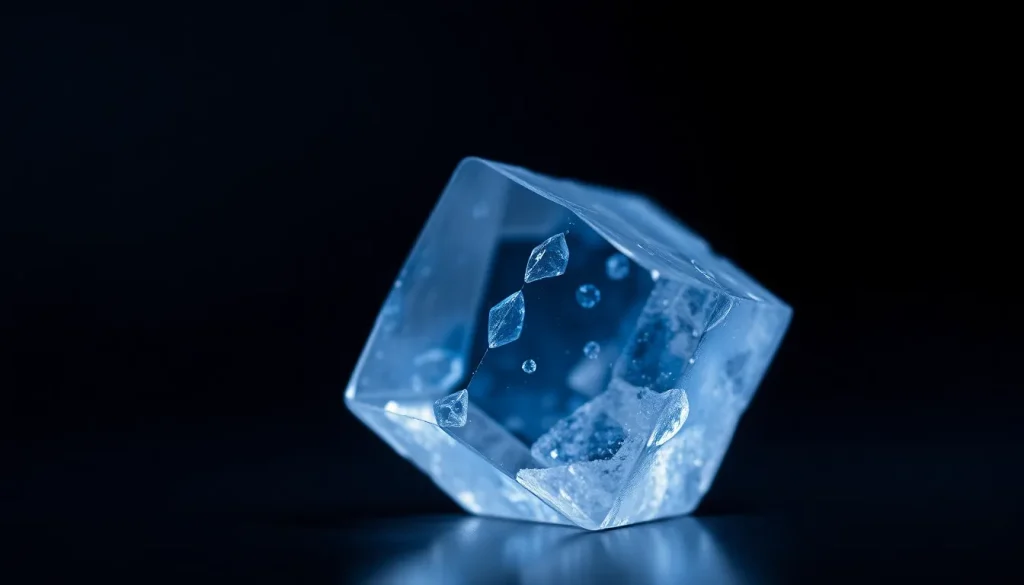
Marialite‑meionite refers to the two end‑members of the scapolite mineral series. Marialite is the sodium‑rich member, while meionite is calcium‑rich. Both crystallize in the isometric system and are prized for their often‑clear, sometimes blue‑violet or pink hues. In gem cutting they are used for faceted stones, cabochons, and ornamental beads.
History and Origin
The scapolite group was first described in the early 19th century. The name “marialite” honors Maria, the wife of the German mineralogist Christian Gottlob Heydenreich, while “meionite” derives from the Greek word meion meaning “less,” reflecting its lower sodium content. Specimens have been reported from classic localities such as Mont Saint‑Hilaire (Canada), the Alpine regions of Italy and Austria, the Kola Peninsula (Russia), and the Mettlach area of Germany. Historically, scapolite was used as a decorative stone in European lapidary work, but its popularity as a gemstone grew in the late 20th century when high‑clarity material became available.
Meaning and Symbolism
In traditional gemstone lore, marialite‑meionite is associated with clarity of thought and spiritual insight. The clear varieties are said to promote mental focus, while the subtle blue or violet stones are linked to intuition and inner communication. Collectors often view the mineral as a bridge between the earth (its calcium component) and the sky (its sodium‑rich, often‑blue forms).
Healing and Metaphysical Properties
Crystal‑healing practitioners attribute the following beliefs to marialite‑meionite:
- Mental clarity: Enhances concentration, study, and decision‑making.
- Communication: Supports honest expression and reduces misunderstandings.
- Spiritual alignment: Helps align the crown and throat chakras, encouraging higher‑frequency insight.
- Emotional balance: Said to calm anxiety and promote a sense of inner peace.
These properties are based on traditional belief systems and are not intended as medical advice.
Varieties and Types
The scapolite series includes several recognized varieties, the most common being:
- Marialite: Sodium‑rich, often colourless to pale blue or violet; may contain minute chlorine inclusions that give a faint sparkle.
- Meionite: Calcium‑rich, typically white to colourless; sometimes exhibits a faint greenish tint due to trace iron.
- Hybrid specimens: Many commercial stones display a mixed chemistry, showing intermediate colors and optical properties.
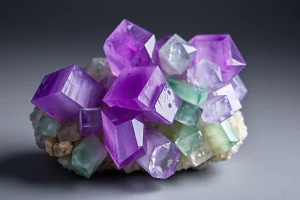
Fine specimens are valued for their lack of visible inclusions and a high degree of transparency. The most desirable colors are clear, light blue, and soft violet, especially when the crystal shows well‑developed cubic faces.
Jewelry Uses and Care
Because of its moderate hardness (5.5–6.5 on the Mohs scale) and perfect cubic cleavage, marialite‑meionite is best suited for pieces that are not subject to heavy impact. Common applications include:
- Faceted cabochons set in rings, pendants, and earrings.
- Beaded necklaces and bracelets, especially when the stone is cut as a round or oval cabochon.
- Inlay work for decorative objects and high‑end watch crystals.
Care instructions:
- Clean with warm, soapy water and a soft brush; avoid ultrasonic cleaners that may exacerbate cleavage.
- Dry with a lint‑free cloth; do not use high‑pressure air.
- Avoid sudden temperature changes, which can cause micro‑fractures.
- Store separately from harder gemstones such as quartz or corundum to prevent scratching.
Buying Guide
When selecting marialite‑meionite, consider the following factors:
- Clarity: Look for stones free of visible inclusions or cloudiness.
- Color: Premium stones are colorless, pale blue, or soft violet with even tone.
- Cut: Well‑cut facets or cabochons that display the cubic symmetry enhance brilliance.
- Treatment disclosure: Some stones are heat‑treated to improve color; reputable sellers will disclose any enhancements.
- Certification: For high‑value pieces, request a gemological report from a recognized laboratory (e.g., GIA, IGI).
Because the mineral can be confused with other white or blue gems such as quartz, calcite, or certain feldspars, purchasing from a trusted dealer and requesting a professional identification is advisable.
FAQ
What is marialite‑meionite good for?
Marialite‑meionite is valued for its clear to pale‑blue appearance in jewelry and as a collector’s mineral. Traditionally it is believed to aid mental clarity and communication, though these are not medical claims.
Is marialite‑meionite rare?
High‑quality, transparent marialite‑meionite is relatively uncommon, especially in vivid blue or violet hues. Common, lower‑grade material is more abundant in many localities, making the stone moderately rare overall.
How can you tell if marialite‑meionite is real?
Real marialite‑meionite shows perfect cubic cleavage, a refractive index around 1.53–1.56, and a white streak. It can be distinguished from quartz or calcite by its higher specific gravity and lack of conchoidal fracture. Professional gemological testing is recommended for certainty.
What chakra is marialite‑meionite associated with?
In crystal‑healing traditions marialite‑meionite is most often linked to the Crown Chakra, supporting higher‑level insight and spiritual connection.
How should you clean marialite‑meionite?
Clean with warm soapy water and a soft brush, avoid ultrasonic cleaners, and keep away from sudden temperature changes. Store separately from harder stones to prevent scratching.
Leave a Reply