
Short Answer
Overview
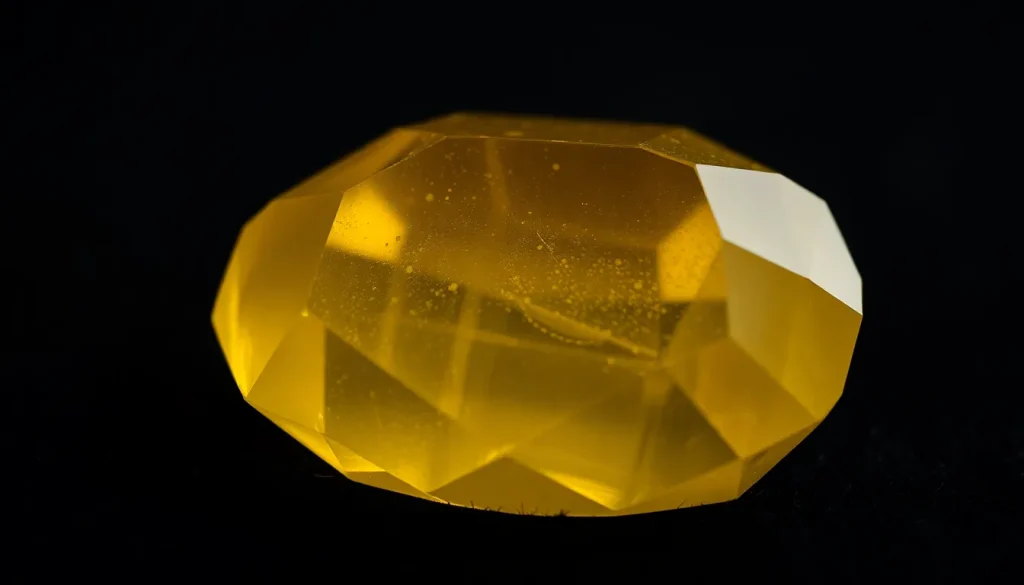
Ekanite is a rare silicate mineral composed principally of calcium, thorium, and silicon (chemical formula Ca2ThSi8O20). It belongs to the tectosilicate group and crystallises in the tetragonal system. The stone is most commonly found in shades of yellow, greenish‑yellow, or brown, and is distinguished by its moderate hardness (5.5‑6.5 on the Mohs scale) and a vitreous luster. A notable characteristic of ekanite is its natural radioactivity, derived from thorium (and occasionally uranium) within its structure.
History and Origin
Ekanite was first described in 1955 from specimens discovered in the gem‑bearing gravels of Ratnapura, Sri Lanka, a region historically renowned for a variety of gemstones. The name derives from the village of Ekan, near the discovery site. Later occurrences were reported from the Ural Mountains (Russia), Tanzania, Madagascar, and a few localities in the United States (Nevada). Because of its thorium content, the mineral has been of interest to both mineralogists and nuclear scientists, though its use as a gemstone remains limited due to safety considerations.
Meaning and Symbolism
In traditional gemstone lore, ekanite is associated with transformation and protection. Its radiant yellow hue is said to symbolize inner light and the ability to overcome obstacles. Some cultures view the stone’s inherent radioactivity as a metaphor for hidden energy, encouraging wearers to tap into inner power and resilience.
Healing and Metaphysical Properties
Crystal‑healing practitioners attribute ekanite with the following beliefs:
- Energy amplification: The thorium element is thought to boost personal energy fields.
- Emotional balance: Its warm colour is believed to soothe anxiety and promote optimism.
- Spiritual insight: Some claim it aids meditation by enhancing clarity of thought.
These claims are traditional beliefs and are not supported by scientific or medical evidence. The stone should never be used as a substitute for professional medical treatment.
Varieties and Types
Ekanite occurs in several colour variations, primarily:
- Yellow to golden‑yellow.
- Greenish‑yellow.
- Brownish‑yellow or light brown.
Specimens with higher thorium content exhibit stronger radioactivity, while those with minor uranium substitution may show slightly different shades. Untreated, natural ekanite is typically found as well‑formed crystal aggregates or as granular grains in alluvial deposits.
Jewelry Uses and Care
Because of its moderate hardness and cleavage‑free structure, ekanite can be cut into cabochons, beads, or faceted stones. However, its radioactivity imposes strict handling guidelines:
- Safety first: Only low‑radioactivity specimens (measured below regulatory limits) should be used in jewelry.
- Setting considerations: Secure settings that protect the stone from impact are recommended, as fractures can release additional radiation.
- Cleaning: Use a soft, lint‑free cloth and mild soap water. Avoid ultrasonic cleaners and harsh chemicals, which could affect any surface treatments.
- Storage: Keep ekanite away from heat sources and direct sunlight; store in a padded pouch or a sealed container if long‑term storage is needed.
Professional gemologists can perform radiation testing to verify that a piece meets safety standards before it is worn.
Buying Guide
When purchasing ekanite, consider the following factors:
- Certification: Request a gem‑ological report that includes radiation level, origin, and any treatments.
- Color and Clarity: Look for vibrant, even colour without excessive inclusions that could weaken the stone.
- Cut Quality: Well‑cut cabochons or facets enhance brilliance while protecting the stone’s integrity.
- Source Transparency: Reputable dealers will disclose the locality and any handling precautions.
- Price Range: Due to rarity, high‑quality ekanite can be expensive; expect prices to vary widely based on size, colour, and radiation level.
Always buy from accredited jewelers or mineral dealers who can provide documentation of safety testing.
FAQ
What is ekanite good for?
Ekanite is primarily valued by collectors for its rarity, distinctive yellow hue, and unique radioactivity. Traditional beliefs attribute it with protective and transformative energies, but these are not scientifically verified.
Is ekanite rare?
Yes. High‑quality, low‑radioactivity ekanite suitable for jewelry is scarce. Large, vibrant crystals are especially uncommon, and most specimens are found in limited localities such as Sri Lanka and the Urals.
How can you tell if ekanite is real?
Authentic ekanite displays a tetragonal crystal habit, a moderate hardness (5.5‑6.5), and a characteristic yellow‑golden colour. Professional testing for radiation levels and a gem‑ological report are recommended for verification.
What chakra is ekanite associated with?
In crystal‑healing circles ekanite is sometimes linked to the Solar Plexus chakra for confidence, though no single standard chakra association exists.
How should you clean ekanite?
Clean ekanite gently with a soft lint‑free cloth and mild soapy water. Avoid ultrasonic cleaners, harsh chemicals, and prolonged exposure to heat. Handle with care to prevent fracture, especially in specimens with higher radioactivity.
Leave a Reply