
Short Answer
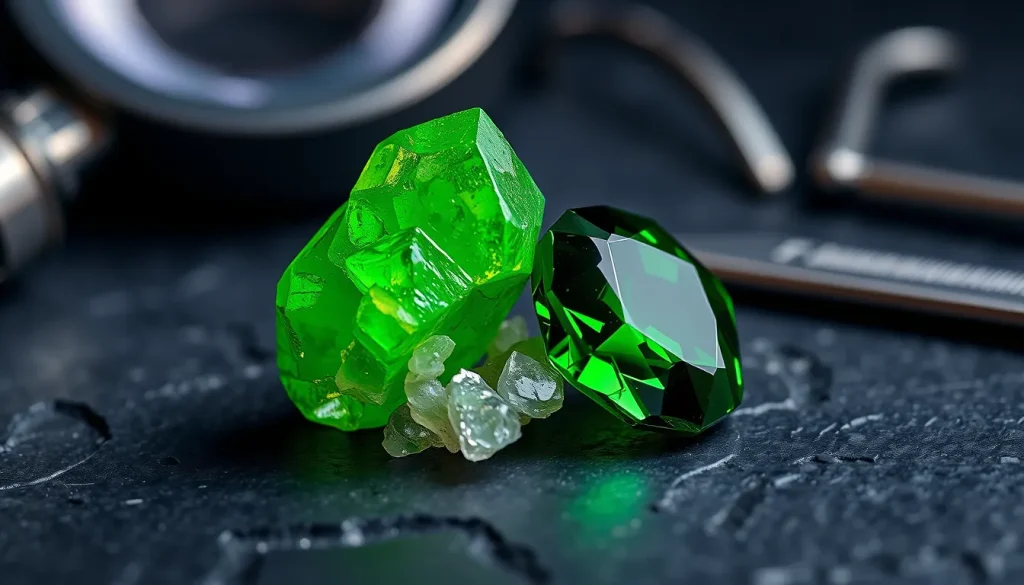
In the realm of mineralogy, nickel is a transition metal that acts as a powerful chromophore, often imparting striking shades of lime, apple, and forest green to various mineral structures. While nickel is rarely the primary component of a gemstone, its presence as a trace element or a primary substitute in specific mineral groups creates some of the most sought-after specimens for advanced collectors.
What Is a Nickel-Bearing Mineral?
A nickel-bearing mineral is any mineral species where nickel (Ni) is integrated into the crystal lattice, either as a primary constituent or as a substituting ion. In gemology, nickel is most prized for its ability to produce a distinct, saturated green color that differs from the chromium or vanadium greens found in emeralds.
The substitution typically occurs when nickel replaces magnesium (Mg) or iron (Fe) due to similar ionic radii. This chemical substitution not only alters the color but can sometimes affect the crystal’s stability and refractive index. These minerals are often found in ultramafic rocks or through the hydrothermal alteration of nickel-rich deposits.
Varieties and Related Materials
Nickel-bearing gemstones vary widely in their hardness and rarity. The following are the most prominent varieties encountered by collectors:
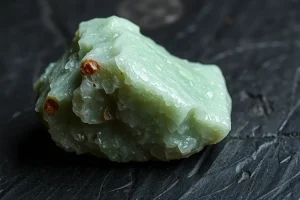
- Gaspeite: A rare nickel carbonate that occurs in vibrant apple-green to yellow-green. It is highly prized for its color but is relatively soft, making it a collector’s stone rather than a jewelry stone.
- Nickeliferous Garnet (e.g., Demantoid-like): While chromium produces the classic green in Demantoid, nickel can also contribute to the green hues in certain garnet species found in specific geological settings.
- Nickel-bearing Olivine: Often referred to as nickel-rich peridot, these specimens show a deeper, sometimes more olive-toned green than standard peridot.
- Nickel-bearing Serpentine: This group includes various minerals where nickel imparts a waxy, deep green luster, often found in massive forms or botryoidal habits.
Identification and Look-Alikes
Identifying nickel-bearing minerals requires a combination of visual inspection and instrument-based testing. Because many green minerals look identical to the naked eye, gemologists rely on the following:
| Feature | Nickel-Bearing Gems | Common Look-Alikes (Cr/V) |
|---|---|---|
| Color Hue | Often leans toward ‘yellow-green’ or ‘lime’ | Often ‘blue-green’ or ‘deep forest’ |
| Refractive Index | Varies by host mineral | Typically higher in Beryl/Tourmaline |
| Chemical Test | Positive for Ni via spectroscopy | Positive for Cr/V via spectroscopy |
Expert Tip: To distinguish Gaspeite from green smithsonite or calcite, a mild acid test can be used by professionals, as carbonates will effervesce, though this is destructive and should only be done on small samples.
Quality and Value Factors
For nickel-bearing minerals, value is driven more by rarity and crystal habit than by traditional jewelry standards. Key factors include:
- Color Saturation: The most vivid, ‘electric’ greens command the highest premiums.
- Crystal Integrity: Well-formed crystals (euhedral) are significantly more valuable than massive or fragmented pieces.
- Transparency: Since many nickel minerals are opaque or translucent, a transparent specimen is a rarity and highly prized.
- Provenance: Specimens from famous nickel-rich localities (such as specific deposits in Canada or Russia) carry a provenance premium.
Jewelry Suitability and Care
Most nickel-bearing minerals are unsuitable for mainstream jewelry due to their low Mohs hardness. For example, Gaspeite is far too soft for rings or bracelets.
Care Guidelines:
- Avoid Chemicals: Use only distilled water for cleaning; avoid ultrasonic cleaners which can shatter fragile collector crystals.
- Storage: Store in individual padded compartments to prevent scratching.
- Light Exposure: While generally stable, some nickel-bearing carbonates can fade under prolonged, intense UV exposure.
FAQ
Are nickel-bearing gemstones safe for people with nickel allergies?
In mineral form, nickel is bound within a crystal lattice and is generally not bioavailable. However, for those with extreme sensitivities, wearing these stones against the skin is not recommended without a protective setting.
Can you find nickel-bearing minerals in common jewelry?
Rarely. Most are kept as mineral specimens because their hardness is often too low for daily wear, with the exception of nickel-bearing garnets.
How is nickel-bearing green different from emerald green?
Emeralds get their color from chromium or vanadium, which creates a deeper, cooler green. Nickel tends to produce a 'brighter' or more yellowish-green hue.
Leave a Reply