
Short Answer
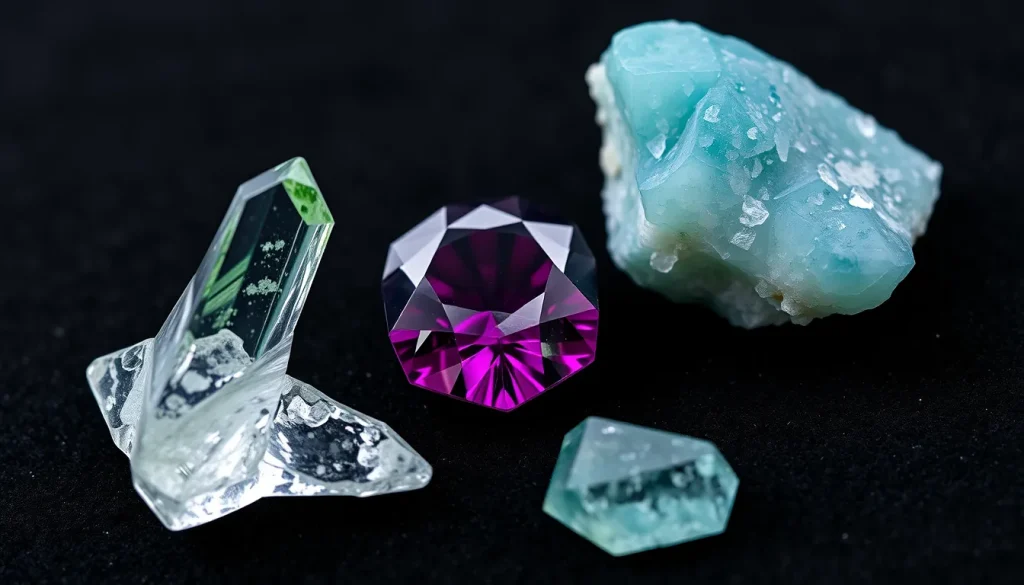
Calcium silicate minerals represent a diverse and fascinating group of gemstones that bridge the gap between common rock-forming minerals and exotic collector’s specimens. Defined by the chemical combination of calcium, silicon, and oxygen, these minerals often incorporate other elements that produce a stunning array of colors and optical effects, making them highly prized in the world of mineralogy.
What Is a Calcium Silicate Mineral?
At its core, a calcium silicate mineral is a compound where calcium (Ca) and silicate (SiO₄) units form the primary structural framework. Depending on the arrangement of these tetrahedra—whether they are isolated, in chains, or in sheets—the resulting mineral exhibits vastly different physical properties. While many calcium silicates are common in the Earth’s crust (such as certain pyroxenes), a select few occur in gem-quality crystals that are rare and aesthetically striking.
Varieties and Related Materials
The spectrum of calcium silicates in the gemstone market ranges from widely recognized species to obscure minerals known only to specialist collectors.
Danburite
Known for its exceptional brilliance and high dispersion, Danburite is a calcium boron silicate. It typically occurs in colorless to pale yellow crystals and is highly valued for its clarity and sharp crystal faces.
Grossular Garnet
A member of the garnet group, Grossular is a calcium aluminum silicate. Its most famous variety, Tsavorite, is a vivid green stone that rivals emeralds in saturation and brilliance.
Lawsonite
A rare calcium aluminum silicate, Lawsonite is primarily a collector’s stone. It often appears in blue to colorless crystals and is prized for its rarity and specific geological occurrence in metamorphic rocks.
Identification and Look-Alikes
Identifying calcium silicates requires a combination of visual inspection and instrumental analysis, as they often mimic more common gemstones.
| Mineral | Common Look-Alike | Distinguishing Feature |
|---|---|---|
| Danburite | Topaz / Quartz | Higher dispersion than quartz; specific gravity differs from topaz. |
| Tsavorite | Emerald / Demantoid | Lack of typical emerald inclusions; higher brilliance than demantoid. |
| Lawsonite | Blue Topaz | Distinct crystal habit and lower refractive index. |
Quality and Value Factors
For the collector, the value of a calcium silicate specimen is determined by several critical criteria:
- Crystal Habit: Well-terminated, sharp crystals are significantly more valuable than tumbled or faceted stones.
- Color Saturation: In the case of Tsavorite, the intensity of the green directly correlates with the price per carat.
- Clarity: Eye-clean specimens are rare and command a premium, especially in Danburite.
- Rarity: Species like Lawsonite are valued based on the scarcity of the locality and the size of the crystal.
Expert Tip: When purchasing rare calcium silicates, always request a mineralogical report. Because many of these stones lack a standardized market price, provenance and certified chemical composition are essential for protecting your investment.
Jewelry Suitability and Care
While some calcium silicates are durable enough for jewelry, others are strictly for display.
Tsavorite and Danburite are generally suitable for rings and pendants due to their hardness (typically 6.5 to 7.5 on the Mohs scale). However, they should be cleaned with mild soap and warm water. Avoid ultrasonic cleaners for minerals with visible fractures or inclusions, as the vibrations can cause the stone to shatter.
Lawsonite and other rarer silicates are often too fragile or too rare to be faceted, and are best kept in mineral display cases to prevent abrasion.
FAQ
Are calcium silicates common in jewelry?
Some, like Tsavorite Garnet, are high-end jewelry staples. Others, like Danburite, are popular with collectors but less common in commercial jewelry.
How can I tell the difference between Danburite and Topaz?
While they look similar, Danburite has a different specific gravity and refractive index. A professional gemologist uses a refractometer to distinguish them.
Are these minerals stable for long-term storage?
Yes, most calcium silicates are chemically stable, though some rare species can be sensitive to extreme temperature changes or harsh chemicals.
Leave a Reply