Short Answer
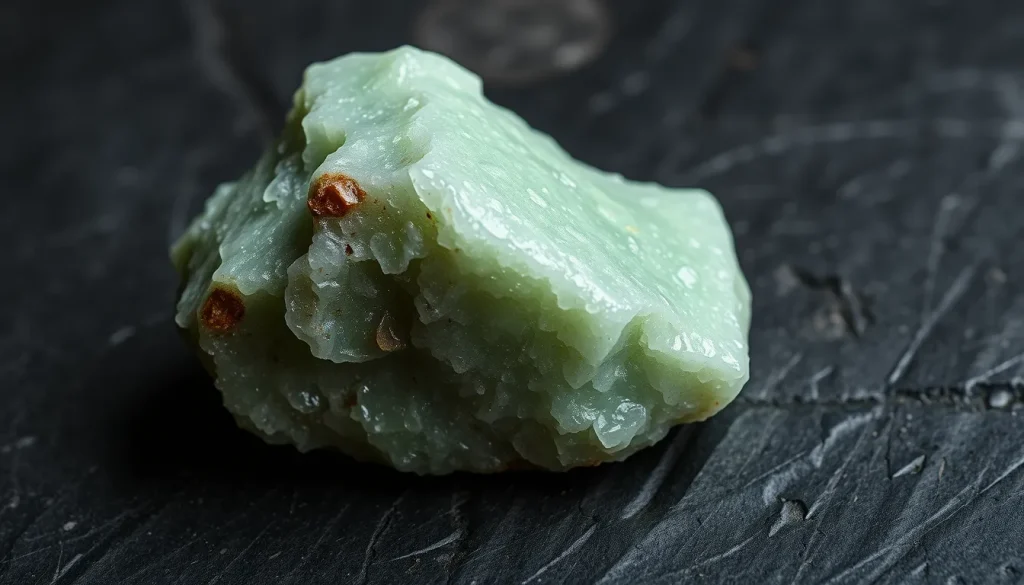
Lizardite is a magnesium silicate mineral and a primary member of the serpentine group. Often mistaken for its more famous relative, chrysotile, lizardite is distinguished by its specific crystalline structure and habit. While it rarely occurs as a standalone gemstone in high-clarity forms, it is a significant component of many ornamental rocks used in carvings and lapidary arts.
What Is Lizardite?
Chemically defined as (Mg, Fe, Ni)₃Si₂O₅(OH)₄, lizardite is a phyllosilicate mineral. It typically forms through the hydrothermal alteration of ultramafic rocks, such as peridotite, in a process known as serpentinization. Unlike chrysotile, which forms fibrous asbestos-like structures, lizardite typically manifests as platy crystals or massive, cryptocrystalline aggregates.
Visually, lizardite is most recognized by its characteristic pale green to yellowish-green color, though it can occasionally appear grey or white. It possesses a waxy to greasy luster and a Mohs hardness of approximately 2.5 to 4, making it relatively soft compared to traditional gemstones.
Practical Uses and Limitations
Due to its low hardness and fragility, lizardite is not suitable for high-wear jewelry such as engagement rings. However, it finds extensive use in other areas:
- Ornamental Carving: Because of its softness, it is an excellent material for intricate carvings, figurines, and small sculptures.
- Lapidary Cabochons: It can be polished into smooth cabochons for pendants or earrings where the stone is protected from impact.
- Geological Indicators: For geologists, the presence of lizardite serves as a key indicator of the metamorphic history of the Earth’s mantle.
Varieties and Related Materials
Lizardite is part of the serpentine group, which includes several polymorphs that share the same chemistry but differ in structure:
| Mineral | Structure | Common Appearance |
|---|---|---|
| Lizardite | Platy/Sheet-like | Pale green, massive aggregates |
| Chrysotile | Fibrous | White to light green fibers |
| Antigorite | Bladed/Pseudo-hexagonal | Darker green, more durable |
Identification and Look-Alikes
Identifying lizardite requires a combination of visual inspection and physical testing. Its waxy luster and pale green color can lead to confusion with other minerals:
- Jadeite/Nephrite: These are significantly harder (6-7 Mohs) and typically possess a more vitreous luster.
- Prehnite: While similar in color, prehnite usually forms botryoidal (grape-like) clusters and has a higher hardness.
- Chrysotile: Distinguished primarily by its fibrous nature; lizardite lacks the asbestos-like fibers.
Jewelry Suitability and Care
If you own jewelry featuring lizardite or serpentine materials, specific care is required to maintain the stone’s integrity:
Expert Tip: Avoid using ultrasonic cleaners or steam cleaners on lizardite. The mineral’s porous nature and low hardness make it susceptible to chemical erosion and physical cracking.
Care Guidelines:
- Clean only with a soft, damp cloth and mild soap.
- Store separately from harder gemstones (like diamonds or sapphires) to prevent scratching.
- Avoid exposure to harsh acids or prolonged sunlight, which may fade the pale green color.
Symbolism and Modern Beliefs
In metaphysical circles, lizardite is often grouped with other serpentine minerals. It is believed to be a stone of emotional healing and grounding. Practitioners suggest that its connection to the Earth’s deep mantle helps the wearer feel more centered and connected to nature. It is frequently associated with the heart and root chakras, symbolizing growth, renewal, and the shedding of old habits, much like a lizard shedding its skin.
FAQ
Is lizardite the same as asbestos?
No. While it is in the same chemical family as chrysotile (white asbestos), lizardite has a platy structure rather than a fibrous one, meaning it does not possess the dangerous inhalable fibers associated with asbestos.
Can lizardite be used in rings?
It is not recommended for rings due to its low Mohs hardness (2.5-4), which makes it prone to scratching and wear. It is better suited for pendants or carvings.
How can I tell lizardite apart from jade?
The easiest way is a hardness test. Jade (Nephrite or Jadeite) is much harder (6-7) and cannot be scratched by a steel nail, whereas lizardite can be easily scratched.
Leave a Reply