
Short Answer
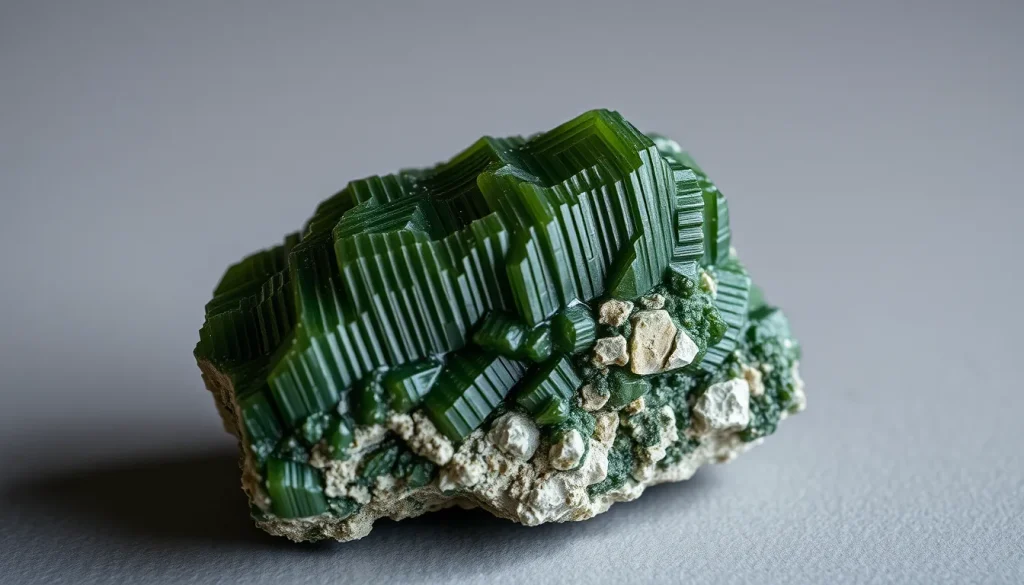
Antigorite is a magnesium silicate mineral and a primary member of the serpentine group. Unlike its cousins chrysotile and lizardite, antigorite is characterized by a unique corrugated crystal structure that allows it to remain stable under higher temperatures and pressures, making it a cornerstone of metamorphic geology.
What Is Antigorite?
Antigorite is a hydrated magnesium silicate mineral with the chemical formula (Mg,Fe)₃Si₂O₅(OH)₄. It is the most common serpentine mineral found in high-grade metamorphic rocks, particularly those resulting from the hydration of ultramafic rocks (serpentinization). While often appearing as a massive, waxy green rock, it can also occur in fibrous or platy forms.
From a crystallographic perspective, antigorite is distinguished by its “waved” or corrugated layers. This structural modification resolves the mismatch between the tetrahedral and octahedral sheets that is present in other serpentine minerals, granting it greater thermal stability.
Practical Uses and Limitations
Historically, serpentine minerals, including antigorite, have been used in various industrial and decorative capacities. However, their use is strictly governed by safety standards due to the potential presence of asbestos-form minerals in some serpentine deposits.

Industrial and Decorative Applications
- Ornamental Stone: Due to its rich green hues, antigorite-bearing rocks are often carved into sculptures, bowls, and small decorative objects.
- Geological Indicators: For geologists, the presence of antigorite is a vital indicator of the temperature and pressure conditions of a rock’s metamorphic history.
- Construction: In some regions, massive antigorite is used as a dimension stone for flooring or wall cladding, provided it is non-fibrous.
Expert Note: It is critical to distinguish between massive antigorite and fibrous chrysotile. While massive antigorite is generally safe, any serpentine material suspected of containing asbestos fibers must be handled according to strict safety protocols.
Varieties and Related Materials
Antigorite is rarely found in pure form and is usually part of a complex mineral assemblage. It is closely related to other members of the serpentine group:
| Mineral | Structure | Typical Environment |
|---|---|---|
| Antigorite | Corrugated Sheets | High-temperature metamorphism |
| Chrysotile | Hollow Tubes (Fibrous) | Low-temperature hydration |
| Lizardite | Flat Sheets | Low-temperature hydrothermal |
Identification and Look-Alikes
Identifying antigorite in the field requires a combination of visual inspection and geological context. It typically exhibits a waxy to greasy luster and a color range from pale green to deep forest green.
Common look-alikes include:
- Jadeite/Nephrite: These are harder than antigorite and lack the characteristic waxy feel of serpentine.
- Epidote: Often found in similar environments, but epidote generally has a more vitreous luster and a different crystal habit.
- Chlorite: Also green and platy, but differs in chemical composition (containing aluminum) and specific gravity.
Symbolism and Modern Beliefs
In the realm of metaphysical beliefs, antigorite is associated with the grounding and healing properties common to the serpentine family. It is often viewed as a stone of emotional balance and spiritual growth.
Modern practitioners suggest that antigorite helps in:
- Connecting the user to the energy of the Earth.
- Clearing stagnant energy from the heart and root chakras.
- Promoting a sense of calm and stability during times of transition.
Note: These beliefs are not scientifically proven and are based on cultural and spiritual traditions.
FAQ
Is antigorite the same as asbestos?
Not necessarily. Antigorite is a serpentine mineral. While some serpentine minerals (like chrysotile) are asbestos, massive antigorite is generally not considered an asbestos hazard, though caution is advised with fibrous samples.
How can I tell antigorite apart from nephrite jade?
The easiest way is hardness; nephrite is significantly harder (6.0-6.5) than antigorite (3.0-6.0). Antigorite also typically has a more waxy, greasy luster.
Where is antigorite typically found?
It is found in metamorphic belts, specifically in the altered sections of the Earth's mantle (ophiolites) where peridotite has undergone serpentinization.
Leave a Reply