
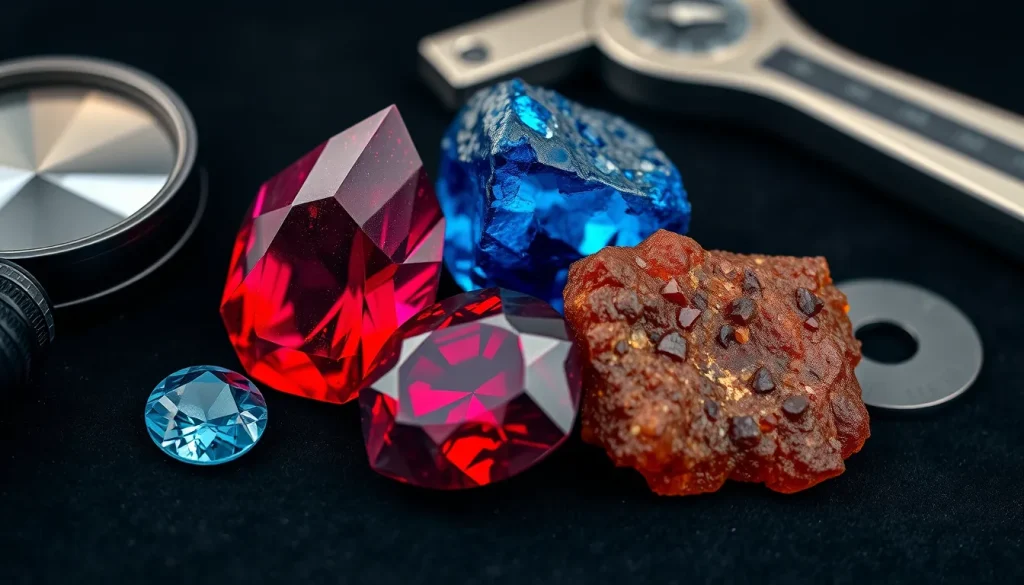
Short Answer
For the serious gemstone collector, rarity is the ultimate driver of value and prestige. While diamonds are the most famous, they are not the rarest. True rarity in gemology is defined by a combination of geological scarcity, the difficulty of formation, and the rarity of gem-quality crystals. This guide examines the most elusive minerals that currently occupy the highest tiers of the collector’s market.
Comparison Table
| Gemstone | Chemical Composition | Primary Source | Rarity Factor |
|---|---|---|---|
| Painite | Borate Mineral | Myanmar | Extremely limited deposits |
| Musgravite | Oxide Mineral | Australia/Africa | Chemical specificity |
| Red Beryl | Beryllium Aluminum Silicate | USA (Utah) | Specific volcanic conditions |
| Grandidierite | Borosilicate | Madagascar | Geographic isolation |
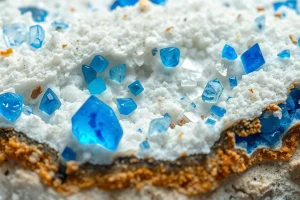
| Benitoite | Barium Titanium Silicate | USA (California) | Single primary location |
Shared Features
Despite their different chemical structures, the world’s rarest gemstones share several defining characteristics that make them desirable to high-end collectors:
- Geological Specificity: They typically form under highly specific pressure, temperature, and chemical environments that are rarely replicated in nature.
- Limited Geographic Distribution: Most of these stones are found in only one or two locations worldwide, making the supply chain extremely fragile.
- High Investment Potential: Due to the dwindling supply of new discoveries, these stones often appreciate in value faster than commercial gemstones.
- Scientific Interest: Many of these gems are prized as much for their mineralogical uniqueness as they are for their aesthetic beauty.
Important Differences
While all are rare, the nature of their rarity differs significantly. For instance, Painite was once considered the rarest mineral on Earth because only two crystals were known to exist for decades. In contrast, Red Beryl is rare not because the mineral itself is unknown, but because the specific combination of beryllium and manganese in a rhyolite host rock is an anomaly.
There is also a distinction between mineral rarity and gem-quality rarity. Many minerals are common in their raw form but almost never occur in transparent, colorless, or richly saturated crystals suitable for jewelry. This is particularly evident in the Beryl family, where emeralds are rare, but Red Beryl is exponentially more so.
Suitability by Use
Collectors must balance rarity with physical durability. Not every rare stone is suitable for daily wear:
- Investment/Museum Grade: Stones like Painite and Grandidierite are primarily kept as specimen crystals or set in protective settings due to their immense value and relative scarcity.
- High-End Jewelry: Musgravite and Red Beryl possess the hardness (typically 7.5 to 8.5 on the Mohs scale) required for rings and pendants, though they are usually reserved for bespoke couture pieces.
- Specimen Collecting: Benitoite is often collected as a raw crystal cluster, which can sometimes be more valuable than a faceted stone.
Identification Limits
Identifying these stones requires advanced laboratory equipment. Because many rare gems share colors with common ones, visual inspection is insufficient:
Expert Tip: Never rely on a handheld refractometer alone for rare minerals. Spectroscopic analysis (FTIR or Raman spectroscopy) is essential to differentiate a rare Musgravite from a common Taaffeite or a synthetic stimulant.
The primary challenge is the existence of simulants—stones that look identical but lack the chemical composition. For example, Red Beryl can be mimicked by synthetic rubies or red spinels, requiring a professional gemologist to verify the beryllium content.
Related Profiles
To further understand the context of these rare stones, collectors should study the following profiles:
- The Beryl Family: To understand the relationship between Aquamarine, Emerald, and Red Beryl.
- The Corundum Group: To compare the rarity of Padparadscha Sapphires against the stones listed above.
- The Borates: To explore the chemical properties that make Painite so elusive.
FAQ
Is a rare gemstone always more expensive than a diamond?
Not necessarily. While some rare gems are priceless, market demand drives price. A high-quality diamond often has a more liquid market than a rare mineral like Painite.
How can I verify the authenticity of a rare gemstone?
The only reliable method is to obtain a certification from a reputable third-party laboratory such as the GIA or SSEF using spectroscopic equipment.
Where can collectors buy these stones?
These are rarely found in retail stores; they are typically acquired through specialized mineral auctions, high-end dealers, or private estate sales.
Leave a Reply