
Short Answer
Overview
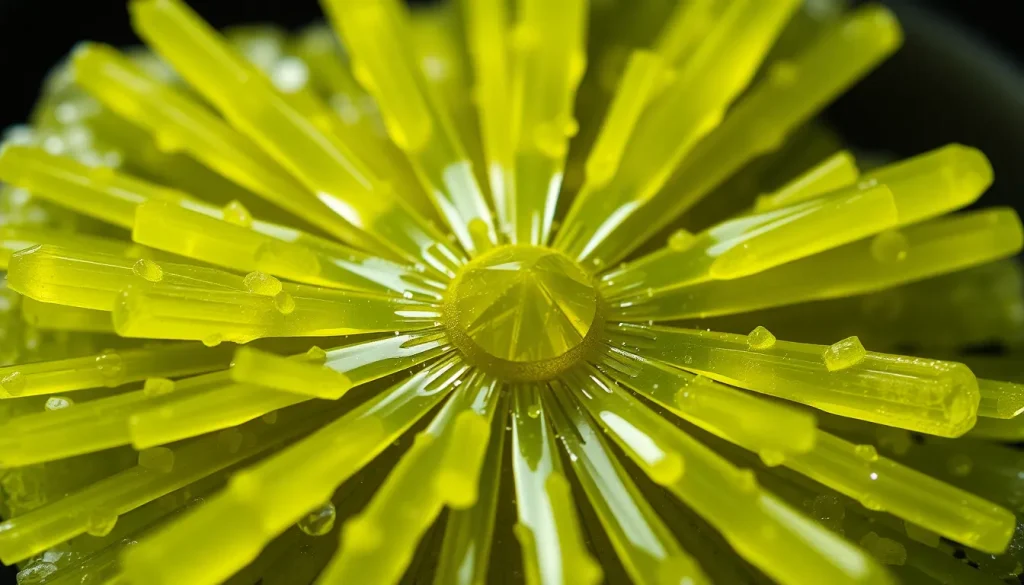
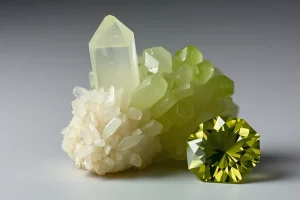
Wavellite is a hydrated aluminum phosphate mineral with the formula Al3(PO4)2(OH)3·5H2O. It crystallizes in the orthorhombic system and is most recognizable for its radial, acicular crystals that radiate outward like a starburst. Colors range from vivid yellow and yellow‑green to brown and occasionally greenish‑blue. The mineral exhibits a vitreous to pearly luster and is transparent to translucent.
History and Origin
The name “wavellite” honors the English mineralogist William Wavell, who first described the mineral in 1808 from specimens collected in Cornwall, England. It is typically found in the oxidized zones of lead‑zinc ore deposits, forming as a secondary mineral through the alteration of primary phosphates. Significant localities include the United States (Arizona, Utah), Australia, Brazil, France, Germany, Italy, Namibia, Spain, and Zambia.
Meaning and Symbolism
Traditional gemstone lore attributes wavellite with themes of renewal, clarity, and emotional balance. Its bright, sun‑like hue is said to inspire optimism and to help release old patterns, allowing the wearer to embrace new opportunities. The radiating crystal form reinforces the symbolism of spreading light outward.
Healing and Metaphysical Properties
In crystal‑healing circles, wavellite is believed to stimulate the heart chakra, encouraging compassion and self‑love. Practitioners claim it can aid in emotional clearing, boost confidence, and support the manifestation of personal goals. These properties are considered metaphysical beliefs and are not supported by scientific medical evidence.
Varieties and Types
Wavellite occurs in several distinct habits:
- Radial (starburst) clusters – the classic, most sought‑after form, consisting of needle‑like crystals radiating from a central point.
- Botryoidal masses – rounded, grape‑like aggregates that are generally less transparent.
- Massive – granular or compact forms without distinct crystal faces.
Color variations are primarily controlled by trace impurities and the degree of oxidation, producing shades from lemon yellow to deep amber brown.
Jewelry Uses and Care
Because of its relatively low hardness (3.5–4 on the Mohs scale) and perfect cleavage on {010}, wavellite is best suited for pendants, earrings, and brooches where it is protected from abrasion. It should be set in protective settings such as bezel or channel mounts rather than prong settings that expose sharp edges. Care recommendations include:
- Avoid exposure to harsh chemicals, ultrasonic cleaners, and steam.
- Clean gently with a soft, damp cloth and mild soap solution.
- Store separately from harder gemstones to prevent scratching.
Buying Guide
When selecting wavellite, consider the following factors:
- Color and clarity – vivid, uniform color and minimal inclusions are most prized.
- Crystal habit – genuine starburst clusters command higher value than massive or botryoidal specimens.
- Treatment disclosure – natural wavellite is rarely treated, but any enhancement (e.g., heat or dye) should be disclosed by the seller.
- Certification – for high‑value pieces, request a gemological report from a reputable laboratory.
Because wavellite is not a common commercial gemstone, prices vary widely based on quality, size, and rarity of the crystal habit. Purchasing from reputable dealers and requesting provenance information helps ensure authenticity.
FAQ
What is wavellite good for?
Wavellite is prized for its distinctive starburst crystals used in specialty jewelry and collector pieces; traditionally it is believed to promote emotional renewal and confidence, though these effects are not medically verified.
Is wavellite rare?
High‑quality wavellite with vivid color and well‑formed radial clusters is relatively uncommon, especially from notable localities, while more massive or botryoidal specimens are more readily found.
How can you tell if wavellite is real?
Authentic wavellite displays its characteristic orthorhombic crystal shape, a vitreous‑pearly luster, and a white streak. Because it is soft, a professional gemologist can confirm identity using hardness testing, refractive index measurement, and, if needed, X‑ray diffraction.
What chakra is wavellite associated with?
In crystal‑healing traditions wavellite is most often linked to the Heart (Anahata) chakra, where it is said to encourage love and emotional balance.
How should you clean wavellite?
Clean wavellite gently with a soft, damp cloth and mild soap; avoid ultrasonic cleaners, steam, and harsh chemicals. Store it separately from harder gemstones to prevent scratching.
Leave a Reply