
Short Answer
Overview
Vesuvianite, also known by the historic name idocrase, is a calcium‑magnesium‑iron aluminum silicate mineral that belongs to the sorosilicate subclass. It crystallises in the tetragonal system, typically forming well‑defined prismatic crystals or massive aggregates. Its Mohs hardness of 6.5–7.5 places it in the medium‑hard range, making it suitable for a variety of jewelry applications, from rings to pendants. The gemstone displays a broad colour palette—most commonly green, yellow, brown, and, in rarer specimens, blue‑violet—each colour being a result of subtle variations in iron, manganese and trace element content.
History and Origin
The name “vesuvianite” derives from the volcanic slopes of Mount Vesuvius in Italy, where the mineral was first described in 1866. Early European collectors prized the bright green crystals from this locality, and the alternative name “idocrase” (from Greek *eidos* “form” and *krasis* “mixing”) was later adopted to highlight the mineral’s complex chemistry. Today vesuvianite is mined in several continents. Major localities include Italy (the type locality), the United States (California, New Mexico, Arizona), Pakistan, Afghanistan, Russia, Japan, China, Mexico, and Brazil. Each region tends to produce characteristic colour zones, for example the deep forest‑green stones of Italy versus the golden‑yellow varieties from California.
Meaning and Symbolism
In traditional gemstone lore, vesuvianite is linked to personal growth and the confidence to navigate change. Green specimens are associated with the heart’s nurturing energy, symbolising compassion, emotional balance and the ability to forgive. Yellow and brown hues are thought to provide grounding, stability, and protection against negative influences. The rare blue‑violet stones are sometimes connected with intuition and the ability to see beyond the ordinary.
Healing and Metaphysical Properties
Crystal‑healing practitioners attribute a range of non‑scientific properties to vesuvianite, based on long‑standing belief systems. These include:
- Heart‑chakra activation: Enhances love, forgiveness and emotional openness.
- Protective shield: Said to guard the aura from psychic intrusion and environmental stress.
- Physical support: Traditionally believed to aid the respiratory system, bones and muscles.
- Mental clarity: Used in meditation to foster focus, decision‑making and insight.
These claims are part of cultural traditions and should not replace professional medical advice.
Varieties and Types
Vesuvianite occurs in several recognised colour varieties, each sometimes marketed under a trade name:
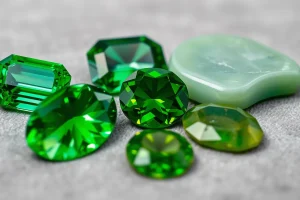
- Green vesuvianite: Ranges from pale pistachio to deep forest green; the most common commercial variety.
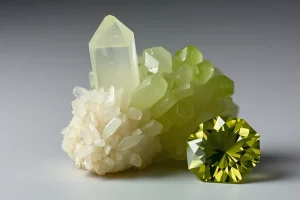
- Yellow (golden) vesuvianite: Displays bright lemon to amber tones and is prized for its sunny appearance.
- Brown (chocolate) vesuvianite: Earthy chocolate‑brown hues, often used in rustic or vintage designs.
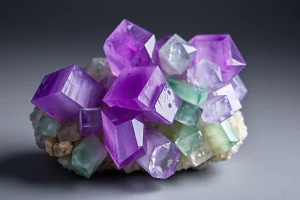
- Blue‑violet vesuvianite: Rare, with delicate lavender or periwinkle coloration; highly sought after by collectors.
- Multicoloured or speckled vesuvianite: Natural marbling of green, yellow and brown within a single crystal, valued for its unique pattern.
Heat treatment is occasionally applied to deepen green or yellow colour saturation. The process is stable, does not compromise hardness, and is usually disclosed by reputable dealers.
Jewelry Uses and Care
Because of its attractive colour range and moderate hardness, vesuvianite is set in rings, earrings, pendants, brooches and decorative inlays. It can be faceted, cabochon‑cut, or used as a natural slice. When setting the stone, jewelers typically avoid excessive pressure along the {001} plane, where the mineral exhibits a subtle parting tendency.
Cleaning: Warm, mildly soapy water and a soft brush are sufficient for routine cleaning. Rinse thoroughly and pat dry with a lint‑free cloth. Ultrasonic cleaners should be avoided for heavily included stones, as prolonged vibration may loosen inclusions.
Storage: Keep each piece in a soft pouch or a lined compartment, separate from harder gemstones such as quartz, topaz or corundum to prevent scratching.
Wear: Vesuvianite is suitable for daily wear, but exposure to harsh chemicals, extreme heat, or strong impacts should be minimized to preserve clarity and prevent fracture of fragile inclusions.
Buying Guide
When selecting a vesuvianite gemstone, consider the following criteria:
- Colour saturation: Deep, even colour without pronounced zoning commands the highest price.
- Clarity: Inclusions are common; however, large cracks, cloudiness or heavy mineral veining reduce value.
- Cut and polish: Well‑cut stones exhibit sharp facets, a bright vitreous luster and an even surface.
- Origin: Provenance from classic localities (e.g., Italy, California) can add desirability and may influence colour characteristics.
- Treatment disclosure: Reputable sellers will disclose any heat treatment or other enhancements.
For high‑value pieces, especially those intended for engagement rings or heirloom jewelry, request a gem‑ological certificate from a recognised laboratory such as the GIA or IGI.
FAQ
What is vesuvianite good for?
Vesuvianite is valued for its attractive colour range in jewelry and, in traditional crystal lore, is believed to support emotional balance, personal growth and protective energy. It is not a substitute for medical treatment.
Is vesuvianite rare?
High‑quality, vivid‑coloured vesuvianite is less common than many abundant gemstones, especially in large, inclusion‑free stones. Rarity depends on colour, clarity, size and whether the stone has been treated.
How can you tell if vesuvianite is real?
Real vesuvianite shows a refractive index around 1.74, a hardness of 6.5–7.5, and a white streak. Natural inclusions and a vitreous luster are typical. For certainty, have the stone examined by a certified gemologist or submit it to a laboratory for a GIA/IGI report.
What chakra is vesuvianite associated with?
Traditional crystal‑healing beliefs associate vesuvianite primarily with the Heart (Anahata) chakra, though some practitioners also link its yellow tones to the Solar Plexus.
How should you clean vesuvianite?
Clean vesuvianite with warm, soapy water and a soft brush, then rinse and pat dry with a lint‑free cloth. Avoid ultrasonic cleaners for heavily included stones and keep the gem away from harsh chemicals, extreme heat or sudden temperature changes.
Leave a Reply