
Short Answer
Overview
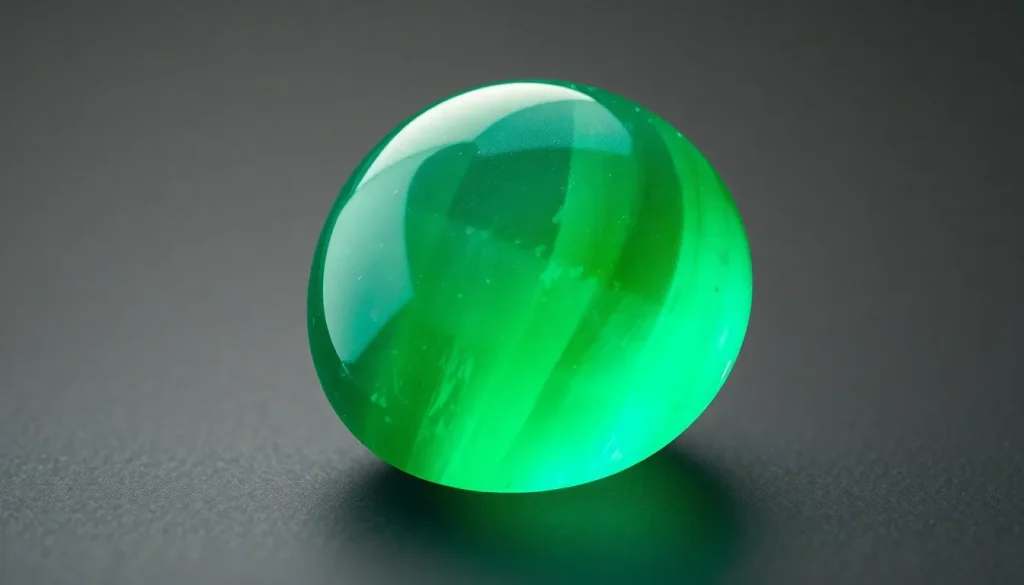
Cornwallite is a secondary copper arsenate mineral noted for its bright emerald‑green to bluish‑green hue. It forms botryoidal or radial aggregates and is occasionally cut for collectors’ pieces, though its relative softness limits widespread jewelry use.
History and Origin
The mineral was first described in 1846 from specimens mined in the Lanhydrock region of Cornwall, England, which gave it its name. Subsequent discoveries have been reported in oxidized copper deposits worldwide, especially in arid mining districts where groundwater oxidation produces copper‑arsenate minerals.
Meaning and Symbolism
In traditional folklore, the vivid green of cornwallite is associated with renewal, growth, and the heart’s capacity for compassion. Its copper content links it to conductivity and the flow of energy, symbolising the bridging of earthly matters with emotional insight.
Healing and Metaphysical Properties
Crystal‑healing practitioners attribute cornwallite with grounding and heart‑chakra activation. It is believed to promote emotional balance, encourage forgiveness, and assist in releasing old patterns. These claims are based on tradition and are not medical advice.
Varieties and Types
While the mineral itself does not have widely recognized commercial varieties, it is closely related to:
- Olivenite – another copper arsenate with a similar green colour but orthorhombic symmetry.
- Cornubite – a dimorph of cornwallite that shares the same chemical formula but crystallises in the monoclinic system.
Jewelry Uses and Care
Because of its Mohs hardness of 3.5–4, cornwallite is best suited for pendants, earrings, or brooches that are not subject to daily wear. The stone is porous and can be sensitive to acids, detergents, and prolonged exposure to sunlight, which may cause surface darkening.
Cleaning should be done with a soft, lint‑free cloth and mild warm water. Avoid ultrasonic cleaners and harsh chemicals. Store each piece separately to prevent scratching against harder gemstones.
Buying Guide
When selecting cornwallite, consider the following factors:
- Colour intensity – deep, uniform green is most desirable.
- Clarity – avoid specimens with heavy surface patina unless a vintage look is wanted.
- Cut and setting – low‑profile settings reduce the risk of chipping.
- Origin documentation – reputable dealers will provide locality information and any treatment disclosures.
Because the stone is relatively uncommon in gem‑quality, prices vary widely. Expect higher prices for well‑cut, vivid‑green pieces from known localities such as Cornwall or Arizona.
FAQ
What is cornwallite good for?
Cornwallite is valued by collectors for its vivid green colour and is occasionally used in low‑impact jewelry. In crystal‑healing circles it is believed to aid heart‑centered emotional balance, though these claims are traditional beliefs, not medical facts.
Is cornwallite rare?
High‑quality, gem‑grade cornwallite is relatively rare because it forms in limited oxidized copper deposits and is often fragmented. Specimens from classic localities such as Cornwall or Arizona are especially sought after, but lower‑grade material is more common.
How can you tell if cornwallite is real?
Real cornwallite displays a vivid emerald‑green colour, a vitreous luster, and a greenish‑gray streak. Its hardness (3.5–4) means it can be scratched by a steel nail. Professional gemologists can confirm identity with refractive index measurements and X‑ray diffraction.
What chakra is cornwallite associated with?
Traditionally, cornwallite is linked to the Heart chakra (Anahata) because of its green hue, which is believed to promote emotional healing and compassion in crystal‑healing practices.
How should you clean cornwallite?
Clean cornwallite gently with a soft cloth and lukewarm water. Avoid ultrasonic cleaners, harsh chemicals, and prolonged exposure to sunlight, as the stone can be sensitive to acids and may develop surface darkening.
Leave a Reply