
Short Answer
Overview
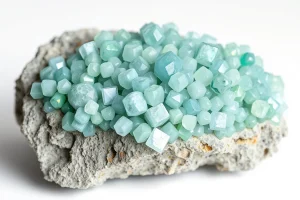
Tremolite is a member of the amphibole group of inosilicate minerals. It forms elongated, fibrous crystals that are typically white, gray, or pale green. While most tremolite has been used industrially as asbestos, high‑quality, clear specimens are occasionally cut for use in fine jewelry and as collector pieces.
History and Origin
The name “tremolite” derives from the Greek word trēma meaning “hole” or “perforation,” referencing its characteristic fibrous habit. The mineral was first described in the early 19th century from deposits in the French Alps. Naturally occurring tremolite is found in metamorphic rocks such as marble and serpentinite, formed under low‑ to medium‑grade metamorphism of calcium‑magnesium rich sediments.
Meaning and Symbolism
In traditional gemstone lore, tremolite is associated with clarity of thought and gentle grounding. Its subtle colors are said to reflect a calm, muted inner strength, encouraging the wearer to remain steady during periods of change.
Healing and Metaphysical Properties
Crystal‑healing practitioners attribute tremolite with the ability to absorb negative energies and promote emotional balance. It is believed to support the heart and lower chakras, helping to release fear and foster a sense of security. These claims are based on metaphysical traditions and are not medical advice.
Varieties and Types
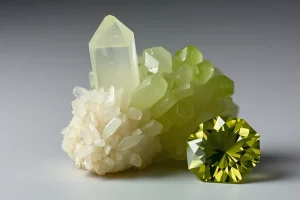
Pure tremolite is typically white to gray. When iron substitutes for magnesium, the mineral becomes actinolite, which displays greener hues. Occasionally, trace elements produce rare pink or bluish shades. The most common gem‑grade material is a translucent, white‑to‑pale‑green variety that can be cut as cabochons or small faceted stones.
Jewelry Uses and Care
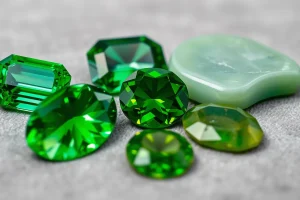
Because tremolite has a Mohs hardness of 5–6, it is best suited for pendants, earrings, and brooches rather than rings that endure heavy wear. The mineral’s perfect cleavage makes it vulnerable to chips, so settings should protect the stone’s edges. Clean tremolite with a soft, lint‑free cloth and mild soapy water; avoid ultrasonic cleaners and harsh chemicals that could damage surface luster.
Buying Guide
When selecting tremolite, consider the following factors:
- Color and Transparency: Clear, white‑to‑pale‑green stones with minimal cloudiness are most prized.
- Cut: Cabochons and low‑profile faceting reduce the risk of cleavage breakage.
- Origin: Specimens from well‑documented localities such as Canada, the United States, or Italy often carry a provenance premium.
- Treatment: Natural tremolite is rarely treated, but verify that any enhancement (e.g., heat or coating) is disclosed.
Because tremolite can contain asbestos fibers, reputable dealers will provide certification confirming that the gemstone has been safely processed and is free of hazardous fibrous material.
FAQ
What is tremolite good for?
Tremolite is valued by collectors for its unique fibrous crystals and occasional use in jewelry. Traditionally, it is believed to aid grounding and emotional balance, but these are metaphysical claims, not medical facts.
Is tremolite rare?
High‑quality, clear tremolite suitable for gemstones is relatively uncommon, especially in colors beyond white and pale green. The mineral itself is abundant in metamorphic rocks, but gem‑grade material is limited.
How can you tell if tremolite is real?
Examine the stone for its characteristic perfect cleavage, vitreous‑to‑silky luster, and white streak. A professional gemologist can confirm identity with refractive index measurements and, if needed, X‑ray diffraction.
What chakra is tremolite associated with?
In crystal‑healing traditions, tremolite is sometimes linked to the root or heart chakras for grounding and emotional stability, though there is no universally accepted association.
How should you clean tremolite?
Use a soft, lint‑free cloth with mild soapy water. Avoid ultrasonic cleaners, steam, or harsh chemicals, as tremolite’s cleavage makes it prone to chipping and surface damage.
Leave a Reply