
Short Answer
Overview
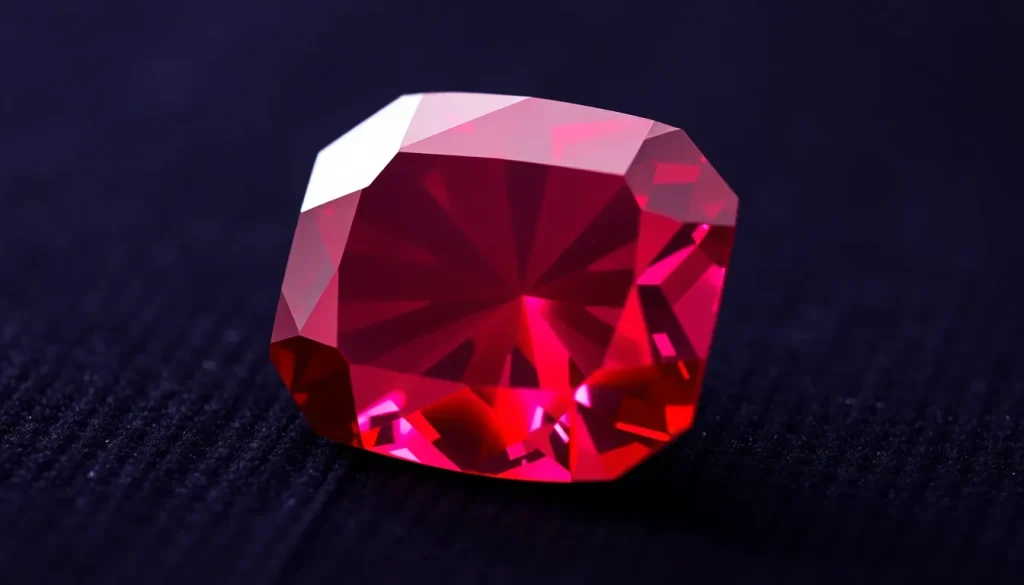
Rubellite is the pink to ruby‑red variety of the tourmaline group, specifically the elbaite species. It is renowned for its vivid coloration, high dispersion, and durability, making it a popular choice for fine jewelry. While chemically identical to other tourmalines, rubellite’s striking hue sets it apart as a distinct gemstone.
History and Origin
The name “rubellite” derives from the Latin rubellus, meaning “reddish.” Historically, pink and red tourmalines were mined in Brazil’s Minas Gerais region in the 18th century, where they were often confused with ruby. Later significant deposits were identified in Afghanistan’s Nuristan area, Mozambique’s Manica Province, and the United States (California). The stone’s popularity grew in the Art Deco era when its bold color complemented the period’s design aesthetic.
Meaning and Symbolism
Traditionally, rubellite symbolizes love, passion, and emotional balance. Its deep pink to red tones are associated with the heart and the nurturing aspects of affection. In contemporary jewelry marketing, rubellite is promoted as an ethical alternative to ruby, offering comparable beauty without the same price or supply constraints.
Healing and Metaphysical Properties
In crystal‑healing circles, rubellite is believed to stimulate the heart chakra, encouraging unconditional love, compassion, and emotional healing. Practitioners claim it can help release past emotional wounds, enhance self‑esteem, and promote a sense of inner warmth. These attributes are considered spiritual and are not a substitute for professional medical treatment.
Varieties and Types
Rubellite occurs in a range of hues, from soft pastel pink to deep ruby red. The most valuable stones display a saturated, even color with minimal zoning. Some specimens are naturally pinkish, while others achieve deeper reds through controlled heat treatment—a widely accepted practice that does not diminish durability.
- Natural Pink Rubellite: Light to medium pink, often with a subtle teal or violet undertone.
- Natural Red Rubellite: Intense ruby red, sometimes bordering on garnet.
- Heat‑Treated Rubellite: Originally pale pink stones that have been heated to develop richer red tones.
Jewelry Uses and Care
Because of its hardness (7–7.5 on the Mohs scale) and excellent luster, rubellite is suited for rings, earrings, pendants, and high‑impact pieces. It can be set in prong, bezel, or channel settings. Care recommendations include:
- Clean with warm, soapy water and a soft brush; avoid harsh chemicals.
- Use a microfiber cloth for polishing; avoid ultrasonic cleaners if the stone is heat‑treated.
- Store separately from softer gems to prevent scratches.
Buying Guide
When selecting rubellite, consider the following factors:
- Color Saturation: Deep, uniform color is most valuable.
- Clarity: Inclusions are common; eye‑clean stones command higher prices.
- Cut: Well‑proportioned cuts maximize brilliance.
- Treatment Disclosure: Reputable dealers will state whether the stone has been heat‑treated.
- Certification: For high‑value pieces, request a GIA or IGI report.
Buying from a trusted gem‑dealer or certified retailer ensures authenticity and accurate treatment information.
FAQ
What is rubellite good for?
Rubellite is prized for its vivid pink‑to‑red color in fine jewelry and is traditionally associated with love and emotional balance in crystal‑healing practices.
Is rubellite rare?
High‑quality, saturated rubellite is less common than other tourmaline colors, but the mineral itself is not extremely rare. Rarity depends on color intensity, clarity, and whether the stone is untreated.
How can you tell if rubellite is real?
A real rubellite will have a hardness of 7–7.5, a vitreous luster, and a refractive index between 1.635–1.670. Professional testing, such as spectroscopy or a GIA report, confirms authenticity and any treatments.
What chakra is rubellite associated with?
In crystal‑healing belief systems, rubellite is linked to the Heart (Anahata) chakra, supporting love, compassion, and emotional healing.
How should you clean rubellite?
Clean rubellite with warm soapy water and a soft brush. Avoid harsh chemicals and ultrasonic cleaners if the stone has been heat‑treated. Store separately from softer gems to prevent scratching.
Leave a Reply