
Short Answer
Overview
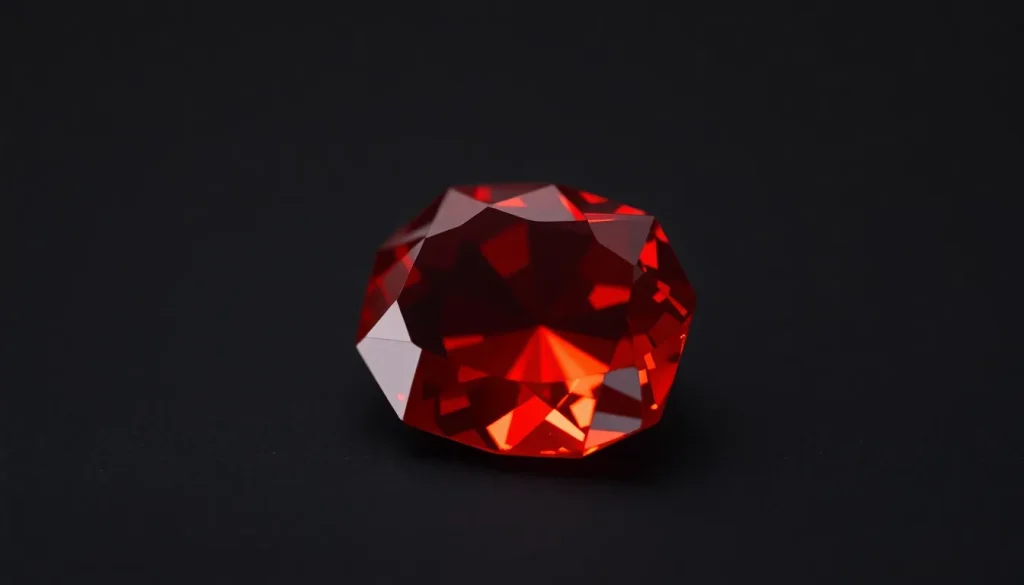
Pyralspite refers to the solid‑solution series that links three major garnet species – pyrope (Mg₃Al₂(SiO₄)₃), almandine (Fe₃Al₂(SiO₄)₃), and spessartine (Mn₃Al₂(SiO₄)₃). Because these end‑members readily substitute for one another in the crystal lattice, natural specimens often display a blend of magnesium, iron, and manganese, resulting in a wide palette of reds, pinks, and orange‑brown tones. All members share the characteristic garnet crystal habit, a dodecahedral or trapezohedral form with a vitreous luster and a high degree of brilliance when faceted.
History and Origin
The term “pyralspite” was coined by mineralogists in the early 20th century to simplify discussion of the compositional continuum between pyrope, almandine, and spessartine. Historically, each end‑member was identified as a distinct gemstone, but advances in analytical techniques (e.g., electron microprobe) showed that most natural garnets fall somewhere along the pyralspite series. Major deposits are found in metamorphic rocks such as schist and gneiss, where high temperatures and pressures promote garnet growth. Important localities include the Umba River in Tanzania, the Ural Mountains of Russia, the Bushveld Complex in South Africa, the Nilgiri Hills of India, and the state of Minas Gerais in Brazil.
Meaning and Symbolism
In traditional gemstone lore, pyralspite garnets are associated with vitality, courage, and passion. The deep red hues are thought to stimulate the heart and encourage emotional honesty, while the orange‑brown shades of spessartine are linked to creativity and personal power. Across cultures, garnets have been used as talismans for protection during travel and as symbols of enduring love.
Healing and Metaphysical Properties
Crystal‑healing practitioners attribute the following properties to pyralspite garnets, based on long‑standing belief rather than scientific evidence:
- Energy grounding: Red and orange garnets are said to anchor the wearer’s energy to the Earth, supporting the Root chakra.
- Emotional balance: The stone is believed to help release old emotional patterns and foster self‑confidence.
- Physical support: Some traditions claim it can aid circulation and support the blood‑forming organs.
These claims are not a substitute for professional medical advice.
Varieties and Types
The pyralspite series includes several recognizable varieties, each named for its dominant chemical component:
- Pyrope: Magnesium‑rich; classic deep blood‑red color.
- Almandine: Iron‑rich; darker reds to brownish‑red tones.
- Spessartine: Manganese‑rich; vivid orange‑to‑copper hues.
- Intermediate specimens: Most marketable garnets contain mixed Mg, Fe, and Mn, producing a gradient of colors from pinkish‑red to rich orange.
Because the series is continuous, the exact composition is often expressed as a percentage of each end‑member (e.g., 40 % pyrope, 35 % almandine, 25 % spessartine).
Jewelry Uses and Care
Garnets, including pyralspite, rank 7–7.5 on the Mohs scale, making them suitable for most jewelry applications such as rings, earrings, pendants, and watch bezels. Their good hardness and resistance to scratching allow for bezel, prong, and channel settings. When caring for pyralspite pieces, follow these guidelines:
- Clean with warm, soapy water and a soft brush; avoid ultrasonic cleaners if the stone is heat‑treated.
- Dry with a lint‑free cloth; moisture‑sensitive treatments (e.g., oil‑filled fractures) may be affected by prolonged soaking.
- Store separately from harder gemstones (e.g., diamonds, sapphires) to prevent abrasion.
Buying Guide
When selecting a pyralspite garnet, consider the following factors:
- Color: Look for vivid, evenly distributed hue; overly brown or muddy tones may indicate lower quality.
- Clarity: Inclusions are common but should not obscure transparency.
- Cut: Well‑cut stones display strong fire and brilliance; poor cuts waste the stone’s natural sparkle.
- Treatment disclosure: Many garnets are heat‑treated to enhance color; reputable sellers will disclose any treatments.
- Certification: For high‑value pieces, request a gem‑ological report from a recognized laboratory (e.g., GIA, IGI).
By focusing on these criteria, buyers can ensure they obtain a beautiful and authentic pyralspite garnet.
FAQ
What is pyralspite good for?
Pyralspite garnets are valued for their vivid red to orange hues in jewelry and are traditionally believed to promote vitality, emotional balance, and grounding. Their durability also makes them suitable for everyday wear.
Is pyralspite rare?
The rarity of pyralspite depends on color quality, clarity, and locality. High‑grade, deep‑red pyrope or bright spessartine stones are less common than lower‑grade material, but the series as a whole is not considered extremely rare.
How can you tell if pyralspite is real?
Authentic pyralspite exhibits a cubic crystal habit, a vitreous luster, and a refractive index between 1.71 and 1.80. Simple tests include checking hardness (7+ on Mohs) and using a loupe to examine inclusions. For certainty, obtain a professional gem‑ological report.
What chakra is pyralspite associated with?
In crystal‑healing traditions, red and orange garnets are often linked to the Root chakra for grounding, while some practitioners also associate orange spessartine tones with the Sacral chakra. These associations are symbolic, not scientific.
How should you clean pyralspite?
Clean pyralspite gently with warm soapy water and a soft brush. Avoid harsh chemicals, ultrasonic cleaners (if the stone is heat‑treated), and prolonged soaking. Dry with a lint‑free cloth and store separately from harder gemstones.
Leave a Reply