
Short Answer
Overview
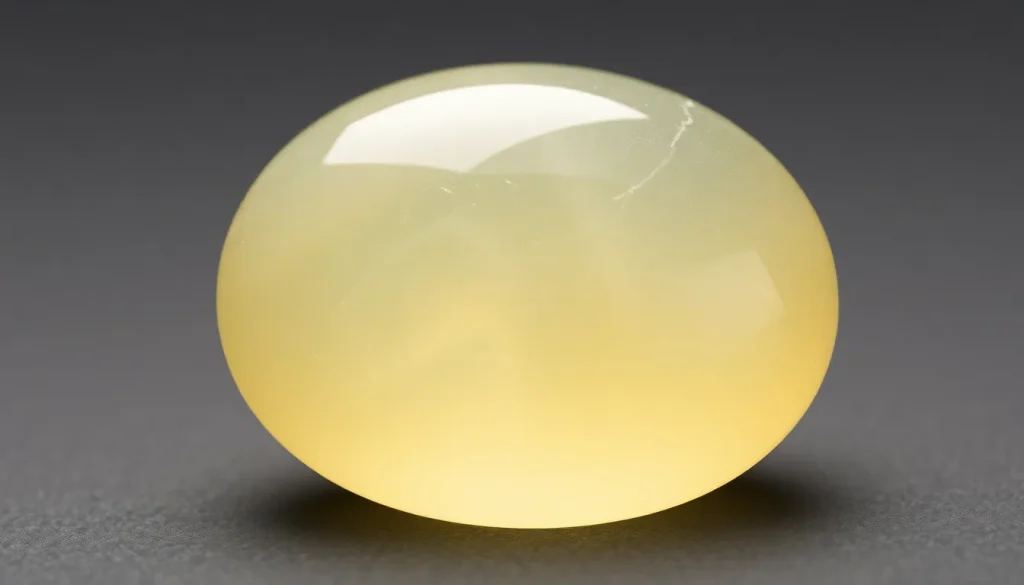
Parisite is a rare fluorocarbonate mineral composed primarily of calcium, cerium, lanthanum, carbonate groups, and fluorine. It crystallizes in the trigonal system and is typically found as tabular or platy crystals that can be cut into cabochons or faceted gems. Colors range from nearly colorless to pale yellow and, in some specimens, a light brownish tint.
History and Origin
The mineral was first described in 1868 from a deposit near the village of Saint‑Marie‑de‑Paris, France, which gave it the name “Parisite.” Subsequent discoveries have been reported from several rare‑earth element districts, including Madagascar, the United States (California), and Russia. Because of its rarity and the presence of valuable rare‑earth elements, Parisite is primarily of interest to mineral collectors rather than large‑scale gem markets.
Meaning and Symbolism
In traditional gemstone lore, Parisite is associated with clarity of thought and the unveiling of hidden potential. Its subtle coloration is said to encourage modesty while supporting personal growth. Wearers often view the stone as a reminder to remain grounded while pursuing intellectual or creative ambitions.
Healing and Metaphysical Properties
Within crystal‑healing circles, Parisite is believed to stimulate the third‑eye chakra, fostering intuition and mental clarity. Practitioners claim it can aid in releasing emotional blockages related to self‑esteem and may support the assimilation of new knowledge. These attributes are based on long‑standing metaphysical traditions and are not medical advice.
Varieties and Types
Parisite occurs in several compositional varieties, the most common being:
- Parisite‑(Ce): Dominated by cerium; formula CaCe(Ce,La)₂(CO₃)₃F.
- Parisite‑(La): Lanthanum‑rich analogue, sometimes listed as a separate species.
Both varieties share similar crystal habits and optical properties, though subtle differences in color and density can be observed under magnification.
Jewelry Uses and Care
Because of its moderate hardness (5.5–6 on the Mohs scale) and perfect basal cleavage, Parisite is best suited for pendants, earrings, and cabochon settings where the stone is protected from impact. It should not be used for rings or bracelets that endure frequent knocks.
Cleaning recommendations:
- Use a soft, lint‑free cloth to wipe away dust.
- If deeper cleaning is required, soak in lukewarm water with a mild dish‑soap, then rinse and pat dry.
- Avoid ultrasonic cleaners, steam cleaning, and harsh chemicals, as these can exacerbate cleavage or affect surface treatments.
Buying Guide
When purchasing Parisite, consider the following factors:
- Color and Transparency: Clear to pale yellow stones with good translucency are most prized.
- Cut Quality: Look for well‑oriented cuts that minimize the visibility of cleavage planes.
- Origin: Specimens from historically documented localities (France, Madagascar) often carry a premium.
- Certification: Request a gemological report from a reputable laboratory to verify authenticity and any treatments.
Because Parisite is uncommon, prices can vary widely. Expect higher costs for larger, flawless cabochons or faceted stones with documented provenance.
FAQ
What is Parisite good for?
Parisite is prized by collectors for its rarity and unique chemistry. In jewelry, it is used for pendants and earrings where its subtle color and moderate hardness can be showcased safely. Metaphysically, it is believed to aid mental clarity and intuition.
Is Parisite rare?
Yes. High‑quality, transparent Parisite specimens are uncommon. Rarity depends on color, size, clarity, and locality, with well‑documented stones from France or Madagascar being especially sought after.
How can you tell if Parisite is real?
Real Parisite exhibits a trigonal crystal habit, perfect basal cleavage, and a refractive index around 1.68–1.71. A professional gemologist can confirm authenticity using optical microscopy, specific gravity measurement, and, if needed, X‑ray diffraction.
What chakra is Parisite associated with?
In crystal‑healing traditions Parisite is linked to the Third Eye (Ajna) chakra, supporting intuition and mental insight. This association is based on belief, not scientific evidence.
How should you clean Parisite?
Clean Parisite with a soft cloth and, if needed, warm soapy water. Rinse thoroughly and dry gently. Avoid ultrasonic cleaners, steam, or harsh chemicals because the stone’s perfect cleavage can be damaged by vibration or aggressive agents.
Leave a Reply