
Short Answer
Overview
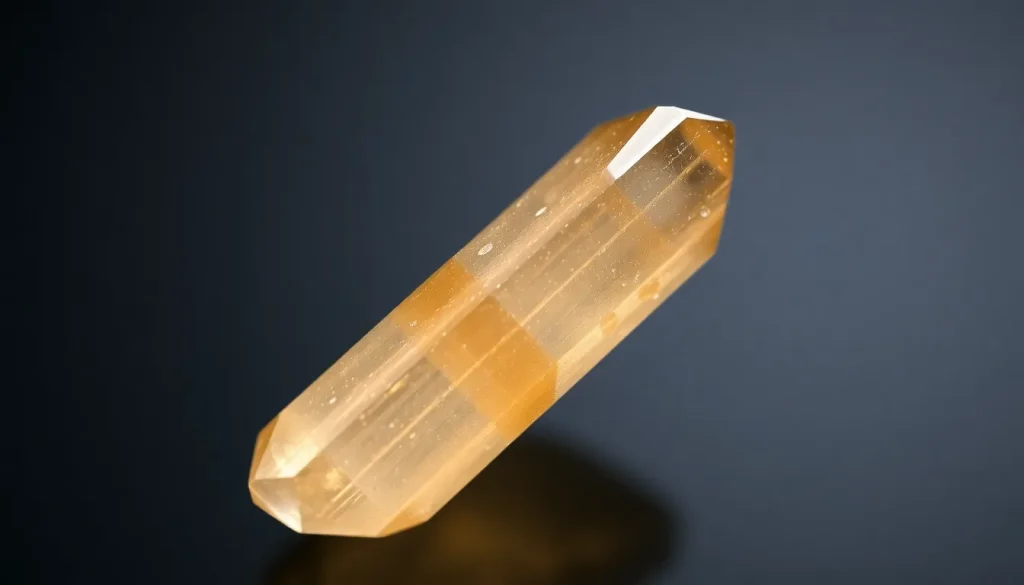
Olenite is a rare sorosilicate mineral that typically forms elongated prismatic crystals with a vitreous luster. Its most common colors range from pale yellow and honey‑gold to light brown, and it can appear transparent to translucent. With a Mohs hardness of about 5.5–6, it is suitable for certain types of jewelry but requires careful handling.
History and Origin
The mineral was first described in the early 1960s after discoveries near the Olen River in the Siberian region of Russia, from which its name derives. Subsequent localities have been identified in Western Australia, Brazil, and a few other scattered sites. Because of its limited occurrence, high‑quality specimens are uncommon.
Meaning and Symbolism
In traditional gemstone lore, Olenite is associated with personal empowerment, confidence, and the ability to manifest intentions. Its warm golden tones are thought to reflect inner strength and optimism, making it a popular talisman for those seeking motivation in creative or professional endeavors.
Healing and Metaphysical Properties
Crystal‑healing practitioners attribute the following properties to Olenite, based on belief rather than scientific evidence:
- Solar Plexus support: Enhances self‑esteem and personal will.
- Energy amplification: Said to boost the effectiveness of other stones placed nearby.
- Emotional balance: Believed to calm anxiety and encourage a positive outlook.
These claims are part of traditional metaphysical systems and should not be taken as medical advice.
Varieties and Types
Natural Olenite occurs primarily in its classic pale‑yellow to light‑brown form. Some specimens display a slightly greener hue due to trace iron, while others may be nearly colourless. The market occasionally offers heat‑treated or oil‑enhanced stones to improve clarity, but untreated material is preferred by collectors.
Jewelry Uses and Care
Because of its moderate hardness, Olenite is best suited for earrings, pendants, and bezel‑set rings where exposure to harsh abrasion is limited. When cleaning, use a soft brush and warm, mildly soapy water; avoid ultrasonic cleaners and harsh chemicals, as they can damage the surface or any treatments applied.
Buying Guide
When purchasing Olenite, consider the following factors:
- Color and clarity: Uniform pale yellow or honey‑gold with minimal inclusions is most valued.
- Cut and proportion: Well‑cut stones display good brilliance and avoid excessive facet loss.
- Origin documentation: Reputable dealers will provide provenance, especially for specimens from classic localities such as Russia.
- Treatment disclosure: Ensure any heat‑treatment or oiling is fully disclosed.
- Certification: Gemological laboratory reports (e.g., GIA, IGI) add confidence in authenticity.
Because Olenite is not widely available, prices can vary considerably; high‑quality, untreated stones command premium prices, while lower‑grade material may be more affordable for casual wear.
FAQ
What is Olenite good for?
Olenite is valued for its warm yellow colour in jewelry and is traditionally believed to support confidence and personal power. It is also collected for its rarity and distinct crystal habit.
Is Olenite rare?
Yes, high‑quality Olenite is rare. It occurs in only a few localities, and gem‑grade material with good colour and clarity is limited, making it less common than many mainstream gemstones.
How can you tell if Olenite is real?
Real Olenite displays a vitreous luster, pale yellow to honey‑gold colour, and a Mohs hardness of about 5.5–6. It should have a white streak and distinct cleavage. Professional gemological testing, such as refractive index measurement and spectroscopy, is recommended for certainty.
What chakra is Olenite associated with?
In crystal‑healing traditions Olenite is linked to the Solar Plexus (Manipura) chakra, which is said to influence confidence and personal will.
How should you clean Olenite?
Clean Olenite with warm, mildly soapy water and a soft brush. Rinse thoroughly and pat dry with a lint‑free cloth. Avoid ultrasonic cleaners, steam, or harsh chemicals, as they may damage the surface or any treatments.
Leave a Reply