
Short Answer
Overview
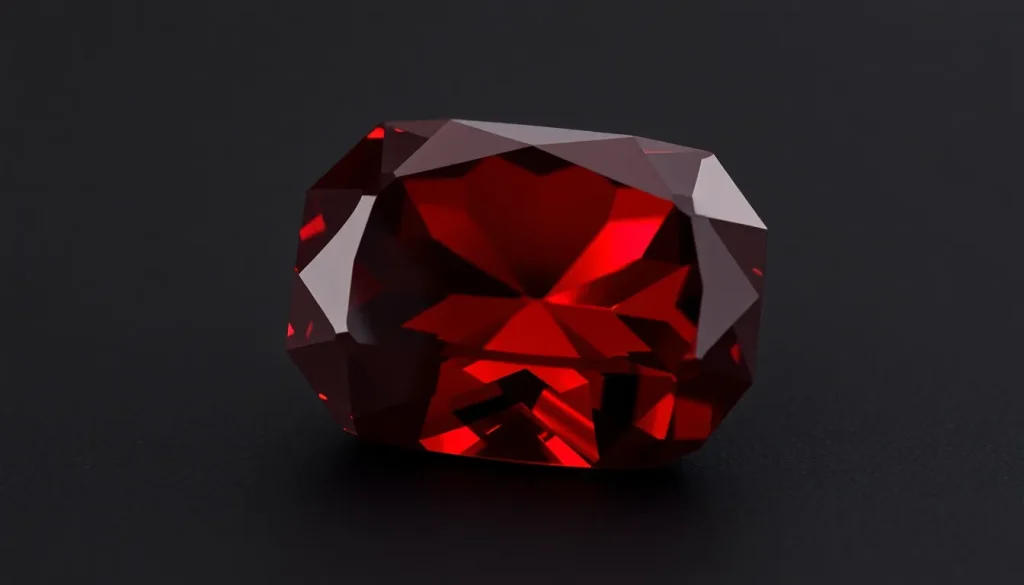
Almandine is a deep‑red to reddish‑brown member of the garnet group, with the ideal chemical formula Fe₃Al₂(SiO₄)₃. It crystallises in the cubic (isometric) system and typically forms well‑shaped dodecahedra or trapezohedra. With a Mohs hardness of 7–7.5, almandine is suitable for many types of jewelry, from rings to pendants. Its vivid color, high refractive index, and vitreous luster make it a favorite among gem collectors and designers.
History and Origin
The name “almandine” derives from the German word Almand, meaning “German,” because the stone was first described from deposits in the Harz Mountains of Germany. Historically, almandine was used in medieval armor as a decorative inlay and later became a popular gemstone in Victorian jewellery. Major producing regions today include Norway, Brazil, India, the United States (California), Russia, Tanzania, Sri Lanka, and Madagascar. These localities yield specimens ranging from transparent, glass‑like stones to opaque, richly pigmented crystals.
Meaning and Symbolism
In traditional gemstone lore, almandine is associated with courage, vitality, and perseverance. Its deep red hue is thought to symbolize the life‑force and to encourage the wearer to face challenges with confidence. Almandine is often given as a gift to mark milestones such as graduations, promotions, or anniversaries, reflecting the desire for strength and lasting commitment.
Healing and Metaphysical Properties
Crystal‑healing practitioners attribute a range of metaphysical qualities to almandine. It is believed to:
- Ground and stabilise the wearer’s energy, supporting the Root Chakra.
- Boost physical stamina and aid recovery after illness or injury.
- Promote emotional balance, helping to release fear and anger.
- Enhance the flow of blood and circulation, according to traditional beliefs (not a medical claim).
These properties are part of folklore and spiritual practice; they are not supported by scientific evidence.
Varieties and Types
Almandine is one of the five major garnet species, and it frequently forms solid‑solution series with:
- Pyrope – creating the pyrope‑almandine series, which yields stones of intermediate colour.
- Spessartine – resulting in the almandine‑spessartine series, often producing orange‑red hues.
While pure almandine displays a uniform deep red, mixed varieties can exhibit brown, purplish, or even violet undertones. Heat treatment is occasionally used to enhance colour saturation, but untreated almandine of good quality is highly prized.
Jewelry Uses and Care
Because of its hardness and durability, almandine is suitable for rings, earrings, necklaces, and brooches. It is frequently cut in:
- Round brilliant
- Oval
- Emerald
- Cushion
When caring for almandine jewellery, follow these guidelines:
- Cleaning: Use warm, soapy water and a soft brush. Rinse thoroughly and pat dry with a lint‑free cloth.
- Avoid harsh chemicals: Chlorine, bleach, and strong acids can affect surface treatments.
- Storage: Keep stones separated from softer gems (e.g., amber, pearls) to prevent scratching.
- Inspection: Have settings checked annually by a jeweller, especially for pieces set in softer metals.
Buying Guide
When purchasing almandine, consider the following factors:
- Colour: The most valuable stones display a uniform, saturated deep red without brown or gray overtones.
- Clarity: Inclusions are common, but eye‑clean stones fetch higher prices.
- Cut: Well‑proportioned cuts maximise brilliance; poorly cut stones appear dull.
- Origin: Certain locales (e.g., Norway and Brazil) are renowned for high‑quality material.
- Treatment disclosure: Reputable dealers will state whether the stone has been heat‑treated or irradiated.
For assurance, request a certificate from a recognised laboratory such as the Gemological Institute of America (GIA) or the International Gemological Institute (IGI). A certified report confirms identity, treatment status, and basic physical properties.
FAQ
What is almandine good for?
Almandine is prized for its vivid red colour, durability, and suitability for all types of jewellery. Traditionally, it is believed to promote courage, grounding, and emotional balance, though these claims are spiritual rather than scientific.
Is almandine rare?
Almandine is relatively common compared with rarer garnet varieties such as demantoid. High‑quality, deep‑red, eye‑clean stones from renowned localities can be scarce and command premium prices.
How can you tell if almandine is real?
Real almandine feels heavy for its size (high specific gravity) and shows a vitreous luster. It lacks cleavage and has a conchoidal fracture. Professional testing—such as refractive index measurement or a GIA certificate—provides certainty.
What chakra is almandine associated with?
In crystal‑healing traditions, almandine is linked to the Root Chakra, supporting grounding and stability.
How should you clean almandine?
Clean almandine with warm, soapy water and a soft brush, rinse well, and dry with a lint‑free cloth. Avoid harsh chemicals and ultrasonic cleaners if the stone has surface treatments.
Leave a Reply