
Short Answer
Monazite is a fascinating phosphate mineral that serves as a primary source of rare earth elements (REE), particularly cerium and lanthanum. While not typically utilized as a faceted gemstone due to its low hardness and lack of transparency, it is of immense value to geologists, chemists, and industrial engineers. Found globally in igneous rocks and heavy mineral sands, Monazite provides a window into the geochemical history of the Earth’s crust.
What Is Monazite?
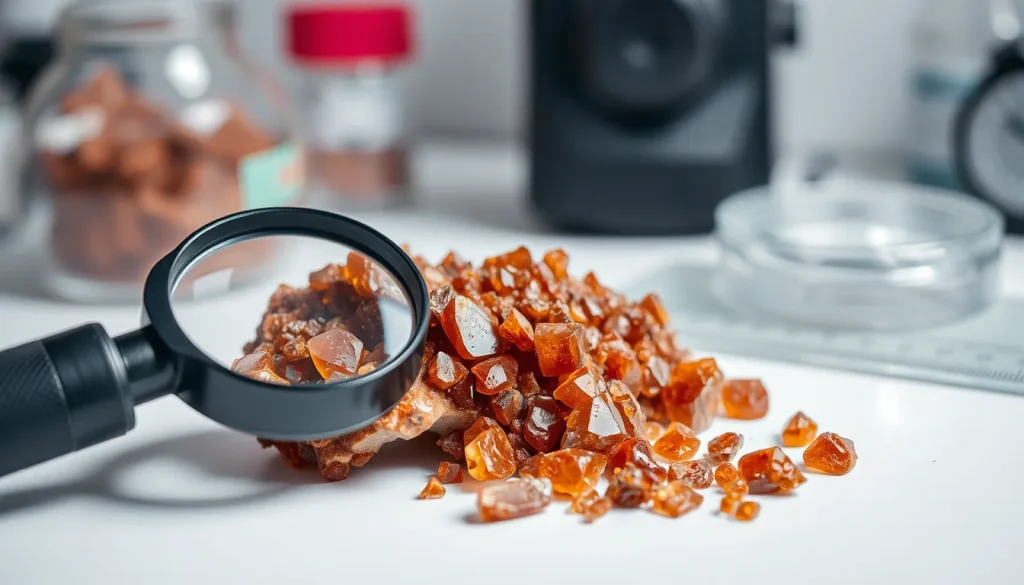
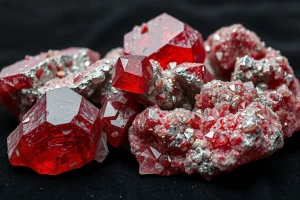
Monazite is a group of phosphate minerals with the general formula (Ce, La, Nd, Th)PO4. It is primarily composed of light rare earth elements (LREE) and is often associated with thorium, making it naturally radioactive. The mineral typically occurs as small, reddish-brown to yellowish grains or occasionally as larger, translucent crystals.
From a crystallographic perspective, monazite belongs to the monoclinic crystal system. Its chemical flexibility allows it to incorporate various elements, which makes it an essential tool for geochronology—specifically U-Pb dating—to determine the age of metamorphic and igneous rocks.
Practical Uses and Limitations
Unlike diamonds or sapphires, Monazite is not used in jewelry. Its primary value is industrial and scientific:
- Rare Earth Production: It is a critical ore for extracting cerium, lanthanum, and neodymium, which are used in high-strength magnets, catalysts, and electronics.
- Nuclear Energy: Because it contains thorium, Monazite is researched as a potential fuel source for future thorium-based nuclear reactors.
- Geological Dating: Due to its resistance to chemical weathering and its ability to retain uranium and thorium, it is used to date the timing of metamorphic events.
Professional Tip: Because Monazite contains thorium, handled samples can emit alpha radiation. While generally safe in small quantities, professional mineralogists utilize appropriate shielding and ventilation when processing powdered Monazite.
Identification and Look-Alikes
Identifying Monazite requires a combination of physical observation and instrumental analysis. To the naked eye, it can be confused with other heavy minerals found in placer deposits.
Physical Properties
| Property | Value/Description |
|---|---|
| Color | Yellowish-brown, reddish-brown, occasionally pink |
| Hardness (Mohs) | 5.0 to 5.5 |
| Luster | Resinous to greasy |
| Specific Gravity | 4.6 to 5.4 (Very Heavy) |
| Streak | White to yellowish |
Common Look-Alikes
- Xenotime: Also a rare earth phosphate, but it belongs to the tetragonal system and contains heavier rare earths (Yttrium).
- Zircon: Often found alongside Monazite in sands; however, Zircon is significantly harder (7.5) and lacks the radioactivity of Monazite.
- Rutile: While similarly colored, Rutile has a higher refractive index and different crystal habit.
Quality and Value Factors
In the context of Monazite, “quality” is not measured by clarity or color, but by chemical purity and elemental concentration. The value of a Monazite deposit is determined by:
- REE Concentration: The percentage of neodymium and praseodymium relative to other elements.
- Thorium Content: While thorium is a resource, very high levels can complicate the processing and transport of the mineral due to radioactivity regulations.
- Grain Size: Larger, well-formed crystals are highly prized by mineral collectors and museums, whereas fine grains are preferred for industrial leaching.
FAQ
Is Monazite safe to touch?
Yes, in small crystal form, it is generally safe to handle. However, because it contains thorium, inhaling powdered monazite is hazardous due to alpha radiation.
Can Monazite be used in jewelry?
No, Monazite is too soft (5-5.5 Mohs) and lacks the transparency and brilliance required for gemstones.
How is Monazite different from Xenotime?
While both are phosphates, Monazite contains light rare earths (like Cerium) and is monoclinic, whereas Xenotime contains heavy rare earths (like Yttrium) and is tetragonal.
Leave a Reply