
Short Answer
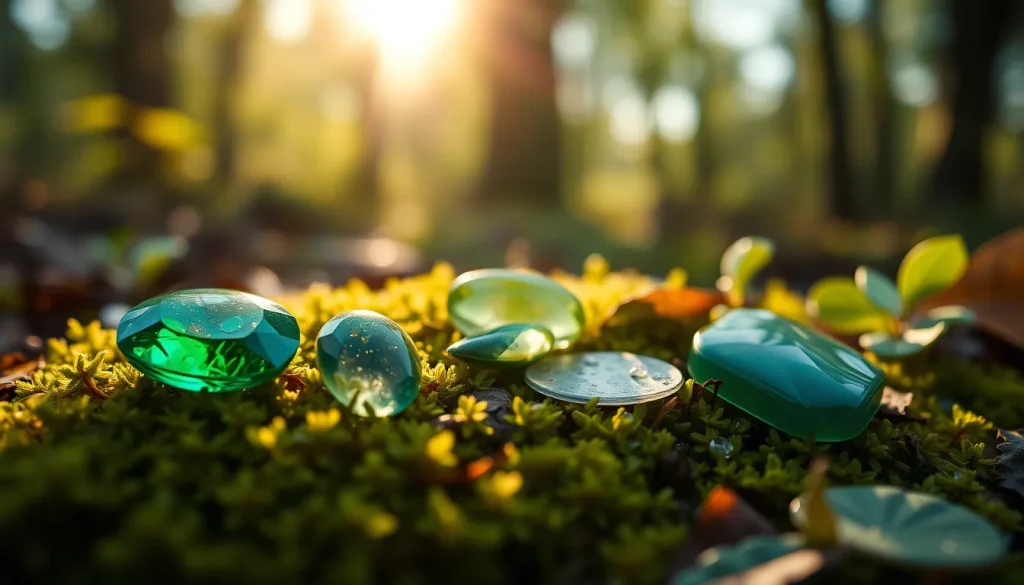
Throughout human history, the color green has been inextricably linked to the natural world, representing the cyclical rebirth of spring and the enduring vitality of the earth. In gemology and metaphysical study, green gemstones are prized not only for their aesthetic brilliance but for their perceived ability to facilitate inner growth, emotional healing, and spiritual renewal.
Documented Context
The association of green minerals with growth and renewal is documented across multiple civilizations. From the lush valleys of ancient Mesopotamia to the imperial courts of China, green stones have been utilized as talismans for health and prosperity. Scientifically, the green hue in gemstones is typically caused by the presence of transition metals, most commonly chromium, vanadium, or iron, within the crystal lattice.
Place and Period
Different cultures have emphasized different green stones during specific eras:
- Ancient Egypt: Peridot (known as the ‘gem of the sun’) was highly valued during the New Kingdom for its protective properties.
- Imperial China: Jade (Nephrite and Jadeite) became the ultimate symbol of virtue, purity, and longevity, often surpassing gold in value during the Han and Qing dynasties.
- Renaissance Europe: Emeralds became symbols of nobility and divine wisdom, frequently used in royal regalia to signify fertility and growth.
Historical Uses
Historically, green gemstones were employed for more than mere ornamentation. They were integrated into ritualistic and medicinal practices:
| Gemstone | Historical Application | Intended Outcome |
|---|---|---|
| Emerald | Placed under the tongue or on the eyes | To restore vision and soothe inflammation |
| Jade | Carved into amulets and burial suits | To ensure immortality and spiritual protection |
| Malachite | Used in powdered form or as pendants | To ward off negative energy and promote health |
Later Interpretations
As the focus shifted from ritualistic medicine to psychology and spirituality, the interpretation of green gemstones evolved. During the 19th and 20th centuries, the ‘green’ energy was recontextualized as a tool for emotional balance. The focus moved toward the heart center, where green stones were believed to help the wearer release old traumas and open themselves to new experiences, mirroring the biological process of a plant shedding old leaves to make room for new growth.
Modern Associations
In contemporary practice, green gemstones are categorized by their specific ‘vibrational’ intent for renewal:
- Emerald: Associated with unconditional love and the renewal of partnerships.
- Peridot: Linked to the release of burdens and the fostering of a positive, growth-oriented mindset.
- Tsavorite Garnet: Viewed as a stone of abundance and the manifestation of personal goals.
- Green Tourmaline: Used for detoxifying the emotional body and promoting physical vitality.
“The allure of green gemstones lies in their reflection of the natural world. By wearing these stones, the individual seeks to align their internal state with the effortless growth and resilience of nature itself.”
Source Limitations
It is important to note that while the symbolic associations of green gemstones are deeply rooted in cultural history, they are not supported by clinical scientific data. The ‘healing’ properties attributed to these stones are based on traditional beliefs and metaphysical frameworks rather than empirical medical evidence. Gemologists emphasize that the value of a stone is determined by its color, clarity, cut, and carat weight, regardless of its perceived spiritual utility.
FAQ
Which green gemstone is best for emotional healing?
While subjective, Emerald and Green Tourmaline are most frequently associated with emotional renewal and the opening of the heart center.
What causes the green color in emeralds versus peridots?
Emeralds get their green color primarily from chromium or vanadium, whereas peridots are colored by iron.
Are all green stones considered 'stones of growth'?
In metaphysical traditions, yes, the color green is universally linked to growth and renewal, though the specific 'type' of growth varies by stone.
Leave a Reply