
Short Answer
Overview
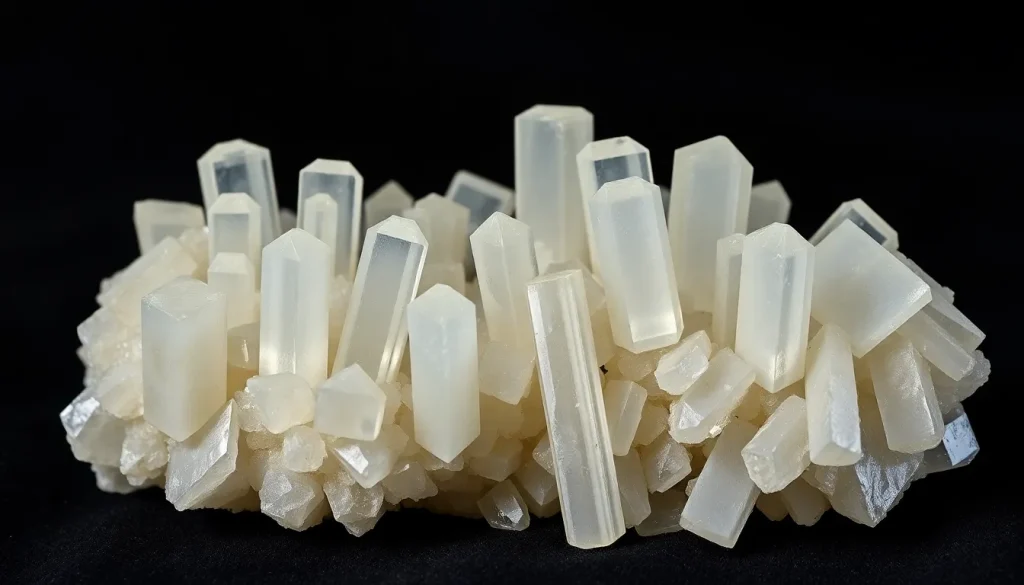
Leucophanite is a rare silicate mineral that occasionally occurs in gem‑quality crystals. Its chemical composition is NaCa4Si8O20(OH,F)·8H2O, placing it in the cancrinite group of sorosilicates. The mineral forms prismatic, often tabular crystals that can be colourless, white, pale yellow or very light brown. Because of its relatively low hardness (5.5–6 on the Mohs scale) and perfect cleavage, it is used primarily in collectors’ pieces rather than everyday jewelry, yet its subtle glow and historical intrigue make it a point of interest for gem enthusiasts.
History and Origin
The name “leucophanite” derives from the Greek words leukos (white) and phanitos (appearing), reflecting the stone’s typical colourless to milky appearance. It was first described in the early 19th century from specimens found in the Långban region of Sweden. Since then, notable localities have been identified in Norway, the United States (California), Canada (British Columbia), and Japan. The mineral is usually formed in alkaline, low‑temperature hydrothermal veins and in nepheline‑rich pegmatites.
Meaning and Symbolism
In traditional gemstone lore, leucophanite is thought to represent clarity of thought and inner illumination. Its subtle colour is associated with humility and a quiet confidence, making it a symbolic reminder to stay grounded while pursuing higher ideals.
Healing and Metaphysical Properties
Crystal‑healing practitioners attribute the following properties to leucophanite, describing them as traditional beliefs rather than medical facts:
- Enhances mental clarity and aids in meditation.
- Supports the throat chakra by encouraging honest communication.
- Promotes emotional balance, helping the wearer release suppressed feelings.
These claims are part of folk metaphysics and should not replace professional health advice.
Varieties and Types
Leucophanite occurs in several colour varieties, the most common being:
- Colourless/White – Transparent crystals with a milky luster.
- Pale Yellow – Light lemon‑tinted specimens, sometimes confused with citrine.
- Pale Brown – Light amber tones, often found in oxidized zones.
- Greenish Hue – Rare, caused by trace iron or copper.
Inclusions of fluid‑filled cavities can produce a “cat’s‑eye” effect, but such occurrences are extremely rare.
Jewelry Uses and Care
Because of its perfect cleavage and moderate hardness, leucophanite is best suited for pendants, earrings, and brooches that protect the stone from knocks. Settings that cushion the gem, such as bezel or prong with protective backings, are recommended.
Cleaning should be performed with a soft brush and mild soapy water. Avoid ultrasonic cleaners, steam, and harsh chemicals, as they can damage the surface or exacerbate cleavage. Store the stones separately from harder gems to prevent scratching.
Buying Guide
When purchasing leucophanite, consider the following criteria:
- Clarity and Colour: Look for transparent to translucent stones with uniform colour and minimal inclusions.
- Cut and Setting: Well‑cut stones will display their natural luster; avoid overly deep cuts that may increase the risk of fracture.
- Certification: Request a gemological report from a reputable laboratory that confirms the mineral species and notes any treatments.
- Origin: Reputable sources often disclose the locality, which can affect value and rarity.
Because natural leucophanite is uncommon, prices vary widely. Expect higher costs for large, clear, colourless specimens from classic localities such as Sweden or Norway.
FAQ
What is leucophanite good for?
Leucophanite is valued by collectors for its rare crystal habit and subtle beauty, and it is occasionally set in pendants or earrings. Traditionally, crystal‑healing practitioners believe it promotes mental clarity and supports communication.
Is leucophanite rare?
High‑quality, transparent leucophanite is relatively rare. Fine specimens are most commonly found from classic localities such as Sweden and Norway, while lower‑grade material is more abundant from other hydrothermal deposits.
How can you tell if leucophanite is real?
Real leucophanite displays a vitreous‑pearly luster, perfect cleavage, and a refractive index around 1.53. It is usually colourless to pale yellow and has a white streak. Professional gemological testing, including spectroscopy and density measurement, is recommended for certainty.
What chakra is leucophanite associated with?
In crystal‑healing traditions, leucophanite is sometimes linked to the throat chakra, but there is no universally accepted chakra association.
How should you clean leucophanite?
Clean leucophanite with a soft brush and mild soapy water, then rinse with distilled water and pat dry. Avoid ultrasonic cleaners, steam, and harsh chemicals, and store it separately from harder gemstones to prevent scratching.
Leave a Reply