
Short Answer
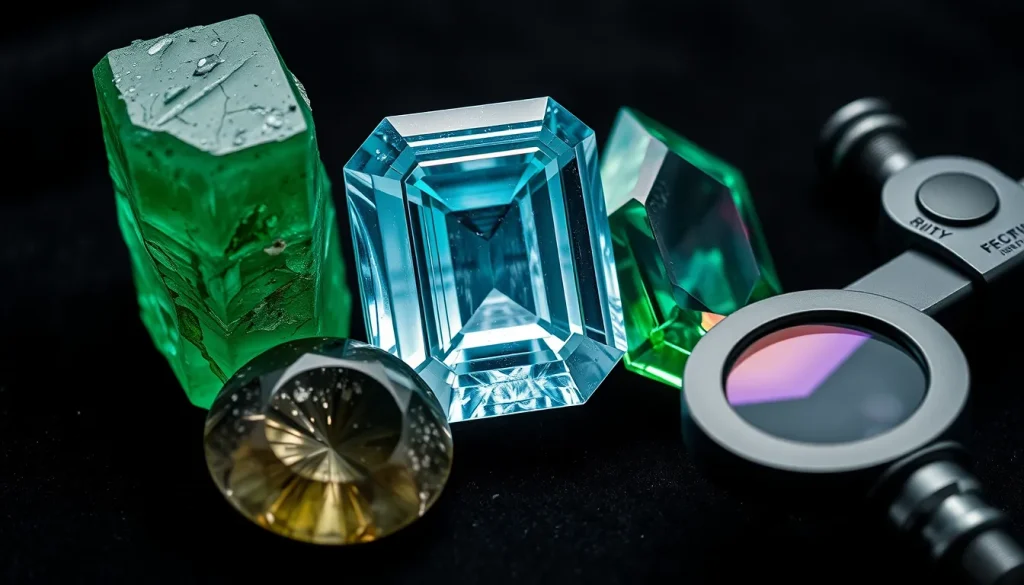
Beryllium is a rare alkaline earth metal that serves as the foundational element for some of the world’s most coveted gemstones. In the earth’s crust, beryllium is seldom found in its pure form, instead bonding with silicon, oxygen, and aluminum to create complex mineral structures. The result is a group of minerals characterized by exceptional hardness, stability, and a diverse palette of colors that have captivated collectors for millennia.
What Is a Beryllium Mineral?
In gemology, beryllium minerals refer to gemstones where beryllium (Be) is a primary constituent of the chemical formula. The two most significant mineral groups containing beryllium are Beryl (a cyclosilicate) and Chrysoberyl (an oxide). While they share a common element, their crystal systems and chemical bonds differ significantly, leading to distinct physical properties.
Beryl has the chemical formula Be3Al2Si6O18, while Chrysoberyl is BeAl2O4. Both are known for their durability, making them highly suitable for jewelry, though they vary in their refractive indices and cleavage patterns.
Varieties and Related Materials
The diversity of beryllium minerals is most evident in the Beryl species, where trace elements replace aluminum or beryllium to create a spectrum of colors.

The Beryl Family
- Emerald: The most valuable variety, colored green by chromium or vanadium.
- Aquamarine: Ranging from pale blue to deep teal, colored by iron.
- Morganite: A soft pink to peach variety colored by manganese.
- Heliodor: The golden-yellow variety, also attributed to iron.
- Goshenite: The colorless, pure form of beryl.
The Chrysoberyl Family
Unlike the beryl family, chrysoberyl is often prized for its optical effects rather than just its color:
- Alexandrite: A rare color-change variety that appears green in daylight and red in incandescent light.
- Cymophane (Cat’s Eye): Displays a sharp band of light (chatoyancy) due to parallel needle-like inclusions.
- Yellow Chrysoberyl: The standard yellow-green variety, highly durable and brilliant.
Identification and Look-Alikes
Because beryllium minerals often overlap in color with other species, professional identification is critical. For example, emeralds are frequently confused with green tourmaline or tsavorite garnet.
| Beryllium Mineral | Common Look-Alike | Distinguishing Feature |
|---|---|---|
| Emerald | Green Tourmaline | Emeralds typically have more “jardin” (internal inclusions). |
| Aquamarine | Blue Topaz | Aquamarine has a lower refractive index and different crystal habit. |
| Alexandrite | Color-change Garnet | Alexandrite has a significantly higher hardness (8.5). |
Treatments and Synthetic Counterparts
Due to the rarity of high-quality beryllium crystals, treatments are common.
Gemologist’s Tip: Always verify if an emerald has been “oiled.” Cedar oil is traditionally used to fill surface-reaching fractures to improve clarity and color saturation.
- Oiling: Common in emeralds to mask inclusions.
- Heat Treatment: Occasionally used in aquamarine or morganite to improve color consistency.
- Synthetics: Flux-grown emeralds and hydrothermal beryls are chemically identical to natural stones but lack natural inclusion patterns.
Quality and Value Factors
The value of beryllium minerals is driven by color intensity, saturation, and clarity. For Beryl, the “saturation” of the green in emeralds or the “watery’ clarity of aquamarines is paramount. For Chrysoberyl, the strength of the color change in Alexandrite or the sharpness of the eye in Cat’s Eye determines the market price.
Jewelry Suitability and Care
Beryllium minerals are generally excellent for jewelry due to their high Mohs hardness (Beryl: 7.5-8; Chrysoberyl: 8.5). However, emeralds can be brittle due to internal fractures.
- Cleaning: Use lukewarm soapy water and a soft brush. Avoid ultrasonic cleaners for oiled emeralds.
- Storage: Store beryllium stones separately from diamonds to prevent scratching.
- Setting: Protective settings (like bezels) are recommended for emeralds to prevent chipping.
FAQ
Are all beryls emeralds?
No, emerald is just one variety of beryl. Other varieties include aquamarine, morganite, and heliodor, distinguished primarily by their color.
What makes Alexandrite so expensive?
Its extreme rarity and its unique ability to change color from green in daylight to red in incandescent light.
Can I use an ultrasonic cleaner on my emerald jewelry?
It is generally discouraged, especially for oiled emeralds, as the ultrasonic vibrations can strip the oil or widen existing fractures.
Leave a Reply