
Short Answer
Overview
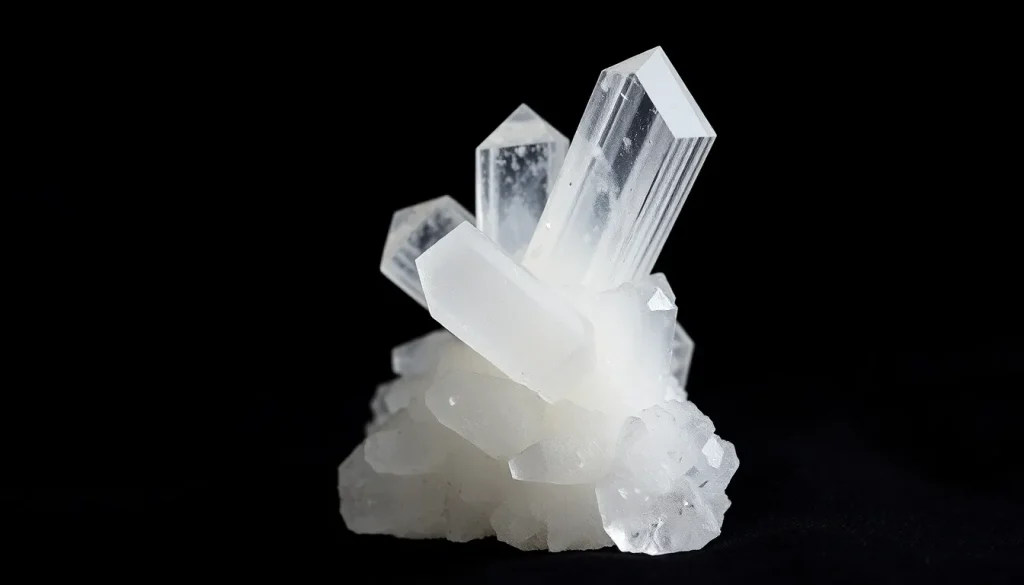
Baryte (also spelled barite) is a barium sulfate mineral with the chemical formula BaSO4. It crystallizes in the orthorhombic system and is renowned for its unusually high specific gravity (approximately 4.5), which makes it feel noticeably heavy for its size. Natural specimens occur in a variety of colors, including colorless, white, gray, yellow, brown, blue, and red, often forming tabular or prismatic crystals that can be transparent to opaque.
History and Origin
The name “baryte” derives from the Greek word barys, meaning “heavy,” reflecting its density. Historically, baryte has been mined for its barium content, which is essential in drilling fluids for oil and gas exploration. In the gemstone market, high‑clarity, well‑formed crystals have been collected since the 19th century, especially from locales such as the United Kingdom’s Derbyshire region and the United States’ Texas and Missouri deposits. Today, major producing countries include China, India, Morocco, Mexico, and the United States.
Meaning and Symbolism
In traditional gemstone lore, baryte is associated with grounding, stability, and the ability to “anchor” thoughts. Its heavy feel is said to symbolize emotional weight that can be transformed into strength. Collectors often value baryte for its rarity in large, flawless crystals and its striking metallic or vivid hues.
Healing and Metaphysical Properties
Crystal‑healing practitioners attribute the following properties to baryte, describing them as traditional beliefs rather than medical facts:
- Grounding and Protection: Thought to help ground excess mental energy and protect against negative influences.
- Emotional Balance: Believed to aid in releasing repressed emotions and fostering calmness.
- Physical Support: Some claim it can support the skeletal system and aid in the absorption of calcium, though these are not clinically proven.
Varieties and Types
Baryte exhibits several notable varieties, distinguished primarily by color and crystal habit:
- Clear (Colorless) Baryte: Transparent crystals prized for their glass‑like appearance.
- Blue Baryte: Often formed by inclusions of iron or manganese, ranging from pale sky‑blue to deep cobalt.
- Yellow (Golden) Baryte: Colored by trace amounts of sulfur or iron, giving a warm, honey‑like hue.
- Red Baryte: Rare, typically colored by hematite or other iron oxides.
- Brown/Chocolate Baryte: Darker tones caused by organic impurities.
Jewelry Uses and Care
Because baryte has a Mohs hardness of 3–3.5, it is relatively soft compared with traditional gemstones such as quartz or sapphire. Consequently, it is most suitable for pendants, earrings, brooches, and occasional‑wear pieces where abrasion risk is low. When set in protective settings (e.g., bezel or channel), baryte can be displayed safely.
Care Guidelines:
- Clean with a soft, lint‑free cloth; avoid ultrasonic cleaners that could cause micro‑fractures.
- Use mild, pH‑neutral soap and warm water for deeper cleaning; rinse thoroughly and dry.
- Store separately from harder stones to prevent scratching.
- Avoid exposure to harsh chemicals, acids, or prolonged sunlight, which can fade some colored varieties.
Buying Guide
When purchasing baryte, consider the following factors:
- Clarity and Transparency: Higher‑value pieces are clear, free of inclusions, and exhibit good light transmission.
- Color Saturation: Vivid blues, deep reds, and rich yellows are rarer and command higher prices.
- Crystal Habit: Well‑formed tabular or prismatic crystals with sharp terminations are preferred by collectors.
- Treatment Disclosure: Some baryte is heat‑treated to enhance color; reputable sellers should disclose any treatments.
- Certification: For larger or high‑value specimens, request a gemological report from a recognized laboratory (e.g., GIA or IGI).
Because baryte is relatively abundant in certain regions, the price is generally modest, but exceptional specimens—especially large, flawless crystals—can be valuable.
FAQ
What is baryte good for?
Baryte is valued for its high specific gravity in industrial drilling fluids, as a collector's mineral, and in jewelry where its heavy feel and varied colors add visual interest. Traditional crystal‑healing beliefs attribute grounding and emotional balance properties.
Is baryte rare?
Baryte is not rare as a mineral, but high‑quality, large, clear crystals—especially in vivid colors like blue or red—are less common and can be considered rare in the gemstone market.
How can you tell if baryte is real?
Real baryte feels unusually heavy for its size, shows a perfect {001} cleavage, and has a white streak. It is typically submetallic to silky in luster. Professional testing such as specific gravity measurement or X‑ray diffraction can confirm authenticity.
What chakra is baryte associated with?
In crystal‑healing traditions, baryte is sometimes linked to the Root (Muladhara) chakra for grounding, though there is no universally accepted chakra association.
How should you clean baryte?
Clean baryte with a soft cloth and mild soap solution; avoid ultrasonic cleaners and harsh chemicals. Store it separately from harder gemstones to prevent scratching, and keep it away from prolonged direct sunlight.
Leave a Reply