
Short Answer
Overview
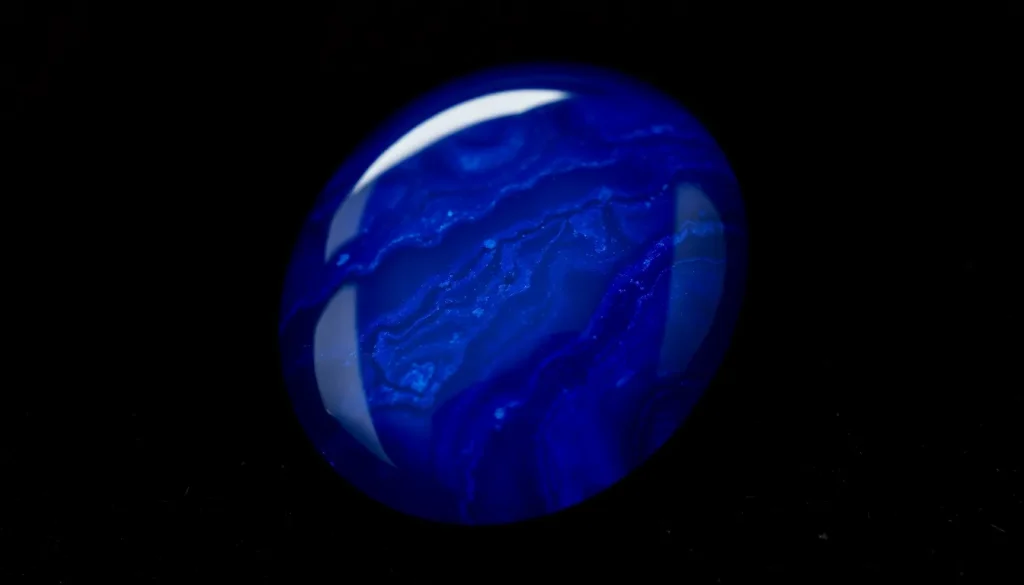
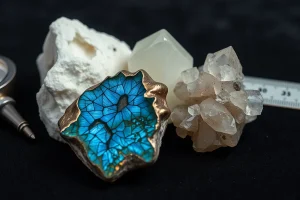
Kyanite is a silicate mineral composed of aluminium silicate (Al2SiO5). It crystallises in the triclinic system and is renowned for its distinct basal cleavage, which allows the stone to split easily along one plane. The most common colour is a vivid blue, though it also occurs in green, gray, black, and violet shades. Because of its striking appearance and metaphysical associations, kyanite is used in jewellery, decorative objects, and crystal‑healing practices.
History and Origin
The name “kyanite” derives from the Greek word kyanos meaning “blue”. Historically, blue kyanite was first described in the 19th century from deposits in Brazil. Today, significant sources include Brazil, the United States (North Carolina, Virginia), India, Madagascar, Switzerland, Canada, and Kenya. Kyanite forms under high‑pressure, low‑temperature conditions typical of metamorphic environments, often in schist and gneiss.
Meaning and Symbolism
In traditional gemstone symbolism, kyanite is associated with truth, communication, and inner peace. Its clear, cool colour is thought to encourage honest expression and alignment of the mind and spirit. The stone’s tendency to split along a single plane is sometimes interpreted as a reminder to stay flexible and adaptable.
Healing and Metaphysical Properties
Crystal‑healing practitioners attribute a range of metaphysical qualities to kyanite. It is believed to aid meditation, enhance intuition, and promote calmness by aligning the throat chakra. Some claim it can help release old patterns, improve focus, and support emotional balance. These beliefs are part of traditional spiritual practices and are not medical advice.
Varieties and Types
Kyanite occurs in several colour varieties, each with subtle differences in translucency and hue:
- Blue kyanite – the most common and highly valued for jewellery.
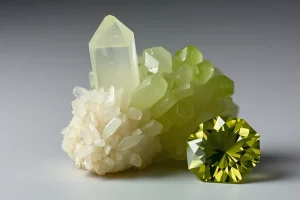
- Green kyanite – often displays a pale to deep green, sometimes called “green silk stone”.
- Gray/black kyanite – opaque to translucent, used in ornamental pieces.
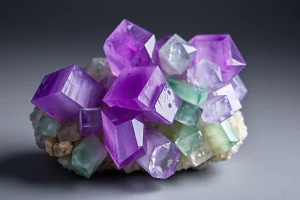
- Violet kyanite – a rarer hue, prized by collectors.
All varieties share the same chemical composition but differ in trace element content that influences colour.
Jewelry Uses and Care
Because kyanite’s hardness ranges from 4.5 to 7 on the Mohs scale and it possesses perfect basal cleavage, it is best suited for pendants, earrings, and brooches where the stone can be set securely. Cabochon cuts that protect the cleavage plane are common. When used in rings, the stone must be set with protective bezels or channel settings to minimise impact.
Care instructions:
- Clean with a soft, damp cloth; avoid ultrasonic cleaners and harsh chemicals.
- Store separately from harder gemstones to prevent scratching.
- Avoid sudden temperature changes, which can cause micro‑fractures.
- If the stone has been heat‑treated, handle with extra care as treatment may affect stability.
Buying Guide
When purchasing kyanite, consider the following factors:
- Colour intensity – Deep, even blue is most desirable; uneven or muted colours are less valuable.
- Clarity – Inclusions are common; however, large fractures or cloudiness reduce brilliance.
- Cut and setting – Look for settings that protect the basal cleavage.
- Origin – Reputable sources such as Brazil, the United States, or Madagascar often provide higher‑quality material.
- Certification – For high‑value pieces, request a gemological report from a recognised laboratory.
Because kyanite can be treated to enhance colour, ask the seller about any heat or dye treatments. Genuine, untreated specimens command premium prices, especially in vivid blue.
FAQ
What is kyanite good for?
Kyanite is valued for its vivid colour in jewellery and decorative objects. Traditionally, it is believed to aid communication, calm the mind, and support meditation, though these claims are not medical facts.
Is kyanite rare?
Kyanite is not extremely rare, but high‑quality, deep‑blue specimens without fractures are less common. Rarity increases for unusual colours such as violet or for untreated stones from renowned localities.
How can you tell if kyanite is real?
Real kyanite shows perfect basal cleavage, a vitreous luster, and a refractive index between 1.712 and 1.734. A professional gemological lab can confirm authenticity and detect any treatments.
What chakra is kyanite associated with?
In crystal‑healing traditions, kyanite is most commonly linked to the throat chakra, though some practitioners also associate it with the third‑eye chakra.
How should you clean kyanite?
Wipe kyanite with a soft, damp cloth and mild soap if needed. Avoid ultrasonic cleaners, steam, and harsh chemicals. Store it separately from harder gemstones to prevent scratching.
Leave a Reply