
Short Answer
Overview
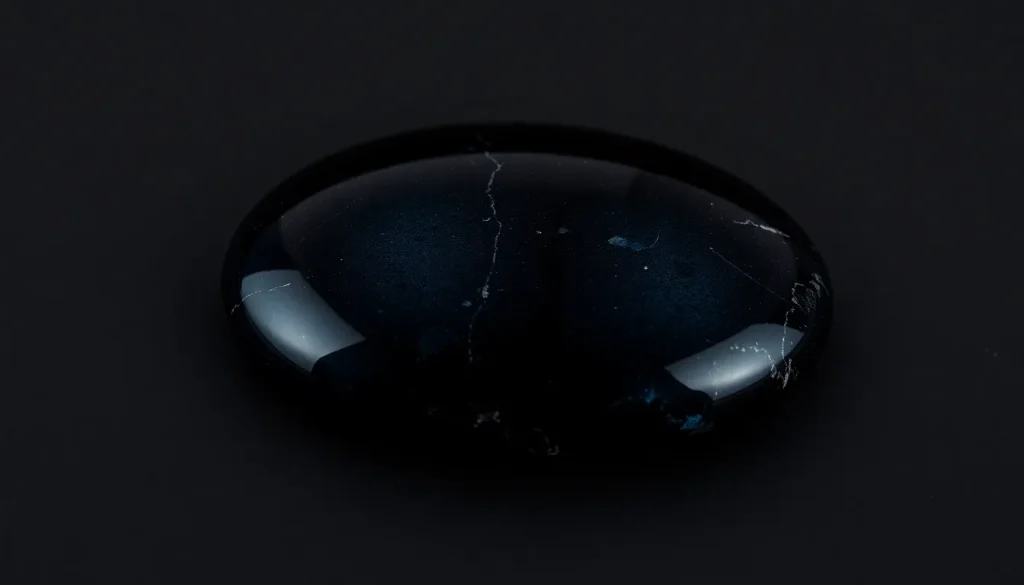
Arfvedsonite is a member of the amphibole group of silicate minerals. It is a sodium‑iron silicate that typically appears in deep black, dark green, or bluish‑black hues with a vitreous to sub‑adamantine luster. The mineral crystallises in the monoclinic system and often forms fibrous or massive aggregates, but gem‑quality specimens are cut as polished cabochons or beads.
History and Origin
The mineral was first described in 1868 from an occurrence in the Fauske district of Norway. It was named in honour of the Swedish chemist Johan August Arfvedson, best known for discovering lithium. Since its initial discovery, arfvedsonite has been reported from a handful of localities worldwide, most notably Norway, Canada, the United States, and the Russian Urals.
Meaning and Symbolism
In traditional gemstone lore, the deep, grounding colour of arfvedsonite is associated with stability, protection, and inner strength. Its dark appearance is thought to absorb negative energies, making it a symbol of resilience and personal transformation.
Healing and Metaphysical Properties
Crystal‑healing practitioners claim that arfvedsonite can aid in grounding, helping the wearer feel more secure and connected to the Earth. It is said to support emotional balance, encourage logical thinking, and assist in releasing old patterns. These beliefs are part of spiritual traditions and are not supported by medical science.
Varieties and Types
While the mineral is most commonly black, variations include:
- Green arfvedsonite – darker green tones, often found in Norwegian specimens.
- Blue‑black arfvedsonite – a subtle blue sheen visible under certain lighting.
- Brownish arfvedsonite – rare, with a dark brown hue.
Gem‑quality material is usually cut as a cabochon to display its depth of colour and to minimise the visibility of its characteristic fibrous structure.
Jewelry Uses and Care
Because arfvedsonite ranks 5.5–6.5 on the Mohs scale, it is suitable for earrings, pendants, and brooches where it is protected from heavy impact. The stone’s perfect amphibole cleavage means it can split if struck sharply, so settings that cushion the stone are recommended. Cleaning should be performed with a soft, lint‑free cloth and mild soapy water; avoid ultrasonic cleaners and harsh chemicals, which can damage any surface treatments.
Buying Guide
When purchasing arfvedsonite, consider the following factors:
- Colour intensity: Deep, uniform colour without excessive surface blemishes is most prized.
- Clarity: Some fibrous texture is natural, but large cracks or fractures reduce value.
- Cut: Polished cabochons that showcase the stone’s luster are preferred.
- Origin: Specimens from classic localities such as Norway or the Canadian Shield often command higher prices.
- Treatment disclosure: Ensure the seller discloses any heat or resin treatments that may have been applied to enhance colour.
For confidence, request a gem‑ological report from a reputable laboratory, especially for larger or high‑value pieces.
FAQ
What is arfvedsonite good for?
Arfvedsonite is prized by collectors for its rare, deep colour and by jewelers for cabochon settings. In crystal‑healing circles it is believed to aid grounding, emotional balance, and mental clarity, though these claims are not medically verified.
Is arfvedsonite rare?
High‑quality, vividly coloured arfvedsonite is relatively rare. Good specimens are limited to a few classic localities such as Norway and the Canadian Shield, and larger stones are uncommon due to the mineral’s typical fibrous habit.
How can you tell if arfvedsonite is real?
Real arfvedsonite displays a dark, uniform colour, vitreous luster, and characteristic amphibole cleavage. Refractive index and specific gravity can be measured with a gem‑lab. For certainty, obtain a professional identification report from a recognized laboratory.
What chakra is arfvedsonite associated with?
Traditionally, arfvedsonite is linked to the Root (Muladhara) chakra, reflecting its grounding colour and the belief that it helps anchor energy to the Earth.
How should you clean arfvedsonite?
Clean arfvedsonite with warm, soapy water and a soft cloth. Avoid ultrasonic cleaners, steam, or harsh chemicals, as they may damage surface treatments or exacerbate its natural cleavage.
Leave a Reply