
Short Answer
Overview
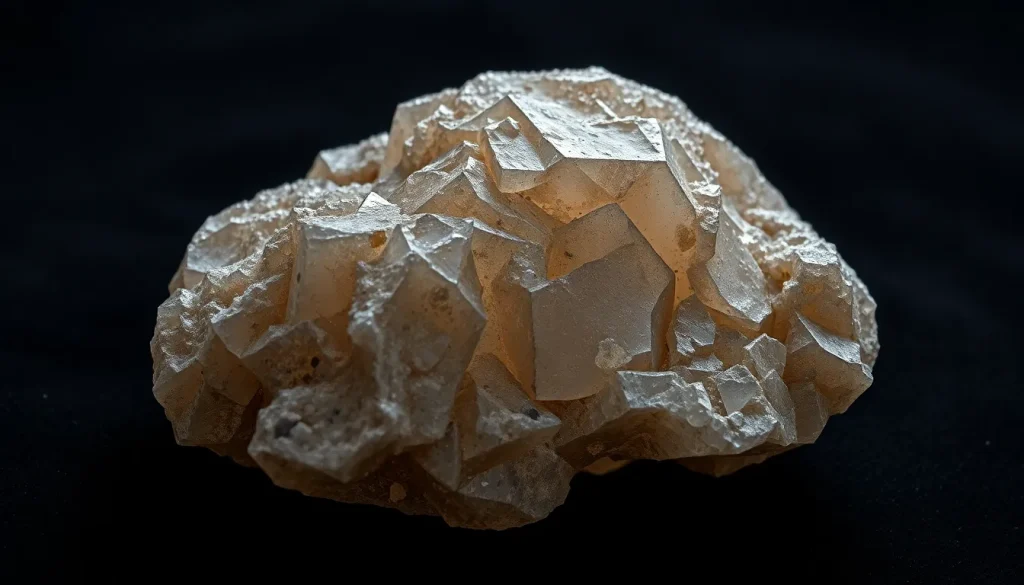
Bort is a term used in the gem and mineral trade to describe low‑grade, heavily included diamonds that are unsuitable for conventional jewelry. These stones are valued primarily for their hardness and thermal conductivity, making them important in industrial applications such as cutting, drilling, and polishing.
History and Origin
The word “bort” derives from the 16th‑century Dutch “bort,” meaning “a broken stone.” Historically, miners and traders distinguished bort from gem‑quality diamonds because of its opaque, cloudy appearance and irregular crystal habit. Bort has been mined alongside gem‑grade diamonds in major diamond fields worldwide.
Meaning and Symbolism
In traditional symbolism, diamonds represent purity, strength, and eternal love. Because bort lacks the brilliance of clear diamonds, it is less associated with these romantic qualities and is instead linked to practicality, resilience, and the hidden value of strength that is not immediately visible.
Healing and Metaphysical Properties
Crystal‑healing practitioners attribute grounding and protective qualities to bort, believing it can help anchor scattered energy and enhance focus. Some claim that bort assists in clearing mental fog and supports the root chakra, though these statements are based on belief rather than scientific evidence.
Varieties and Types
- Natural bort – Rough, uncut diamonds recovered from primary deposits; typically brown, grey, or black.
- Synthetic industrial diamond – Man‑made diamonds produced by high‑pressure high‑temperature (HPHT) or chemical vapor deposition (CVD) processes; often marketed as bort for cutting tools.
- Carbonado – A black, polycrystalline form of diamond that is sometimes classified as a type of bort because of its opaque appearance.
Jewelry Uses and Care
Because of its low clarity and lack of sparkle, bort is rarely set in fine jewelry. When used, it is usually fashioned into small accent stones, bezel‑set pavés, or industrial‑style pieces. Care instructions are identical to those for gem‑quality diamonds:
- Clean with a soft brush and mild detergent; avoid abrasive cleaners.
- Store separately from softer gemstones to prevent scratching.
- Because bort may contain internal fractures, avoid sudden impacts.
Buying Guide
If you are considering a bort specimen for a collection or industrial purpose, evaluate the following:
- Clarity: Look for inclusions, color zoning, and any visible cracks.
- Carat weight: Larger pieces are valuable for industrial use.
- Origin: Certified sources from reputable mines or manufacturers provide assurance of ethical sourcing.
- Treatment: Verify whether the stone has been laser‑drilled or coated, as this affects performance.
For jewelry, opt for higher‑grade diamonds; bort is best suited for collectors interested in the full spectrum of diamond material.
FAQ
What is Bort good for?
Bort is prized for industrial uses such as cutting, drilling, and polishing because of its hardness, and it is collected by enthusiasts interested in raw diamond material; traditional beliefs also associate it with grounding and protection.
Is Bort rare?
Bort is not rare in terms of quantity, as it is commonly extracted alongside gem‑grade diamonds. However, high‑quality, large, or uniquely coloured bort specimens can be scarce and valuable for collectors.
How can you tell if Bort is real?
Real bort will feel extremely hard, show a high‑index sparkle under magnification, and have a characteristic octahedral cleavage. Professional gemologists can confirm authenticity with a microscope, hardness test, and spectroscopic analysis.
What chakra is Bort associated with?
In crystal‑healing traditions, bort is linked to the Root (Muladhara) chakra, where it is believed to provide grounding and stability, though this association is based on belief, not scientific fact.
How should you clean Bort?
Clean bort with warm, soapy water and a soft brush; avoid ultrasonic cleaners if the stone has internal fractures. Dry with a lint‑free cloth and store separately from softer gems to prevent scratches.
Leave a Reply