
Short Answer
Overview
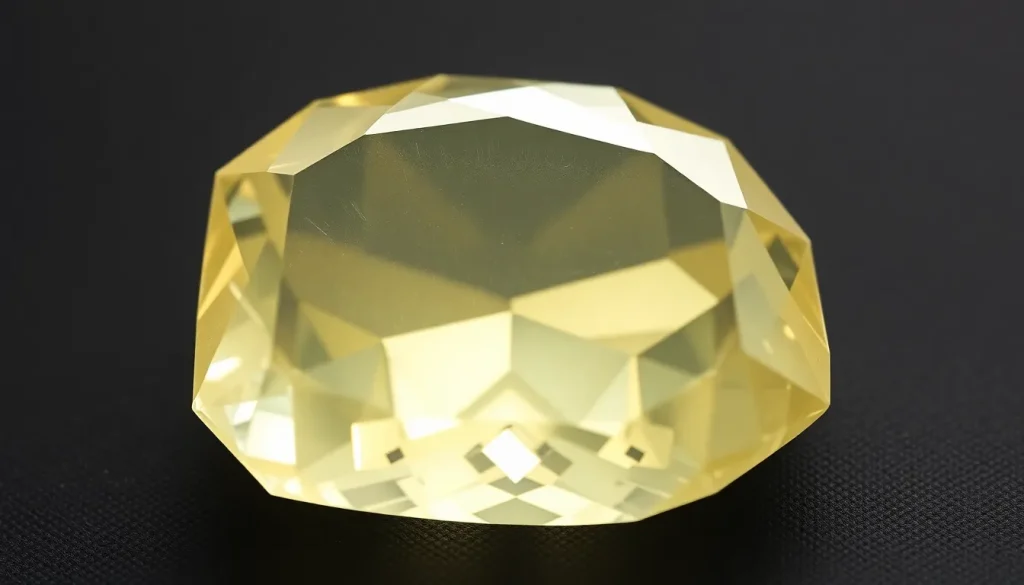
Amblygonite is a lithium‑sodium aluminium phosphate fluoride mineral with the chemical formula (Na,Li)AlPO4F. It crystallises in the triclinic system and is prized as a transparent to translucent gemstone that can appear colourless, white, yellow, green, blue, violet, or brown. Its vitreous luster and relatively high refractive index give it a bright, diamond‑like appearance, while its perfect cleavage on one plane requires careful handling.
History and Origin
The name “amblygonite” derives from the Greek words amblys (blunt) and gonia (angle), referring to the mineral’s blunt crystal angles. First described in 1800 from deposits in the United States, amblygonite was initially a curiosity for mineral collectors. It later gained popularity as a gemstone in the early 20th century, especially the yellow varieties marketed as “lemon amblygonite.” Today, notable localities include North Carolina and Maine (USA), Brazil, Madagascar, China, and Russia.
Meaning and Symbolism
In traditional gemstone lore, amblygonite is associated with clarity of thought and honest communication. It is said to encourage the expression of inner truth and to support decision‑making processes. The stone’s range of colours is sometimes linked to personal transformation, with yellow representing optimism and blue or violet indicating spiritual insight.
Healing and Metaphysical Properties
Crystal‑healing practitioners attribute amblygonite with the following beliefs:
- Enhances mental clarity and helps dissolve confusion.
- Supports the throat chakra, promoting clear speech and self‑expression.
- Assists in emotional balance by soothing anxiety and stress.
- Facilitates the integration of intuition with rational analysis.
These properties are based on traditional and contemporary metaphysical teachings and should not be taken as medical advice.
Varieties and Types
Amblygonite occurs in several colour varieties, each reflecting trace element chemistry and exposure conditions:
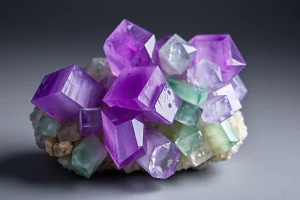
- Colourless/White – Highly transparent, often used as a clear gemstone substitute for quartz.
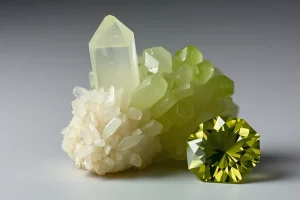
- Yellow (Lemon amblygonite) – Ranges from pale lemon to deep golden hues; the most commercially popular colour.
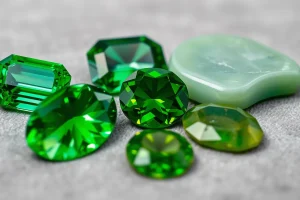
- Green – Resulting from iron or chromium content; can show vivid emerald‑like tones.
- Blue to Violet – Rare, caused by trace amounts of titanium or manganese; prized by collectors.
- Brown – Typically caused by oxidation; less common in fine jewelry.
Many specimens exhibit colour zoning, where multiple hues appear within a single crystal, adding visual interest for cabochon and faceted cuts.
Jewelry Uses and Care
Because of its hardness of 5.5–6 on the Mohs scale, amblygonite is suitable for earrings, pendants, and rings set with protective settings. However, its perfect cleavage makes it vulnerable to chipping if struck. Recommended care includes:
- Clean with mild soap, warm water, and a soft brush; avoid ultrasonic cleaners.
- Store separately from harder gemstones (e.g., quartz, topaz) to prevent scratches.
- Remove jewelry before vigorous activities that could cause impact.
- Professional polishing may be needed over time to maintain brilliance.
Buying Guide
When selecting amblygonite, consider the following factors:
- Colour and Clarity – Transparent, evenly coloured stones without cloudiness are most valued.
- Cut – Cabochons showcase colour and reduce the risk of cleavage damage; faceted stones require careful handling.
- Origin – Provenance from well‑known localities (e.g., North Carolina) can add confidence in authenticity.
- Treatment Disclosure – Some stones are heat‑treated to enhance colour; reputable sellers will disclose any treatments.
- Certification – For high‑value pieces, request a gem‑ological report from a recognized laboratory.
Because amblygonite can be confused with quartz, fluorite, or clear calcite, purchasing from a trusted dealer and obtaining a professional appraisal is advisable.
FAQ
What is amblygonite good for?
Amblygonite is valued for its clear to vivid colours in jewelry, especially cabochons and pendants. Traditionally, it is believed to promote clear communication, mental focus, and emotional balance, though these are not medical claims.
Is amblygonite rare?
High‑quality, well‑coloured amblygonite (especially blue or violet) is relatively rare, while colourless and yellow stones are more common. Rarity depends on clarity, colour intensity, and whether the stone is untreated.
How can you tell if amblygonite is real?
Real amblygonite has a vitreous luster, a refractive index around 1.53, and perfect cleavage on one plane. It may be distinguished from quartz by its lower hardness (5.5–6) and by a white streak. Professional gem‑ological testing is recommended for certainty.
What chakra is amblygonite associated with?
In crystal‑healing traditions, amblygonite is most often linked to the Throat (Vishuddhi) chakra, supporting clear speech and self‑expression.
How should you clean amblygonite?
Clean amblygonite with warm, soapy water and a soft brush. Avoid ultrasonic cleaners and harsh chemicals. Store it separately from harder gems, and protect it from sudden impacts that could split along its perfect cleavage.
Leave a Reply