
Short Answer
Overview
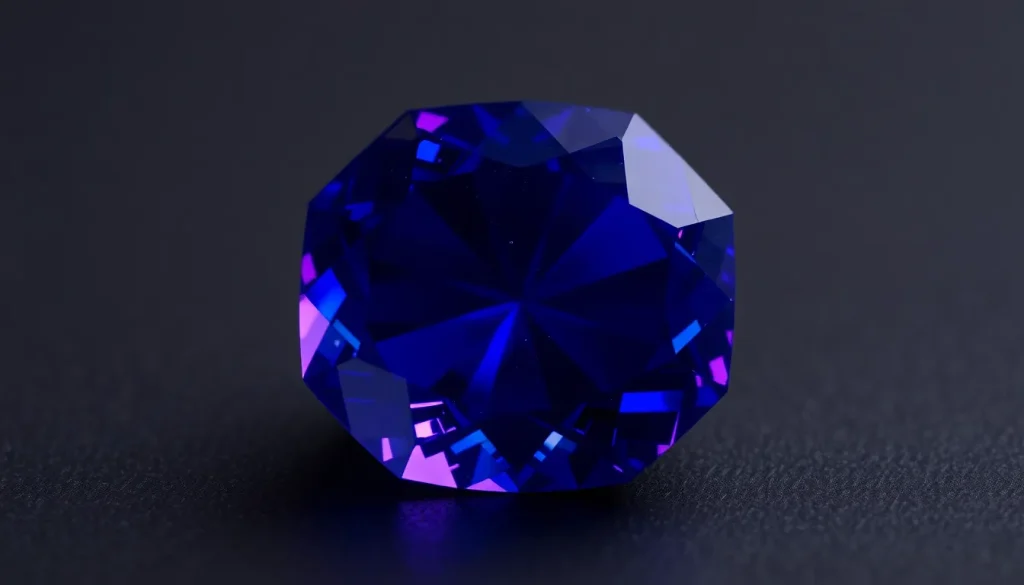
Axinite is a rare, pleochroic silicate gemstone belonging to the axinite group of borosilicates. It typically occurs in triclinic crystals and displays a range of colors from deep violet and blue to green, brown, pink, and colour‑less. Its vitreous to sub‑adamantine luster and moderate hardness (6.5–7 on the Mohs scale) make it a distinctive, though relatively fragile, choice for collectors and niche jewelry.
History and Origin
The name “axinite” derives from the Greek word “axinos,” meaning “axis,” a reference to the crystal’s characteristic axial twinning. First described in 1865 from specimens in the Binn Valley, Switzerland, axinite has since been reported from a limited number of localities worldwide. Notable occurrences include Brazil’s Minas Gerais, Madagascar’s Antsirabe region, the United States (California), Namibia, and parts of Russia.
Meaning and Symbolism
In traditional gemstone lore, axinite is said to encourage inner strength, self‑confidence, and the ability to make balanced decisions. The stone’s multicolored nature is thought to symbolize adaptability and the integration of opposing energies, while its pleochroism is associated with seeing multiple perspectives.
Healing and Metaphysical Properties
Crystal‑healing practitioners attribute axinite with the following traditional beliefs:
- Enhancing personal power and will‑power, helping the wearer to stand firm in convictions.
- Supporting emotional balance by harmonising the heart and third‑eye chakras.
- Aiding in the release of old patterns and encouraging personal transformation.
These properties are based on cultural and metaphysical traditions and are not intended as medical advice.
Varieties and Types
The axinite group includes three principal species, distinguished by the dominant metal in their structure:
- Axinite‑(Fe) – iron‑rich, typically brown to violet.
- Axinite‑(Mn) – manganese‑rich, often displaying pink to reddish hues.
- Axinite‑(Ca) – calcium‑dominant, commonly green to blue.
All varieties share the same basic crystal habit – usually tabular or prismatic crystals that may exhibit well‑developed axial twins. The degree of pleochroism varies, with some specimens showing markedly different colors when viewed from different directions.
Jewelry Uses and Care
Because of its moderate hardness and perfect cleavage‑like fracture, axinite is best suited for earrings, pendants, and brooches where the stone is protected from daily impact. It can be set in protective bezels or clusters to reduce the risk of chipping.
Cleaning: Use warm, soapy water and a soft brush. Avoid ultrasonic cleaners and harsh chemicals, which may damage surface treatments or exacerbate fractures.
Storage: Keep axinite pieces separate from harder gemstones such as quartz or diamonds to prevent scratching. Store in a padded compartment or wrapped in a soft cloth.
Buying Guide
When selecting axinite, consider the following factors:
- Color and Pleochroism: Deep, evenly distributed color and strong pleochroic contrast are prized.
- Clarity: Inclusions are common; however, eye‑clean stones fetch higher prices.
- Cut and Symmetry: Well‑cut facets that showcase the stone’s axial twinning enhance brilliance.
- Treatment Disclosure: Natural axinite is rarely treated, but some specimens may be heat‑enhanced to improve color stability. Request certification from a reputable gemological laboratory.
Purchase from reputable dealers who provide a guarantee of authenticity and, where possible, a GIA or IGI report.
FAQ
What is axinite good for?
Axinite is valued for its unique pleochroic colors and rarity, making it a collector's gemstone and a distinctive choice for jewelry such as pendants and earrings. Traditionally, it is believed to promote personal strength and emotional balance, though these claims are not medically verified.
Is axinite rare?
High‑quality, eye‑clean axinite specimens are relatively rare because the mineral forms in limited localities and fine crystal growth is uncommon. Rarity increases with vivid, uniform color, strong pleochroism, and good transparency.
How can you tell if axinite is real?
Real axinite displays a vitreous to sub‑adamantine luster, a hardness of 6.5–7, and characteristic pleochroic color changes under polarized light. A professional gemological lab can confirm identity through refractive index measurements and spectral analysis.
What chakra is axinite associated with?
In crystal‑healing traditions, axinite is commonly linked to the Heart (Anahata) and Third Eye (Ajna) chakras, reflecting its reputed abilities to foster emotional balance and intuition.
How should you clean axinite?
Clean axinite gently with warm, soapy water and a soft brush. Avoid ultrasonic cleaners, steam cleaning, or harsh chemicals, as the stone’s moderate hardness and natural fractures can be damaged by aggressive treatment.
Leave a Reply