
Short Answer
Overview
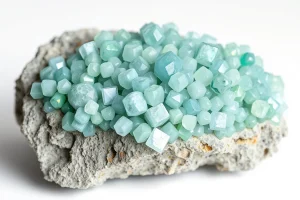
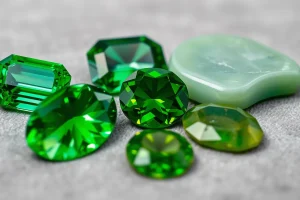
Prehnite is a calcium aluminum silicate mineral with the chemical formula Ca2Al(AlSi3O10)(OH)2. It belongs to the phyllosilicate subgroup of silicate minerals and crystallises in the orthorhombic system. Typically, Prehnite occurs as translucent to transparent aggregates displaying a soft, vitreous to pearly luster. Its most common colour range is pale to medium green, often with yellowish or grayish undertones.
History and Origin
Prehnite was first described in 1788 from a specimen found near the River Elbe in Germany. The mineral was named after the Dutch diplomat and amateur mineralogist Hendrik von Prehn, who supplied the sample to the mineralogist Abraham Gottlob Werner. Historically, it was used as a decorative stone and occasionally as a source of the mineral zeolite in early industrial processes. Today, significant localities include the United States (Arizona, California), Brazil, Namibia, Germany, Australia, and Canada.
Meaning and Symbolism
In traditional gemstone lore, Prehnite is associated with love, compassion, and emotional balance. It is said to encourage openness and gentle communication, making it a popular talisman for fostering harmonious relationships. The stone is also linked to nurturing personal growth and protecting the wearer from negative influences.
Healing and Metaphysical Properties
Within crystal‑healing traditions, Prehnite is believed to:
- Support heart‑centered meditation and enhance feelings of inner peace.
- Assist in clearing emotional blockages and promoting self‑acceptance.
- Facilitate the manifestation of dreams by aligning intention with action.
These claims are based on folklore and are not intended as medical advice.
Varieties and Types
Prehnite occurs in several recognizable forms:
- Moss Prehnite – contains fine, hair‑like inclusions that resemble moss or fern fronds, adding a distinctive texture.
- Transparent Prehnite – high‑clarity material prized for faceting and gemstone use.
- Opaque or Banded Prehnite – often used for ornamental carvings or as cabochons.
Colour variations may range from soft apple‑green to yellow‑green, with occasional brownish tones in heavily included specimens.
Jewelry Uses and Care
Because of its relatively good hardness (6–6.5 on the Mohs scale) and attractive luster, Prehnite is frequently cut as a cabochon, freeform pendant, or faceted gemstone for rings and earrings. It accepts most standard jewelry settings but should be protected from hard impacts that could cause cleavage along its perfect {010} plane.
Care instructions:
- Clean with warm, soapy water and a soft brush; avoid ultrasonic cleaners if the stone has significant inclusions.
- Store separately from harder gemstones such as quartz or diamond to prevent scratching.
- Limit prolonged exposure to high heat or direct sunlight, which can fade the delicate green hues.
Buying Guide
When selecting Prehnite, consider the following factors:
- Colour intensity – Deeper, evenly distributed green is generally more valuable.
- Clarity – Transparent stones with minimal cloudiness command higher prices; moss inclusions are prized for their aesthetic but lower the value for faceted pieces.
- Cut and setting – Well‑proportioned cabochons or facets that showcase the stone’s luster are preferred.
- Treatment disclosure – Some Prehnite is heat‑treated to enhance colour; reputable sellers should disclose any treatments.
- Certification – For high‑value pieces, request a gemological report from a recognized laboratory.
By evaluating these criteria, buyers can ensure they acquire a genuine, high‑quality Prehnite specimen suited to their needs.
FAQ
What is Prehnite good for?
Prehnite is valued in jewelry for its gentle green hue and pearly luster, and in crystal‑healing circles for its reputed ability to promote love, emotional balance, and inner growth.
Is Prehnite rare?
High‑quality, deep‑green Prehnite is relatively uncommon, especially when free of inclusions. However, the mineral itself is found in many locales worldwide, making it moderately available.
How can you tell if Prehnite is real?
Authentic Prehnite feels cool to the touch, has a Mohs hardness of 6–6.5, and displays a characteristic pearly luster. Professional testing, such as refractive index measurement or gemological certification, provides definitive verification.
What chakra is Prehnite associated with?
Traditionally, Prehnite is linked to the Heart (Anahata) chakra, where it is believed to support love and emotional healing.
How should you clean Prehnite?
Clean Prehnite with warm, mild soapy water and a soft brush. Avoid ultrasonic cleaners and harsh chemicals, and store it separately from harder gemstones to prevent scratches.
Leave a Reply