
Short Answer
Overview
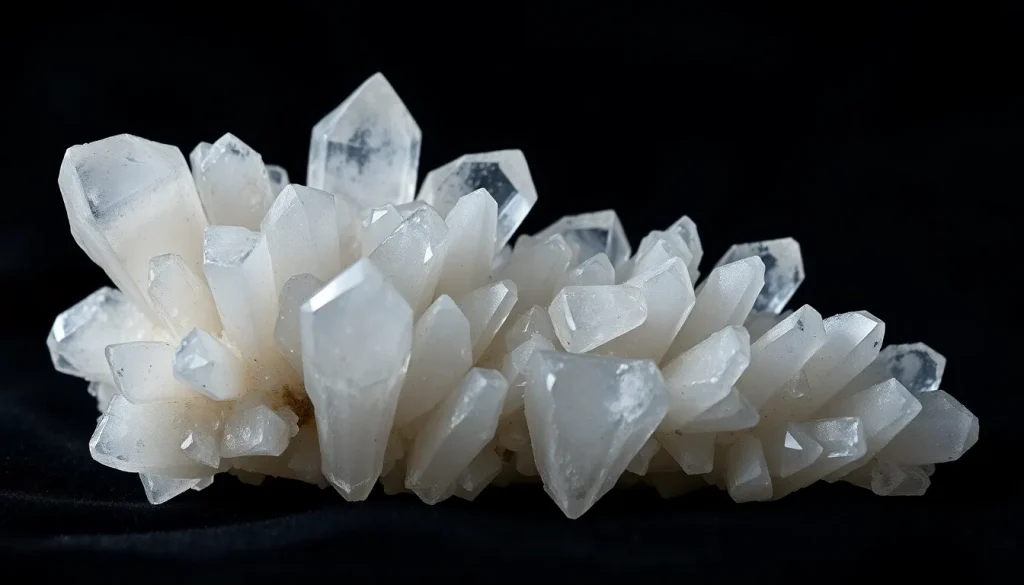
Colemanite is a hydrated calcium borate mineral, formula Ca₂B₆O₁₁·5H₂O. It typically forms in evaporite deposits and is prized by collectors for its soft, waxy crystals that range from colorless to gray, yellow, or brown. Though not commonly used in mainstream jewelry because of its low hardness, colemanite appears in specialty pieces and as a metaphysical crystal.
History and Origin
The mineral was first described in 1883 after its discovery in the Coleman Mine near Salt Lake City, Utah, USA, which gave it its name. Subsequent occurrences were reported from several arid regions worldwide, including Morocco, Spain, Namibia, and Turkey. Historically, colemanite was studied for its boron content and its role in the formation of other borate minerals.
Meaning and Symbolism
In crystal‑healing traditions, colemanite is associated with grounding, stability, and the strengthening of personal boundaries. It is believed to encourage perseverance and assist in the manifestation of goals by anchoring intentions to the physical world. These symbolic meanings are rooted in folklore and contemporary metaphysical practice, not scientific evidence.
Healing and Metaphysical Properties
Practitioners of crystal healing attribute the following properties to colemanite:
- Grounding: Helps users feel more connected to Earth energy.
- Focus and Clarity: Said to clear mental fog and aid concentration.
- Emotional Balance: Supports the release of fear and promotes confidence.
These claims are traditional beliefs and should not replace professional medical advice.
Varieties and Types
Colemanite does not have widely recognized varieties, but specimens can differ in color and crystal habit:
- Colorless/White: Most common, often transparent to translucent.
- Gray to Brown: Result from inclusions or oxidation.
- Yellowish: Occasionally observed in specimens from Morocco.
Jewelry Uses and Care
Because colemanite rates only 2.5–3 on the Mohs scale, it is relatively soft and prone to scratching. It is occasionally set in protective bezel settings or used as a cabochon in low‑traffic jewelry such as pendants or earrings. Care recommendations include:
- Avoid exposure to harsh chemicals, ultrasonic cleaners, or steam.
- Clean gently with a soft, damp cloth; mild soap and lukewarm water are acceptable.
- Store separately from harder gemstones to prevent abrasion.
Buying Guide
When purchasing colemanite, consider the following factors:
- Color and Clarity: Uniform, bright colors and minimal inclusions increase value.
- Crystal Form: Well‑developed, tabular or prismatic crystals are prized by collectors.
- Origin: Specimens from classic localities such as Utah or Morocco often carry a premium.
- Treatment Disclosure: Ensure the seller states whether the stone has been stabilized, dyed, or otherwise treated.
For valuable pieces, request a certified gemological report to verify authenticity.
FAQ
What is colemanite good for?
Colemanite is primarily valued by collectors for its unique crystal forms and by metaphysical practitioners for its grounding symbolism. It is occasionally used in specialty jewelry, though its softness limits widespread use.
Is colemanite rare?
High‑quality colemanite crystals are relatively rare because the mineral forms in specific evaporite environments. While the mineral itself occurs in several countries, gem‑grade material with good color and clarity is uncommon.
How can you tell if colemanite is real?
Real colemanite feels soft (Mohs 2.5–3), displays perfect cleavage on {010}, and often shows a white streak. Its refractive index and specific gravity can be measured with a refractometer and hydrostatic balance. For certainty, seek a professional gemological appraisal.
What chakra is colemanite associated with?
Traditional crystal‑healing lore links colemanite to the Root (Muladhara) chakra, supporting grounding and stability.
How should you clean colemanite?
Clean colemanite gently with a soft, damp cloth and mild soap. Avoid ultrasonic cleaners, steam, or harsh chemicals, and store it separately from harder gemstones to prevent scratches.
Leave a Reply