
Short Answer
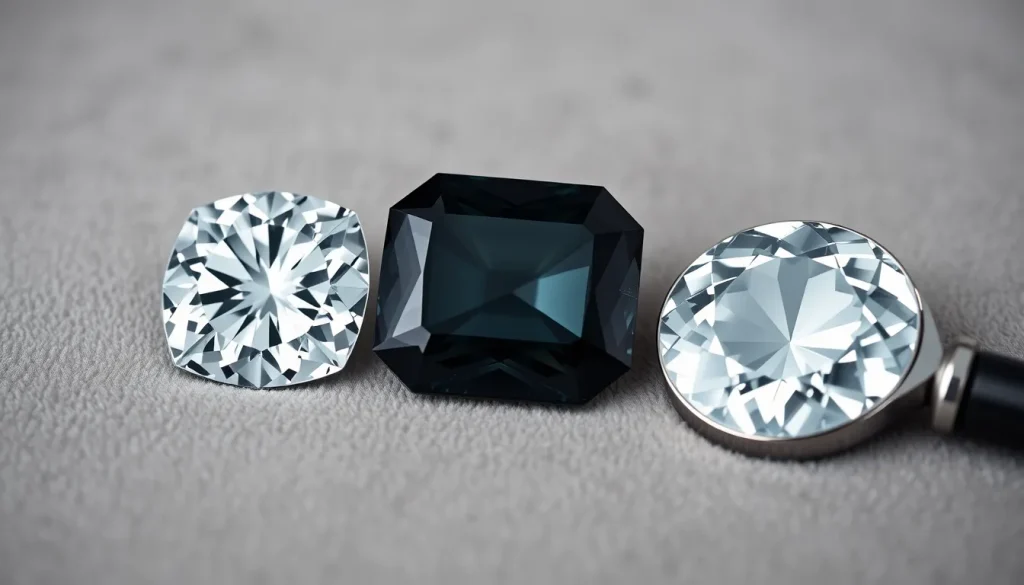
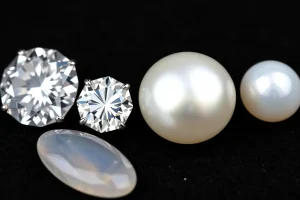
Selecting a colorless gemstone often involves a trade-off between prestige, durability, and budget. While Diamond remains the gold standard for engagement rings, alternatives like White Topaz and the rare Achroite offer distinct optical properties and value propositions. Understanding the scientific divergence between these three minerals is essential for any collector or jewelry enthusiast.
Comparison Table
| Property | Diamond | Achroite (Tourmaline) | White Topaz |
|---|---|---|---|
| Chemical Formula | C | Complex Borosilicate | Al₂SiO₄(F,OH)₂ |
| Hardness (Mohs) | 10 | 7.0 – 7.5 | 8.0 |
| Refractive Index | 2.417 | 1.624 – 1.644 | 1.61 – 1.64 |
| Dispersion | 0.044 (High) | 0.018 (Low) | 0.016 (Low) |
| Rarity | Common to Rare | Very Rare | Abundant |
| Typical Value | High to Ultra-High | Moderate to High | Low to Moderate |
Shared Features
Despite their different chemical compositions, these three gemstones share several key characteristics that make them desirable in the jewelry market:
- Optical Neutrality: All three can appear completely colorless, allowing them to complement any metal setting (platinum, white gold, or silver) without clashing.
- Transparency: In high-quality specimens, all three exhibit excellent transparency, allowing light to pass through the crystal lattice with minimal interference.
- Faceting Potential: Each of these minerals responds well to traditional lapidary techniques, allowing them to be cut into brilliant, emerald, or cushion shapes to maximize light return.
Important Differences
The primary distinctions lie in their fire, durability, and chemical nature.
Brilliance and Fire
Diamond possesses a significantly higher refractive index and dispersion than both Achroite and White Topaz. This results in “fire”—the splitting of white light into spectral colors. While White Topaz and Achroite are bright, they lack the intense scintillation and rainbow flashes characteristic of a diamond.
Hardness and Wear
Diamond is the hardest known natural mineral, making it virtually immune to scratching. White Topaz is quite durable (Mohs 8), making it suitable for daily wear. Achroite, however, is the softest of the three (Mohs 7-7.5) and is more prone to abrasion and chipping over time.
Rarity and Origin
White Topaz is widely available and often used as an affordable diamond alternative. Diamond is globally sourced and highly commercialized. Achroite—the colorless variety of Tourmaline—is exceptionally rare in nature, often making it a prized find for serious collectors rather than a mainstream jewelry choice.
Suitability by Use
Depending on the intended application, one gemstone may be significantly more appropriate than the others:
- Engagement Rings: Diamond is the superior choice due to its unmatched hardness and brilliance, ensuring the stone survives decades of daily wear.
- Statement Jewelry: White Topaz is excellent for large cocktail rings or pendants where a “diamond look” is desired without the extreme cost.
- Collector’s Pieces: Achroite is best suited for high-end collectors or custom jewelry where the rarity of the mineral adds more value than the physical hardness.
Identification Limits
To the untrained eye, these three stones can look identical. However, professional gemologists use specific tools for differentiation:
“The most immediate differentiator is the refractive index. Using a refractometer, a diamond will read off the scale or show a very high value (2.42), while Topaz and Achroite will cluster around the 1.6 range.”
Additionally, Achroite can be distinguished from White Topaz through its crystal system (trigonal vs. hexagonal) and the presence of specific inclusions under a microscope, such as tiny needles or fluid inclusions common in tourmalines.
Related Profiles
For those interested in colorless gemstones, further research into White Sapphire, Moissanite, and Zircon is recommended to understand the full spectrum of colorless mineral options available in the market.
FAQ
Can I use Achroite in an engagement ring?
While possible, it is not recommended for daily wear due to its lower hardness (7-7.5) compared to diamonds or sapphires.
How can I tell the difference between White Topaz and Diamond at home?
Diamonds have significantly more 'fire' (rainbow flashes). However, the only certain way is via a diamond tester or a professional gemologist.
Is Achroite more expensive than White Topaz?
Generally, yes. Because colorless tourmaline (Achroite) is much rarer in nature than white topaz, it often commands a higher price per carat.
Leave a Reply