
Short Answer
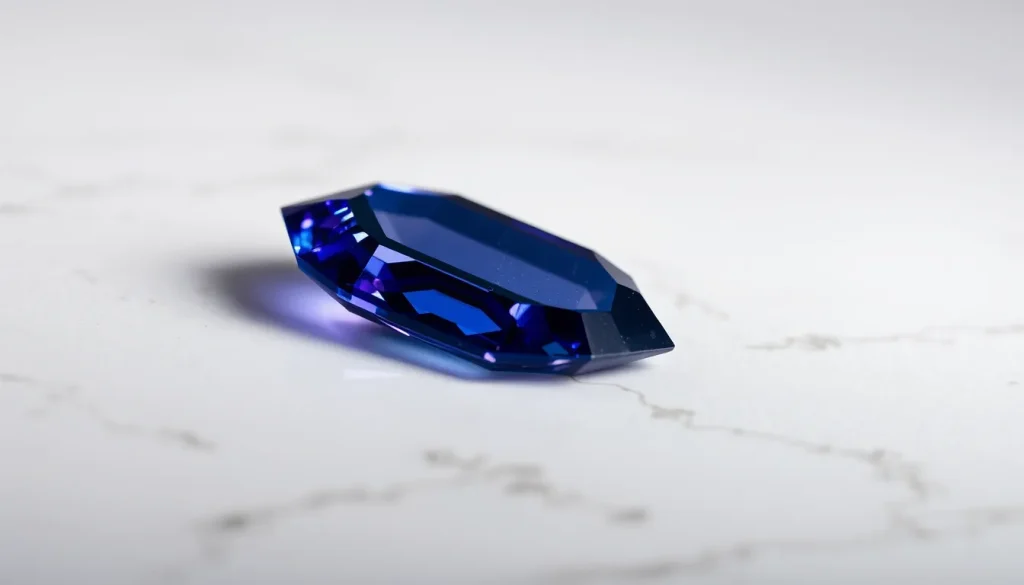
Tanzanite is one of the most captivating and rarest gemstones on Earth, renowned for its deep, velvety blue to violet-blue hues. Unlike many other precious stones found globally, Tanzanite is endemic to a single, small geographic location, making it a prized possession for collectors and jewelry enthusiasts alike.
What Is Tanzanite?
Tanzanite is the blue-violet variety of the mineral zoisite. It is a calcium aluminum silicate hydroxide that occurs in the presence of vanadium, which provides its signature coloration. Geologically, it is formed under extreme conditions, specifically in the metamorphic rocks of the Mererani Hills in Northern Tanzania.
One of the most distinctive optical properties of Tanzanite is its trichroism. This means the stone can exhibit three different colors—blue, violet, and burgundy—depending on the angle from which it is viewed. This property makes the cutting process critical, as the lapidary must orient the crystal to maximize the most desirable blue-violet tones.
Quality and Value Factors
The value of a Tanzanite specimen is primarily determined by its color saturation, clarity, and carat weight. Because the gemstone is rare, large, eye-clean crystals command significant premiums.
- Color: The most valuable stones are those with a deep, saturated blue-violet hue. Stones that lean too heavily toward purple or appear too pale are generally less valuable.
- Clarity: While some inclusions are common, high-grade Tanzanite is expected to be eye-clean. Internal fractures or clouds can diminish the stone’s brilliance and structural integrity.
- Cut: A precision cut is essential to manage the trichroism and ensure the stone does not look “muddy” or overly purple from certain angles.
Treatments and Synthetic Counterparts
Almost all Tanzanite on the market has undergone some form of heat treatment. In its raw state, Tanzanite often appears brownish-red or burgundy. Heating the stone to approximately 500–600°C stabilizes the color and transforms it into the vivid blue-violet seen in jewelry.
Gemologist’s Note: Heat treatment is widely accepted in the trade for Tanzanite and does not negatively impact its value, as it is considered a standard industry practice to achieve the desired aesthetic.
Synthetic Tanzanite is extremely rare because the cost of producing it in a lab is nearly as high as mining it. Most “cheap” Tanzanite is actually blue sapphire, cubic zirconia, or blue spinel.
Identification and Look-Alikes
Due to its color, Tanzanite is frequently confused with other blue gemstones. A comparison of common look-alikes is provided below:
| Gemstone | Key Difference from Tanzanite | Hardness (Mohs) |
|---|---|---|
| Blue Sapphire | Lacks the violet shift; significantly harder. | 9.0 |
| Blue Tourmaline | Different crystal structure; typically more teal or indigo. | 7.0 – 7.5 |
| Kyanite | Distinctive bladed crystals; very poor hardness in one direction. | 4.5 – 7.0 |
Jewelry Suitability and Care
Tanzanite is a beautiful stone but requires careful handling. With a Mohs hardness of 6 to 7, it is softer than sapphires and diamonds, making it susceptible to scratches and chipping.
Care Recommendations
- Avoid Ultrasonic Cleaners: The vibrations can cause internal fractures to expand, potentially cracking the stone.
- Avoid Steam Cleaners: Extreme temperature changes can cause thermal shock.
- Gentle Cleaning: Use lukewarm soapy water and a soft brush.
- Storage: Store Tanzanite separately from harder gemstones to prevent surface abrasions.
History and Cultural Significance
Tanzanite was only discovered in 1967, making it one of the youngest gemstones known to man. It was first found by Maasai tribesmen who noticed the crystals shimmering in the sun after a fire had cleared the brush. The name was coined by Tiffany & Co., who recognized the stone’s potential and marketed it exclusively for several years, linking the gem forever to its home country, Tanzania.
FAQ
Is Tanzanite a sapphire?
No, Tanzanite is a variety of zoisite. While it shares a similar blue color with sapphire, they have completely different chemical compositions and hardness levels.
Why is Tanzanite so expensive?
Its price is driven by extreme rarity. It is found in only one location on Earth, and the supply is limited compared to the global demand.
Can I wear Tanzanite every day?
It is possible, but not recommended for rings that face heavy impact. Due to its lower hardness, it is better suited for earrings or pendants, or as a ring with a protective bezel setting.
Leave a Reply