Short Answer
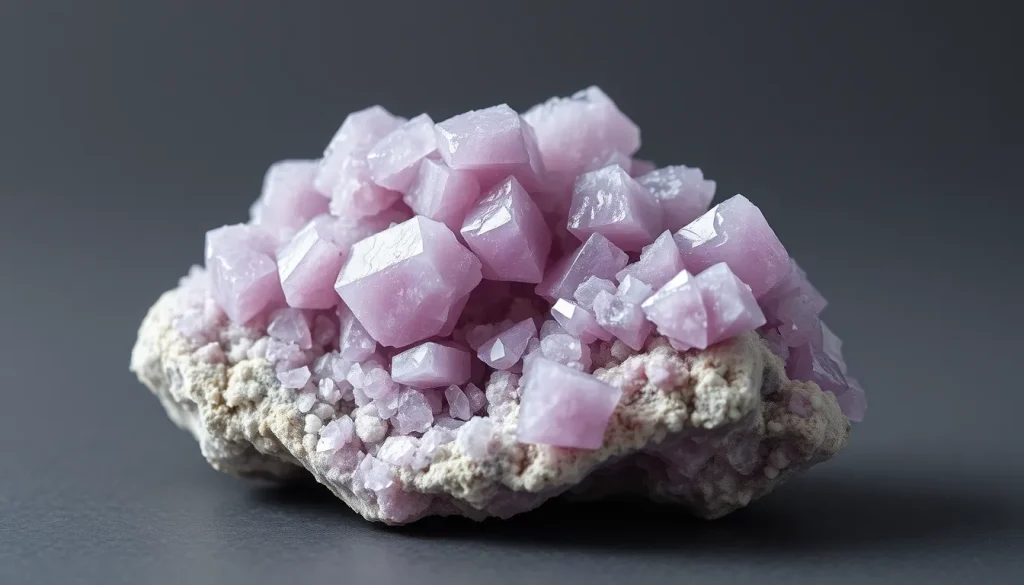
Lepidolite is a complex lithium-aluminum phyllosilicate that captivates both gemologists and metaphysical practitioners with its characteristic lilac to violet hues and shimmering, pearly luster. As a member of the mica group, it is prized not only for its aesthetic appeal but also for its unique chemical composition, which makes it a primary ore of lithium.
What Is Lepidolite?
Lepidolite is a mineral belonging to the mica family, specifically a lithium-rich mica. Its name is derived from the Greek word lepis, meaning ‘scale,’ referring to the mineral’s tendency to form in thin, flaky sheets. Chemically, it is a complex hydrous potassium lithium aluminum fluoride silicate.
The most distinctive feature of lepidolite is its color, which ranges from a pale pinkish-purple to a deep violet. This coloration is primarily due to the presence of manganese. In its crystalline form, it often appears as massive, granular aggregates or as distinct, platy crystals with a vitreous to pearly luster.
Practical Uses and Limitations
Due to its chemical makeup, lepidolite serves several distinct purposes across different industries:
- Industrial Use: Its most significant commercial value lies in its role as a source of lithium, which is essential for the production of batteries and certain psychiatric medications.
- Ornamental Use: In the gemstone market, lepidolite is used for cabochons, spheres, and tumbled stones. Because of its low hardness, it is rarely faceted for high-end jewelry.
- Metaphysical Use: It is widely utilized in holistic practices as a “stone of transition,” believed to assist in emotional balance and stress reduction.
Gemologist’s Note: While lepidolite is visually stunning, its perfect basal cleavage makes it fragile. It should not be used in rings or settings where it is prone to frequent impact.
Identification and Look-Alikes
Identifying lepidolite requires a keen eye for both color and structure. It is often confused with other purple minerals. The following table highlights the key differences:
| Feature | Lepidolite | Amethyst | Charoite |
|---|---|---|---|
| Structure | Platy/Flaky (Mica) | Hexagonal Crystals | Fibrous/Swirly |
| Hardness | 2.5 – 3 (Soft) | 7 (Hard) | 6 – 6.5 (Medium) |
| Luster | Pearly to Vitreous | Vitreous | Waxy to Vitreous |
Jewelry Suitability and Care
Lepidolite is considered a soft stone, ranking low on the Mohs scale. This makes it unsuitable for daily-wear jewelry like engagement rings. However, it is excellent for pendants, earrings, and collector’s specimens.
Care Instructions:
- Cleaning: Use only a soft, damp cloth. Avoid ultrasonic cleaners or steam cleaners, as the heat and vibration can cause the layers to separate.
- Chemicals: Keep away from harsh chemicals and acids, which can etch the surface.
- Storage: Store lepidolite separately from harder gemstones (like diamonds or sapphires) to prevent scratching.
Symbolism and Modern Beliefs
In modern crystal healing, lepidolite is often referred to as the “Stone of Peace.” This association is largely attributed to its lithium content, as lithium is used medically to treat mood disorders.
Practitioners believe that lepidolite helps to:
- Reduce Anxiety: By absorbing negative energy and calming an overactive mind.
- Support Sleep: Placing lepidolite near the bedside is thought to alleviate insomnia and nightmares.
- Facilitate Change: Helping the wearer navigate major life transitions with grace and emotional stability.
FAQ
Is lepidolite the same as amethyst?
No. Amethyst is a variety of quartz (harder, hexagonal crystals), while lepidolite is a mica (softer, platy structure).
Can I wear lepidolite every day?
It is recommended only for occasional wear or in protected settings (like pendants) because it is very soft and scratches easily.
Why is lepidolite associated with calming energy?
This is primarily because lepidolite naturally contains lithium, a mineral used in pharmaceutical mood stabilizers.
Leave a Reply