
Short Answer
Direct Answer
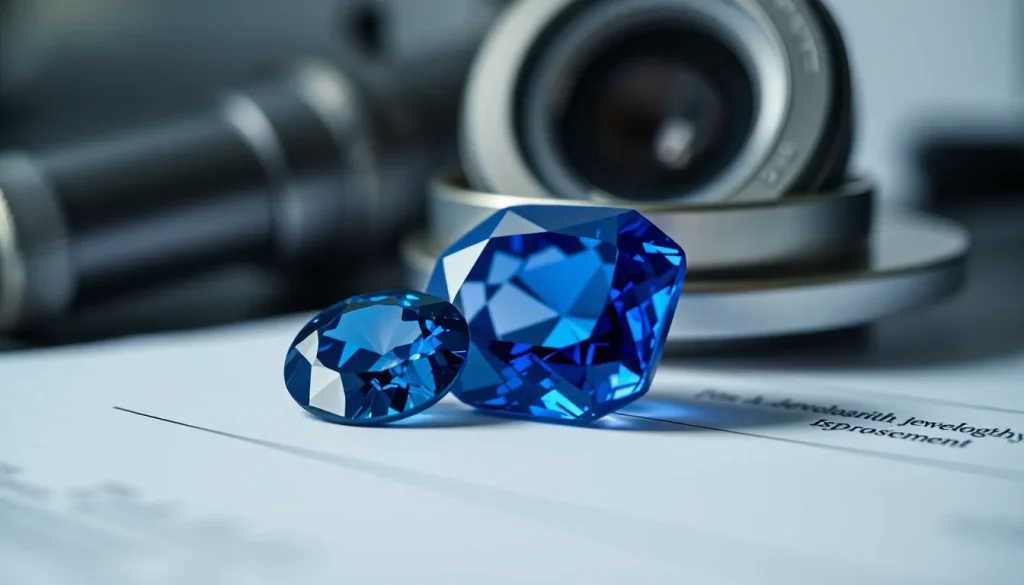
Identifying rare gemstones is a systematic process that blends physical examination, instrumental analysis, and documentary verification. Because rare stones often have high market values and sophisticated synthetic counterparts, identification is not based on a single characteristic but on a ‘convergence of evidence.’ The gold standard for identification is a report from a recognized third-party gemological laboratory, coupled with a verifiable chain of ownership known as provenance.
Relevant Conditions
The need for formal identification and certification arises under several specific conditions where the risk of error is high:
- High-Value Acquisitions: When purchasing investment-grade stones such as Paraiba Tourmaline, Musgravite, or rare Burmese Rubies.
- Similarity to Synthetics: When a stone’s visual properties overlap with lab-grown alternatives (e.g., synthetic spinel vs. natural spinel).
- Origin-Specific Value: When the value of the stone depends on its geographic source, such as Kashmir Sapphires or Colombian Emeralds.
- Estate Liquidation: When gemstones are inherited without documentation and require a current market valuation.
Recommended Steps
To accurately identify a rare gemstone and secure its value, follow these professional steps:
- Preliminary Visual Inspection: Use a 10x jeweler’s loupe to examine the stone for internal inclusions. Natural gemstones typically exhibit growth patterns or mineral crystals that are absent or different in synthetics.
- Physical Property Testing: Measure the Refractive Index (RI) using a refractometer and determine the Specific Gravity (SG). These constants act as a ‘fingerprint’ for the mineral species.
- Spectroscopic Analysis: For rare stones, use a spectrometer to analyze light absorption. This can distinguish between chemically identical stones that differ in trace elements.
- Obtaining Laboratory Certification: Submit the stone to a reputable lab (e.g., GIA, SSEF, or Gübelin). A comprehensive report should include:
- Species and Variety: (e.g., Corundum, variety Blue Sapphire).
- Treatment Disclosure: Whether the stone is heat-treated, oil-filled, or untreated.
- Origin Determination: A scientific opinion on where the stone was mined.
- Establishing Provenance: Compile a dossier of ownership. This includes original invoices, auction records, and previous certificates. Provenance adds a layer of historical authenticity that scientific tests cannot provide.
Expert Tip: Always ensure the certificate is ‘linked’ to the stone. Check for a laser inscription on the girdle of the gemstone that matches the report number to prevent ‘certificate switching.’
Exceptions
There are scenarios where standard identification steps may be inconclusive:
- Composite Stones: Some rare gems are composites or treated with advanced technology (like diffusion) that can mimic natural growth, requiring advanced FTIR spectroscopy to detect.
- Extreme Rarity: Some minerals are so rare that laboratories may lack sufficient reference samples to definitively name the species without destructive testing.
- Unstable Materials: Certain organic gems (like rare pearls or amber) may react poorly to some testing chemicals or heat, requiring non-invasive methods.
When to Ask a Professional
While basic tools can identify common minerals, a senior gemologist is required when:
- Determining Origin: Distinguishing between a Sri Lankan and a Madagascan sapphire requires specialized equipment and an experienced eye.
- Detecting Sophisticated Treatments: Identifying beryllium diffusion or lead-glass filling requires high-end microscopy and spectroscopy.
- Investment Valuation: If the stone is intended for an investment portfolio, a professional appraisal backed by a laboratory report is mandatory to ensure insurability.
FAQ
Is a certificate enough to prove a gemstone is rare?
A certificate proves the identity and quality of the stone, but 'rarity' is often a market designation based on the combination of species, color, and origin.
What is the difference between an appraisal and a certification?
Certification identifies what the stone is; an appraisal determines what the stone is worth based on current market data.
Can a gemstone's origin always be proven?
No. While many origins can be identified, some deposits share identical chemical signatures, meaning a lab may report the origin as 'undetermined' or 'multiple sources'.
Leave a Reply