
Short Answer
Fluorite is one of the most visually captivating minerals in the geological world, prized by collectors and scientists alike for its extraordinary range of colors and its tendency to form perfect cubic crystals. While not typically used in high-end jewelry due to its softness, it remains a cornerstone of mineral collections and a fascinating subject of study in crystallography.
What Is Fluorite?
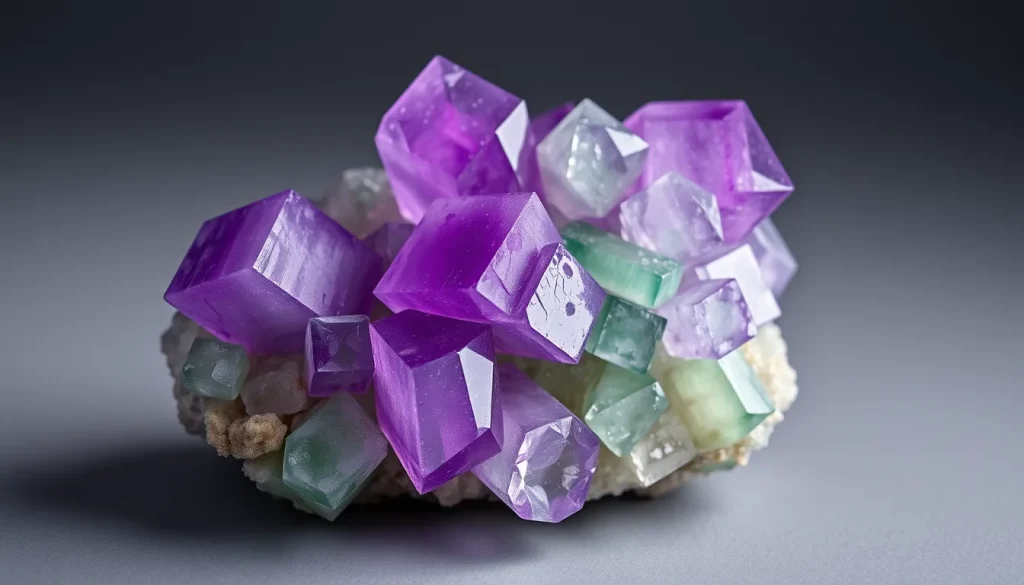
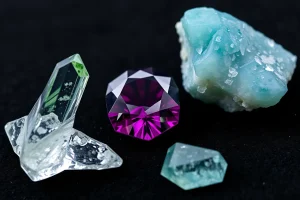
Fluorite is a halide mineral composed of calcium fluoride (CaF2). It is renowned for its wide spectrum of colors, including deep purple, vibrant green, bright yellow, and colorless. The color is typically caused by impurities or structural defects (color centers) within the crystal lattice. One of its most defining scientific characteristics is fluorescence—the ability to emit light when exposed to ultraviolet radiation—a phenomenon that gave the term “fluorescence” its name.
Practical Uses and Limitations
Due to its chemical stability and optical properties, fluorite has diverse applications beyond aesthetics:
- Industrial Use: It is primarily used as a flux in steelmaking and in the production of hydrofluoric acid.
- Optics: High-purity fluorite is used to create specialized lenses for cameras and telescopes because of its low dispersion.
- Limitations: With a Mohs hardness of only 4, fluorite is susceptible to scratching and cleavage. It is not suitable for rings or bracelets that encounter daily wear and tear.
Varieties and Related Materials
Fluorite occurs in a dizzying array of color combinations, often within a single crystal:
Rainbow Fluorite
This term refers to specimens that exhibit multiple bands of color, typically alternating between purple, green, and clear. These are highly sought after for display purposes.
Blue John
A rare, banded variety of fluorite found exclusively in Derbyshire, England. It is historically prized for carving into ornamental vessels and jewelry.
Identification and Look-Alikes
Fluorite can be mistaken for other minerals, but a few key tests can differentiate them:
| Feature | Fluorite | Amethyst / Quartz | Calcite |
|---|---|---|---|
| Hardness | 4 (Soft) | 7 (Hard) | 3 (Very Soft) |
| Cleavage | Perfect Octahedral | Conchoidal Fracture | Rhombohedral |
| Fluorescence | Common/Strong | Rare/Variable | Variable |
Jewelry Suitability and Care
As a senior gemologist, I advise extreme caution when wearing fluorite. It is a soft stone and requires specific care:
“Because fluorite possesses perfect cleavage in four directions, a sharp blow or significant pressure can cause the stone to split. It should be treated as a collector’s specimen rather than a durable gemstone.”
- Cleaning: Use only a soft, damp cloth. Avoid ultrasonic cleaners or steam cleaners.
- Storage: Store fluorite separately from harder gemstones like diamonds or sapphires to prevent surface scratching.
- Chemicals: Keep away from harsh chemicals and acidic solutions.
Quality and Value Factors
When evaluating fluorite for purchase, focus on the following criteria:
- Color Saturation: Deep, vivid purples and greens are generally more valuable than pale hues.
- Clarity: While some inclusions are natural, high transparency and a “glassy” luster increase value.
- Crystal Form: Well-defined cubes or octahedrons are significantly more prized than massive or fragmented pieces.
- Zoning: Sharp, distinct color banding (as seen in Rainbow Fluorite) adds aesthetic appeal and market value.
Symbolism and Modern Beliefs
In modern metaphysical circles, fluorite is often referred to as the “Genius Stone.” It is believed to promote mental clarity, focus, and organization. While these claims lack scientific evidence, the stone’s orderly geometric structure serves as a powerful visual metaphor for structure and order in the mind.
FAQ
Can fluorite be used in a ring?
It is not recommended. Due to its low hardness (4), it will scratch easily and may crack under pressure.
Why is fluorite called the 'Genius Stone'?
This is a metaphysical designation based on the belief that the stone aids in mental focus and cognitive organization.
Is fluorite naturally fluorescent?
Yes, many specimens exhibit strong fluorescence under UV light, which is how the scientific term 'fluorescence' was originally coined.
Leave a Reply