
Short Answer
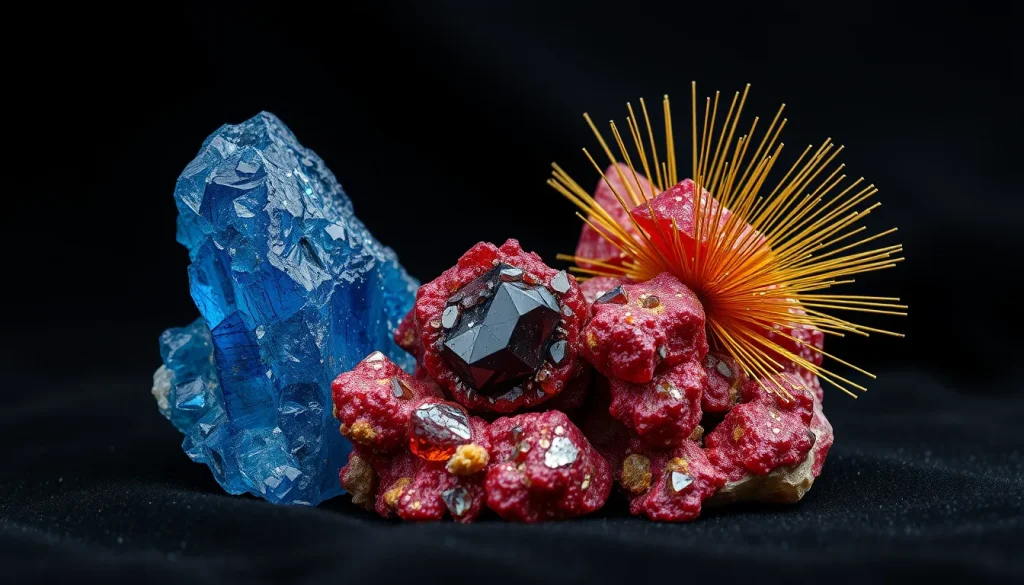
While most enthusiasts are familiar with the ‘celebrity’ oxides—ruby, sapphire, and spinel—the oxide mineral family extends far beyond these mainstream gems. For the advanced collector, the true allure lies in the rarer, often overlooked species that offer unique optical phenomena, extreme rarity, and complex geological origins.
What Is a Rare Oxide Mineral?
In mineralogy, oxides are chemical compounds consisting of oxygen combined with one or more metals. While common oxides like hematite and magnetite are found globally, rare oxide minerals are those that occur in highly specific geochemical environments, often involving rare-earth elements or volatile conditions during magma crystallization.
These minerals are characterized by their generally high hardness, high refractive indices, and often striking colors. Unlike the common silicates, oxides often form as secondary minerals or as accessory minerals in pegmatites and alkaline igneous rocks.
Varieties and Related Materials
The spectrum of collectable oxides is vast. Beyond the Corundum group, collectors focus on several key species:
- Benitoite: A barium titanium silicate oxide (often grouped with oxides due to its properties) found almost exclusively in California; prized for its stunning blue color and high dispersion.
- Rutile: Titanium dioxide known for its intense metallic luster and the “golden needle” inclusions found in quartz.
- Cassiterite: The primary ore of tin, which occurs in deep red to black crystals that are highly sought after in their gemmy, transparent forms.
- Cuprite: A copper oxide known for its deep, saturated red color and high refractive index, often appearing as metallic crystals.
Identification and Look-Alikes
Identifying rare oxides requires a blend of physical observation and instrument-based testing. Because many rare oxides share similar colors with more common gems, caution is required.
| Rare Oxide | Common Look-Alike | Key Distinguishing Feature |
|---|---|---|
| Benitoite | Blue Sapphire | Stronger dispersion (fire) and specific gravity. |
| Cuprite | Red Spinel | Much higher refractive index and metallic luster. |
| Rutile | Golden Topaz | Higher hardness and distinct crystal habit. |
Quality and Value Factors
For rare oxides, value is not determined by the same metrics as commercial diamonds or emeralds. Collectors prioritize the following:
- Crystal Habit: Well-formed, euhedral crystals are significantly more valuable than faceted stones.
- Color Saturation: In minerals like cuprite or benitoite, the intensity and purity of the hue are paramount.
- Locality: A specimen from a “closed” or historic mine (e.g., specific California deposits for benitoite) carries a premium.
- Transparency: Since many oxides are naturally opaque or metallic, high transparency is a rarity that drives price.
Expert Tip: When collecting rare oxides, always request a provenance record. Because these minerals occur in very few locations worldwide, the locality is often as important as the mineral species itself.
Jewelry Suitability and Care
Many rare oxides are too fragile or too rare for traditional jewelry. However, for those that are used, consider these constraints:
- Hardness: While some are hard, others (like cuprite) are relatively soft and prone to scratching.
- Cleavage: Some oxides have distinct cleavage planes that make them susceptible to splitting if hit at the wrong angle.
- Cleaning: Avoid ultrasonic cleaners for minerals with inclusions or fragile crystal structures; use a soft brush and distilled water.
FAQ
Are rare oxides more valuable than mainstream gems?
Not necessarily in the commercial market, but they often hold higher value among specialist collectors due to their rarity and scientific interest.
Can I wear rare oxide minerals in a ring?
It depends on the hardness. Corundum is perfect, but minerals like cuprite are too soft for daily wear and are better suited for display.
How do I tell the difference between a rare oxide and a synthetic?
Professional gemological equipment, such as a refractometer or spectrometer, is required, as some rare oxides have very specific chemical signatures.
Leave a Reply