Short Answer
Direct Answer
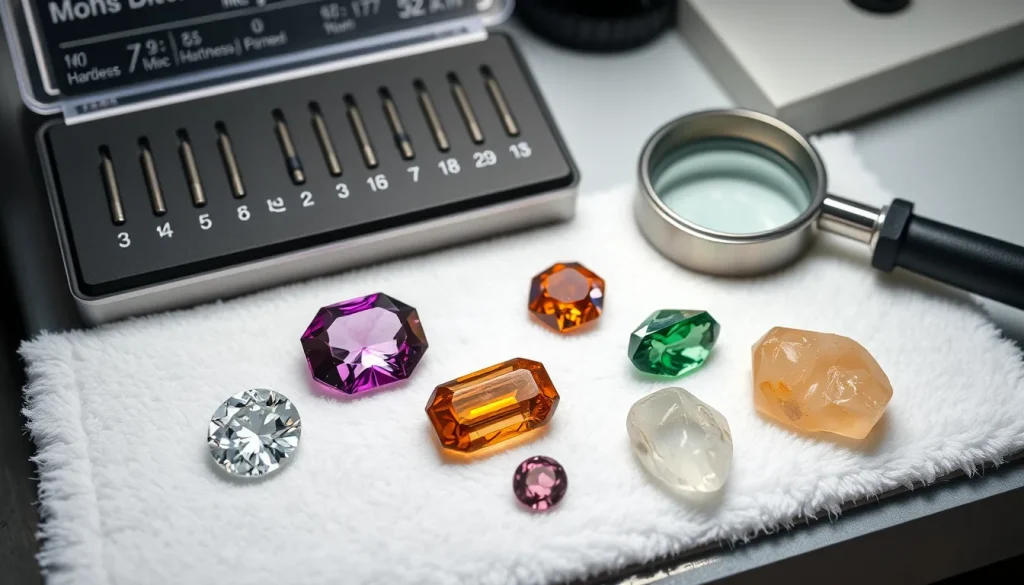
The Mohs Hardness Scale is a qualitative ordinal scale that characterizes the scratch resistance of various minerals through the ability of a harder material to scratch a softer one. In the context of jewelry care, it serves as the primary benchmark for determining whether a gemstone is suitable for specific types of jewelry (such as engagement rings) and dictates the tools and methods that should be used for cleaning and polishing to avoid surface abrasions.
Relevant Conditions
Understanding hardness is critical under several specific conditions to ensure the longevity of a jewelry collection:
- Selection for Daily Wear: When choosing a stone for a ring—which is subject to constant contact with hard surfaces—a higher Mohs rating is required to prevent dulling and scratching.
- Cleaning Protocols: Using an abrasive cleaner or a brush with bristles harder than the gemstone can create microscopic scratches (scuffs) that diminish the stone’s brilliance.
- Storage Logistics: When storing jewelry, gemstones of varying hardness must be separated. A diamond (10) stored in the same compartment as a pearl (2.5-4.5) can easily permanently scratch the softer organic gem.
- Professional Maintenance: During the resizing of a setting or the polishing of a metal band, the jeweler must protect stones with lower hardness ratings from the polishing compounds used.
Recommended Steps
To apply the Mohs scale to your jewelry care routine, follow these professional guidelines:
- Identify the Hardness: Consult a gemological reference to find the Mohs rating of your stone. For example, Diamonds are 10, Sapphires/Rubies are 9, and Opal is 5.5-6.5.
- Assess the Jewelry Type:
- High-Impact (Rings): Prioritize stones with a rating of 7 or higher.
- Low-Impact (Earrings/Necklaces): Stones with a rating of 5-7 are generally acceptable.
- Fragile (Special Occasions): Stones below 5 should be worn sparingly.
- Implement Safe Cleaning: Use a soft microfiber cloth or a soft-bristled toothbrush. Avoid ultrasonic cleaners for stones with low hardness or those containing fractures (like Emeralds).
- Organize Storage: Use lined jewelry boxes with individual compartments to prevent “stone-on-stone” friction.
Expert Tip: Remember that hardness is not the same as toughness. A diamond is the hardest mineral (scratch-resistant), but it has cleavage planes, meaning it can still chip or shatter if struck with sufficient force at the right angle.
Exceptions
While the Mohs scale is an invaluable guide, there are critical exceptions and nuances to consider:
- Anisotropy: Some minerals exhibit different hardness levels depending on the direction in which they are scratched. This is known as hardness anisotropy.
- Toughness vs. Hardness: As mentioned, a stone can be hard (scratch-resistant) but brittle (prone to chipping). For example, Tanzanite is relatively hard (6-7) but quite brittle.
- Surface Coatings: Some gemstones are treated with coatings or resins to fill fissures. The surface hardness of a treated stone may differ from the natural mineral.
When to Ask a Professional
While basic care can be managed at home, seek a certified gemologist or professional jeweler in the following scenarios:
- Deep Scratch Removal: If a gemstone has visible scratches, do not attempt to polish it yourself. Professional lapidary equipment is required to avoid altering the stone’s proportions.
- Identification of Unknown Stones: If you possess a gemstone without documentation, a professional can use hardness tests and refractometry to identify it safely.
- Setting Inspection: If a stone has a low Mohs rating, have a jeweler check the prongs regularly, as soft stones can sometimes wear down the metal or be displaced more easily.
FAQ
Can a diamond scratch any other gemstone?
Yes, because diamond is the hardest mineral on the Mohs scale (10), it can scratch any other natural gemstone.
Is a Mohs 9 stone twice as hard as a Mohs 4.5 stone?
No. The Mohs scale is ordinal, not linear. The actual difference in absolute hardness (measured by Knoop or Vickers scales) can be much larger between high numbers than between low numbers.
Will a soft gemstone like Opal wear down over time?
Yes, gemstones with lower Mohs ratings are more susceptible to 'surface wear,' where the facets lose their sharp edges and the polish becomes dull over years of use.
Leave a Reply