
Short Answer
Overview
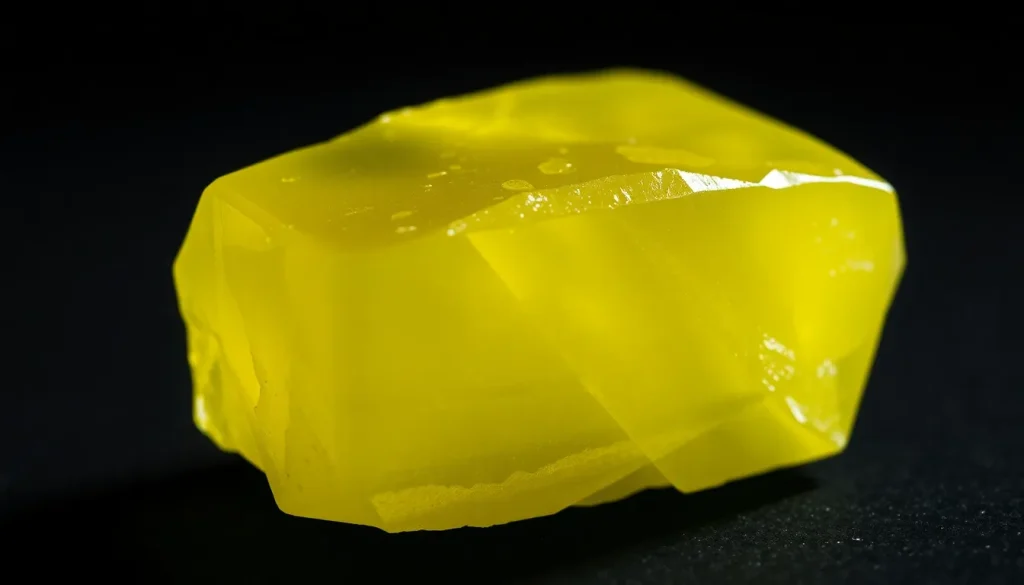
Villiaumite is a rare halide mineral composed of sodium fluoride (NaF). It crystallizes in the isometric system, forming cubic or octahedral crystals that display a brilliant, lemon‑yellow to orange‑yellow hue. With a Mohs hardness of 2–2.5, it is among the softer gemstones, requiring careful handling in jewelry. Its high refractive index (≈1.327) and adamantine to vitreous luster give it an eye‑catching sparkle, while its specific gravity ranges from 2.9 to 3.1.
History and Origin
The mineral was first described in 1866 from an occurrence at Mont Saint‑Hilaire, Quebec, Canada, and was named after the French chemist J.J. Villiaume, who studied sodium fluoride. Subsequent discoveries have been reported from the Kola Peninsula in Russia, the San Benito County in California (USA), and a few localities in Norway and Greenland. Villiaumite’s bright coloration is intrinsic; it does not require heat treatment, though natural specimens of high clarity are exceptionally scarce.
Meaning and Symbolism
In traditional gemstone lore, villiaumite’s sunny yellow is associated with optimism, personal power, and the ability to illuminate one’s path. It is said to encourage clear communication and to foster confidence in decision‑making. Because of its rarity, it is sometimes viewed as a symbol of uniqueness and individuality.
Healing and Metaphysical Properties
Crystal‑healing practitioners attribute villiaumite with the following properties, presented as belief rather than scientific fact:
- Energy amplification: thought to boost the wearer’s personal energy and motivation.
- Solar Plexus activation: believed to support the Manipura chakra, enhancing self‑esteem and willpower.
- Emotional clarity: said to help release fear and promote a positive outlook.
- Physical aid: in alternative traditions, it is sometimes linked to the digestive system and the metabolism of fluoride, though no medical claims are made.
These attributes are based on longstanding metaphysical traditions and should not replace professional medical advice.
Varieties and Types
Villiaumite occurs primarily as:
- Natural bright yellow: the most sought after for its vivid hue.
- Orange‑yellow specimens: slightly darker, often found in the same localities.
- Colorless or pale varieties: rarer and typically less valued in jewelry.
No significant treatments are common, though some low‑grade material may be enhanced by polishing to improve surface brilliance.
Jewelry Uses and Care
Because of its low hardness, villiaumite is most suitable for pendants, earrings, and brooches where the stone can be set protectively. Cabochon cuts are preferred to reduce the risk of chipping. When cleaning, use a soft, lint‑free cloth and mild soap water; avoid ultrasonic cleaners, steam, or harsh chemicals, as they can damage the surface or cause fracture. Store the gemstone separately from harder stones to prevent scratching.
Buying Guide
When purchasing villiaumite, consider the following criteria:
- Color intensity: deep, uniform yellow is most valuable.
- Clarity: aim for specimens with minimal inclusions and no surface blemishes.
- Cut and setting: protective settings (e.g., bezel) are recommended for durability.
- Certification: request a gemological report from a reputable laboratory to confirm authenticity and to rule out synthetic or treated substitutes such as dyed quartz.
- Origin: reputable dealers will disclose provenance; classic localities include Canada, Russia, and the United States.
Given its softness, villiaumite is best suited for collectors and occasional wear rather than everyday pieces.
FAQ
What is villiaumite good for?
Villiaumite is valued for its vivid yellow color in jewelry and as a collector's mineral; traditionally it is believed to promote confidence and mental clarity, though these are metaphysical claims, not medical facts.
Is villiaumite rare?
Yes, high‑quality villiaumite is rare. Quality specimens with intense, uniform color are limited to a few localities, making the stone uncommon in the gem market.
How can you tell if villiaumite is real?
Real villiaumite feels soft (Mohs 2–2.5), shows a bright yellow color without fluorescence, and has a white streak. Professional gemologists can confirm identity with refractive index measurement and X‑ray diffraction.
What chakra is villiaumite associated with?
In crystal‑healing traditions, villiaumite is linked to the Solar Plexus (Manipura) chakra, thought to enhance personal power and confidence.
How should you clean villiaumite?
Clean villiaumite gently with lukewarm soapy water and a soft cloth. Avoid ultrasonic cleaners, steam, harsh chemicals, or high‑impact cleaning, as the stone is soft and prone to fracture.
Leave a Reply