
Short Answer
Overview
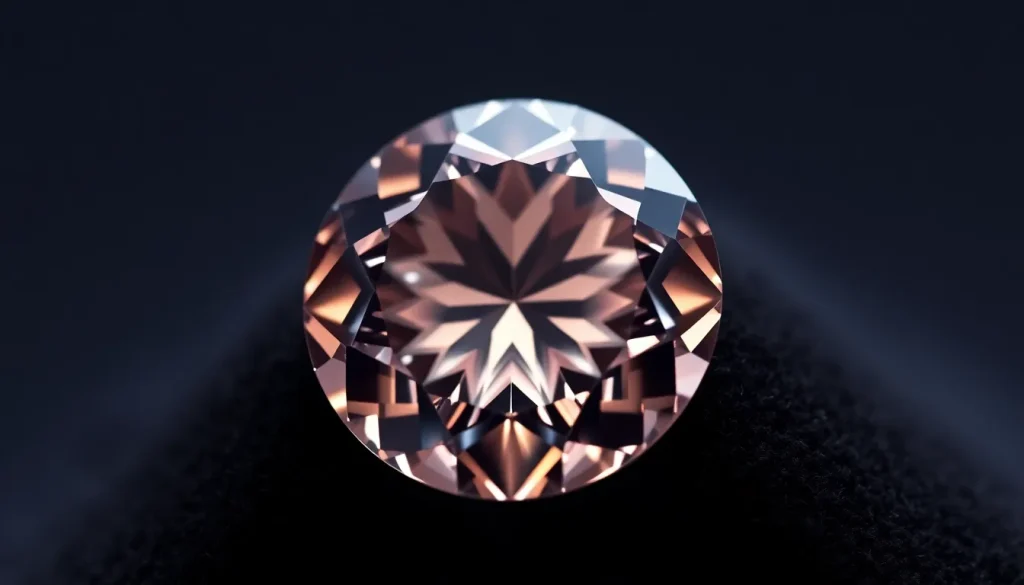
Strontium titanate (SrTiO3) is a synthetic gemstone belonging to the oxide mineral class. It possesses a very high refractive index (2.40–2.41) and strong dispersion, giving it a brilliance that can rival or exceed that of diamond. The stone is typically produced in laboratory settings and is cut in standard gemstone shapes such as round brilliant, princess, and oval.
Colors range from colourless to yellow, orange, pink, blue, and violet, depending on trace impurities or intentional coloration. Because of its optical properties, strontium titanate is most commonly marketed as a diamond simulant.
History and Origin
The compound strontium titanate was first synthesized in the early 20th century by chemists investigating perovskite‑type oxides. Its gemstone potential was recognized in the 1970s when gem cutters discovered that the material could be cut and polished to produce a dazzling sparkle. Since then, it has been produced industrially in small batches for use in fine jewelry, particularly as an affordable alternative to diamond.
Meaning and Symbolism
In contemporary metaphoric language, strontium titanate is associated with clarity, brilliance, and the pursuit of perfection. Its high fire and shine are often likened to inner light and personal integrity. Collectors value the stone for its modern, scientific heritage combined with traditional gemstone allure.
Healing and Metaphysical Properties
Traditional crystal‑healing beliefs attribute strontium titanate with qualities of mental clarity, focus, and enhanced perception. Some practitioners connect it to the third‑eye chakra, suggesting it may aid meditation and intuitive insight. These claims are not scientifically verified and should not replace professional medical advice.
Varieties and Types
- Colourless (clear) – most common, used as a diamond simulant.
- Yellow to orange – created by adding trace iron or manganese.
- Pink – caused by trace chromium.
- Blue to violet – results from cobalt or other transition‑metal impurities.
- Coated or treated stones – surface treatments may enhance colour or luster; they should be disclosed by the seller.
Jewelry Uses and Care
With a Mohs hardness of 5.5–6, strontium titanate is suitable for earrings, pendants, and rings that are not subject to heavy impact. It has no cleavage but exhibits conchoidal fracture, so it can chip if struck. Recommended care includes:
- Clean with warm, soapy water and a soft brush.
- Avoid ultrasonic cleaners if the stone has a surface coating.
- Store separately from harder gemstones to prevent scratching.
- Remove jewelry before exposure to harsh chemicals or extreme heat.
Buying Guide
When purchasing strontium titanate, consider the following:
- Certification – Request a gem‑ological report that confirms the material is synthetic SrTiO3.
- Colour and clarity – Colourless stones with high clarity command higher prices.
- Cut quality – Well‑cut stones maximize brilliance and disguise any inclusions.
- Source – Reputable laboratories and dealers provide traceability and guarantee.
Because the stone is synthetic, price points are generally lower than natural gemstones of comparable appearance, making it an attractive option for budget‑conscious buyers seeking sparkle.
FAQ
What is strontium titanate good for?
Strontium titanate is prized for its high brilliance and diamond‑like sparkle, making it popular in jewelry as an affordable simulant. Traditionally, it is also associated with clarity of thought and focus in crystal‑healing circles.
Is strontium titanate rare?
The material itself is not rare because it is synthetically produced. Rarity applies to high‑quality, colourless stones with excellent cut and clarity, which are less common than lower‑grade material.
How can you tell if strontium titanate is real?
Real strontium titanate will have a refractive index around 2.40–2.41 and strong dispersion. A professional gem‑lab can confirm its composition with spectroscopy. Look for certification and be aware that some treated stones may be coated to alter colour.
What chakra is strontium titanate associated with?
In crystal‑healing belief systems, strontium titanate is sometimes linked to the third‑eye chakra, supporting intuition and mental clarity, though no single standard chakra is universally assigned.
How should you clean strontium titanate?
Clean with warm, soapy water and a soft brush. Avoid ultrasonic cleaners if the stone has a surface coating. Store separately from harder gemstones to prevent scratching and keep away from harsh chemicals.
Leave a Reply